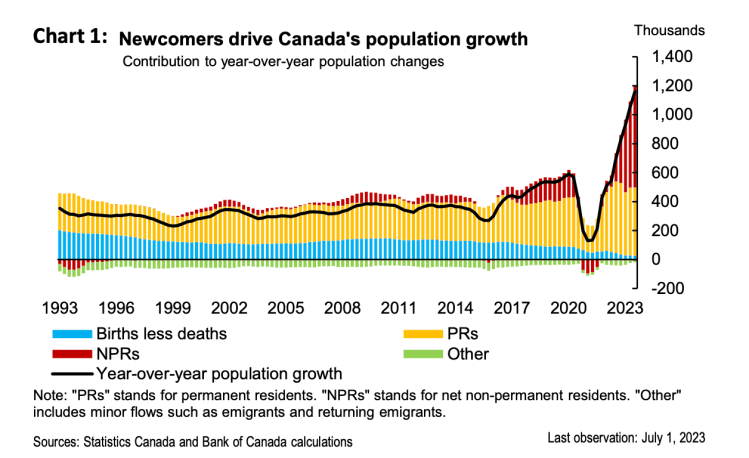
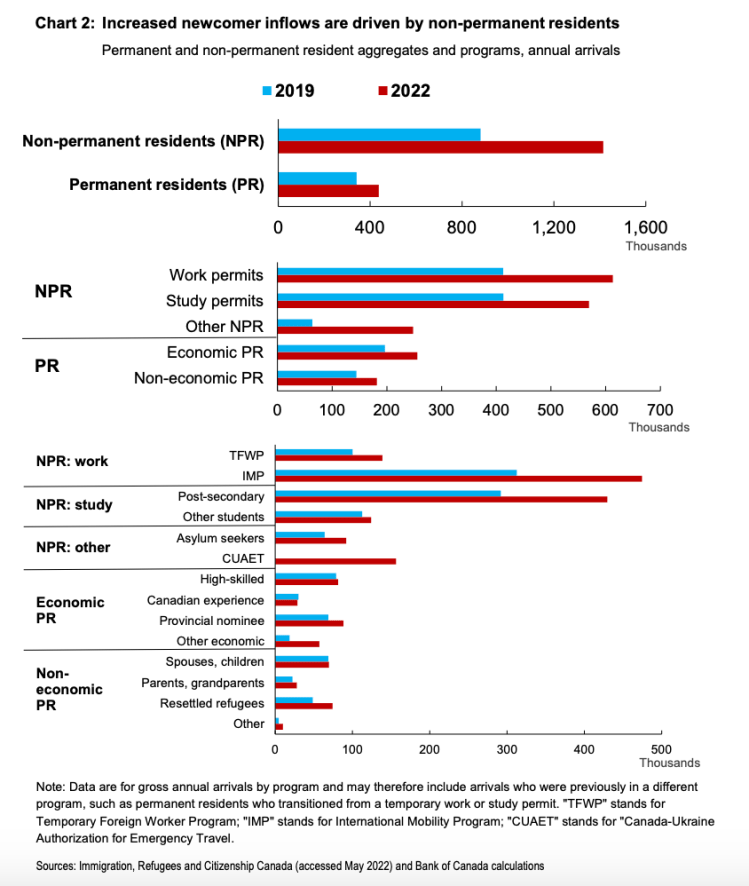
Canada has seen a significant increase in immigration flows since 2022. While a well-established literature looks at the effects of immigration on specific economic variables or narrowly defined questions, significant gaps remain in our understanding of the broader macroeconomic impacts of a rise in newcomers.1 Moreover, these effects are likely to vary among countries and over time due to the diversity
of immigrant contributions to their host country’s economy.
This staff analytical note helps shed light on this complex question. It examines key channels through which the rise in newcomers is changing both supply and demand factors in Canada. Given the complexity and breadth of immigrant contributions, we use a broad range of methodological tools:
• the literature on the macroeconomic effects of immigration
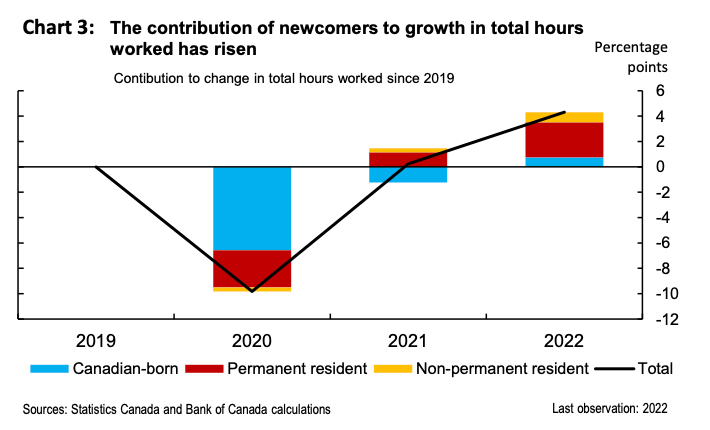
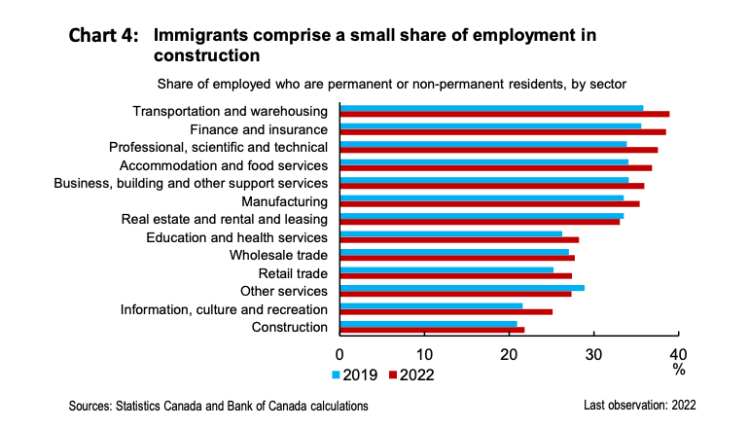
• microdata from the Labour Force Survey to examine the contribution of newcomers to the labour
market, including by sector
• special questions and analysis from two of the Bank of Canada’s surveys—the Canadian Survey of
Consumer Expectations and the Business Leaders’ Pulse
• targeted consultations with immigrant organizations
• model simulations using the Large Empirical and Semi-structural model (LENS)2
On balance, we find that the immediate impacts of the recent rise in newcomers may have boosted consumption, but the inflationary impacts from this channel do not appear considerable. Moreover, the rise in immigration is significantly raising the non-inflationary growth rate of the economy by boosting the labour supply. The rise in immigration is nonetheless contributing to pressures in inflation components linked to house prices, given that it is adding more to housing demand than to housing supply in the context of structural imbalances in the Canadian housing market.
In this analysis, we note several important caveats:
• Newcomers to Canada are diverse, including in the skills and wealth they bring to the country as well as in their consumption and remittance patterns. These nuances should be kept in mind when drawing lessons from studies outside of Canada and when extrapolating the experiences of individuals into bigger trends. Many international studies show that the economic effects of immigration depend heavily on home-country factors and immigrant characteristics.
• Significant gaps exist in the data. It is easier to get a picture of the labour market contributions of newcomers, but quantitative assessments of their impact on housing and consumption are more challenging. The same is true for assessing their overall effects on supply and demand.

Chosen excerpts by Job Market Monitor. Read the whole story @ Assessing the effects of higher immigration on the Canadian economy and inflation – Bank of Canada



 Job Market Monitor
Discussion
No comments yet.