In U.S., Canada, Europe, Australia and Japan, publics say language matters more to national identity than birthplace
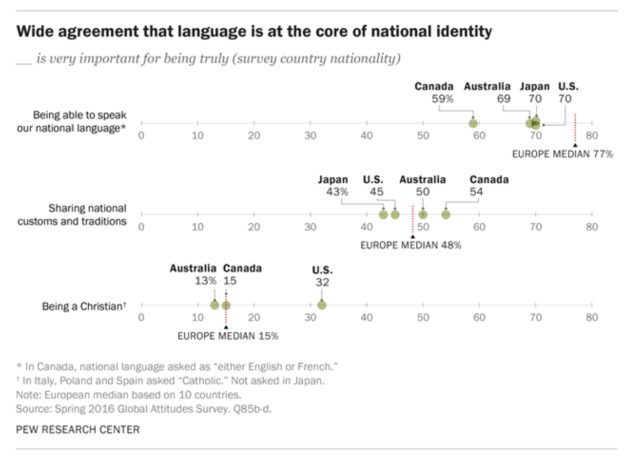
The tide of people moving across the world, be they immigrants or refugees, has sparked concern in Australia, Europe and the United States. In particular, the ethnic, linguistic and cultural background of migrants has triggered intense debates over the benefits and the costs of growing diversity and the risk of open borders to national identity. Unease over the cultural, economic and security ramifications of immigration helped to fuel the Brexit vote in the United Kingdom, encourage the idea of a wall along the U.S.-Mexican border and broaden support for right-wing populist parties in France, Germany and the Netherlands.
Debates over what it means to be a “true” American, Australian, German or other nationality have often highlighted the importance of a person being born in a particular country. But contrary to such rhetoric, a Pew Research Center survey finds that people generally place a relatively low premium on a person’s birthplace. Only 13% of Australians, 21% of Canadians, 32% of Americans and a median of 33% of Europeans believe that it is very important for a person to be born in their country in order to be considered a true national.
There are some exceptions – Hungary (52%), Greece (50%) and Japan (50%) – where about half the public considers birthplace to be very important. But in other nations – Germany (13%), Australia (13%) and Sweden (8%) – very few people make a strong connection between the locale of one’s birth and national identity.
These are the findings from a cross-national poll by Pew Research Center, conducted in 14 countries among 14,514 respondents from April 4 to May 29, 2016.
Chosen excerpts by Job Market Monitor. Read the whole story at How Countries Around the World View National Identity | Pew Research Center



 Job Market Monitor
Discussion
Trackbacks/Pingbacks
Pingback: Immigrant Integration – A new vision for adapting to labor-market and demographic changes, to conceptualizing and communicating shared values | Job Market Monitor - January 26, 2019