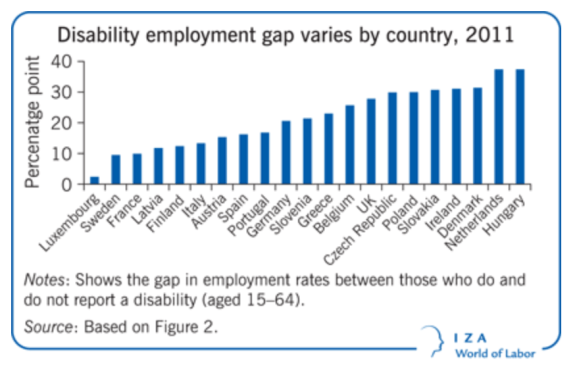
In Europe, about one in eight people of working age report having a disability; that is, the presence of a long-term limiting health condition. Despite the introduction of a range of legislative and policy initiatives designed to eliminate discrimination and facilitate retention of and entry into work, disability is associated with substantial and enduring employment disadvantages. Identifying the reasons for this is complex, but critical to determine effective policy solutions that reduce the social and economic costs of disability disadvantage.
The prevalence of disability, combined with its substantial labor market disadvantage, makes the design of effective policy critical for reducing its negative social and economic consequences. However, this process is complicated by difficulties in measuring disability and in distinguishing its influence on productivity and preferences for work from employer discrimination. Recognizing that the experience of disability varies by type, severity, and duration may nevertheless facilitate a more flexible and tailored approach to policy, which provides the necessary incentives and support to work for those who are able.
Chosen excerpts by Job Market Monitor. Read the whole story at IZA World of Labor – Disability and labor market outcomes



 Job Market Monitor
Discussion
No comments yet.