Some aspects of tertiary education in New Zealand have transformed nearly beyond recognition in just the last few decades – for example, the ability of nearly every student to access almost unlimited content in real time via the internet. Other aspects, such as a university lecture, would be readily recognisable to medieval scholars.
The big social, technological, economic and demographic trends that drove these transformations are ongoing, and could gain momentum. These trends present challenges and opportunities to the tertiary education system and its participants.
Public and private expenditure on tertiary education in New Zealand is about 2.1% of Gross Domestic Product (GDP), compared to an OECD average of 1.6% (OECD, 2015). This is a significant level of expenditure and New Zealanders should expect that our tertiary education system is capable of fuelling a highly successful and inclusive economy and society.
The Government has asked the Commission to carry out an inquiry into “new models of tertiary education”.
This inquiry will explore the big trends affecting the tertiary education system, consider how innovative “new models” can help the system respond positively to them, and consider system and institutional settings that encourage or inhibit new models.
“New models” are new and improved ways of achieving an end. In this inquiry new models could be improved ways of facilitating learning or better ways of delivering tertiary education. New models could potentially include different policy, regulatory, funding and quality assurance arrangements. The inquiry will consider models that already exist or are emerging in New Zealand, as well as things happening in other countries that could be adapted to local conditions.
The terms of reference for the inquiry suggest that there is currently “considerable inertia” in the New Zealand system, and an unwillingness to try new things. This inquiry will consider why that might be, if it is so; why some parts of the system innovate more than others; and how the system overall could become more innovative.
Reflecting the terms of reference, the inquiry will concentrate on educational outcomes generated by the system. This will require the Commission to consider what a good tertiary education system looks like, and how that can be measured.
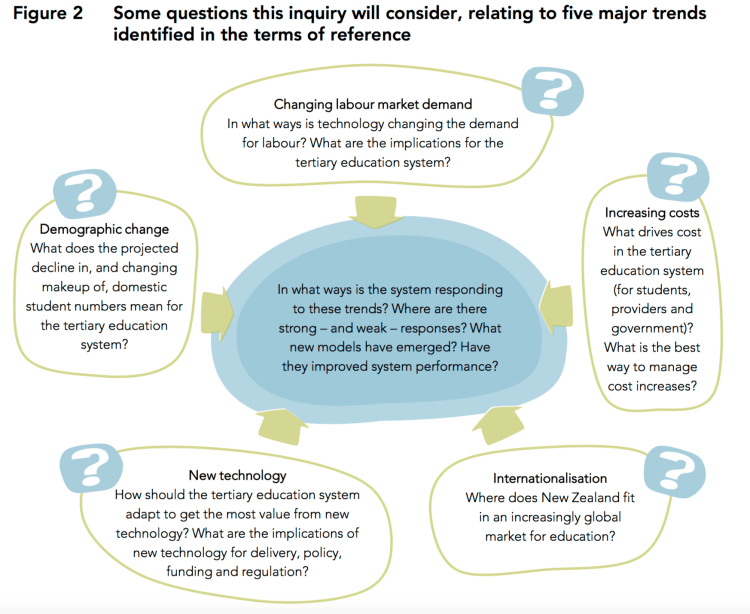
Figure 2 outlines some questions the inquiry will consider over the next 12 months, grouped into five major trends outlined in the terms of reference. This issues paper does not attempt to answer these questions. Instead, it describes some information about the system and trends influencing it, and seeks submissions to help the Commission develop its advice and recommendations.
Chosen excerpts by Job Market Monitor. Read the whole story at New models of tertiary education: issues paper



 Job Market Monitor
Discussion
No comments yet.