The Canadian trade union movement grew out of the industrialization of the economy at the end of the 19th Century. At that time, unions were predominately a male domain and remained so until the 1960s. Today, a union member is slightly more likely to be a woman, and working in an office, school or hospital, while factory workers, miners and other blue collar trades have seen their union membership fall over the past quarter century.
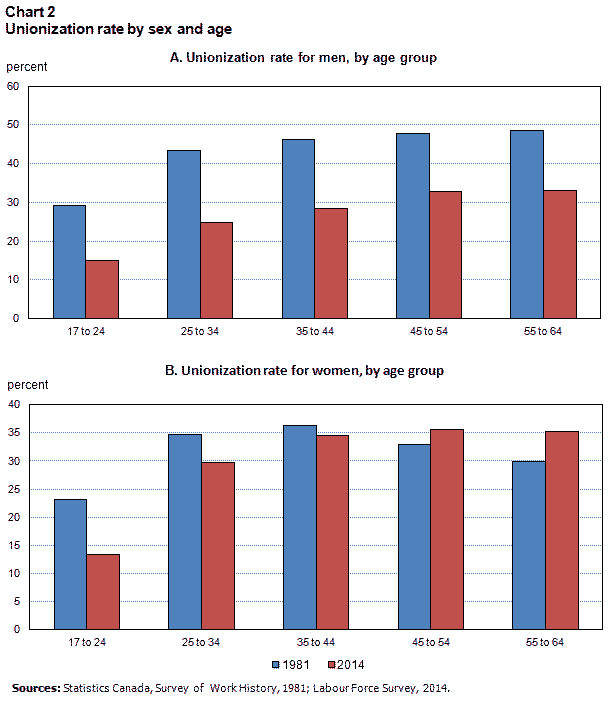
The decline in the unionization rate is not a recent phenomenon. In Canada, most of the decline took place in the 1980s and 1990s. Since Statistics Canada began measuring unionization through household surveys, the rate of unionization has fallen from 37.6% in 1981 to 28.8% in 2014. Trends differ by sex, however.

Statisticians generally measure union activity in two ways: unionization rate and coverage rate. This Megatrend uses the unionization rate because longer trend data are available for these rates.
The decrease in the unionization rate was most evident among men, falling from just over 42% in 1981 to 27% in 2014, a decline of almost 15 percentage points. The largest decrease—8 percentage points—took place in the 1990s. On account of this decline, the unionization rate of men in 2014 was 2 points below the rate for women, whereas in 1981, it was almost 11 percentage points higher. During the same period, the unionization rate for women was relatively stable, varying between 30% and 32%.
Chosen excerpts by Job Market Monitor. Read the whole story at Unionization rates falling.



 Job Market Monitor
Discussion
No comments yet.