The U.S. college admissions process is expensive and stressful, for everyone from high-achieving high school students to first-generation adult learners. It is also surprisingly ineffective — only about 30% of students headed to a four-year college graduate from that college within six years (about 40% take longer or don’t graduate at all, and about 30% transfer). We can and should do better.
A good start is to rein in the $1.75 billion lead-generation industry1, many of whose practitioners reap handsome profits by publishing misleading advertisements for higher education programs. Instead of fulfilling their claims of helping prospective students find the right schools for their needs, interests and resources, many sites promote lower-quality institutions, and in doing so far too many rely on what can only be described as misrepresentation. Rather than providing an objective resource, many lead-generation sites simply sell personal information — often detailed — about those prospects to marketers working for those schools that have paid for access. If substandard schools are tumors on the body of higher education, these sites serve as their blood supply.
To find out if these disclosure notices inform consumers effectively, we [Noodle] commissioned an independent research firm to survey people planning to enroll in a post-secondary educational program in the next two years and who had previously searched for programs online. Their responses indicate that most prospective students misunderstand the nature of the lead generation sites upon which they are relying for objective advice.

A majority (65%) of respondents believe they are getting counseling — i.e. information that helps them make a smart decision about choosing a post-secondary educational program.
Some demographic differences impact respondents’ perceptions of the search results. Those who are more likely to trust the sites are older than 26. This suggests that prospective students who are less likely to have access to guidance counseling about schools and programs, are most likely to believe they are being counseled by these sites.
A majority of respondents (65%) believe they understand how lead generation sites generate their search results.
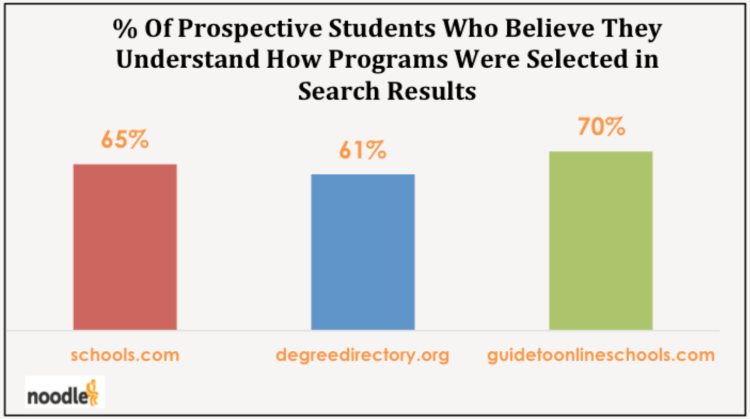
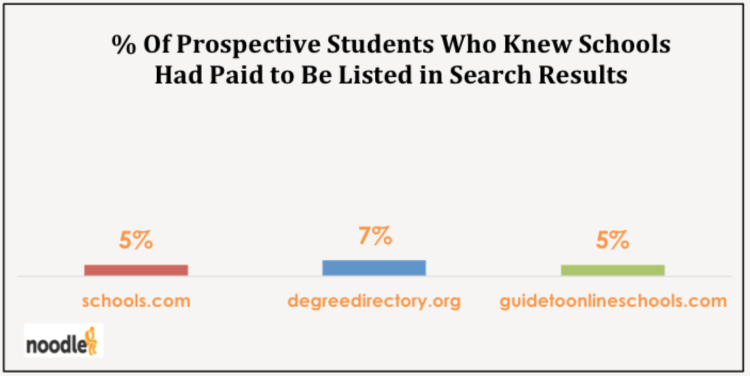
Most respondents, even those who believe they understand how search results are generated, are mistaken. Only 6% knew that schools were paying to be listed on these sites.
via Talking ‘Bout Lead Generation: Selling Students to the Highest Bidders | Articles | Noodle.



 Job Market Monitor
Discussion
No comments yet.