The proportion of unemployed individuals who spent some time on an average day searching for a job increased from 20 percent to 24 percent after the recession. However, and perhaps surprisingly, among those unemployed who did search, the average time spent on job search looked very similar in the five years on either side of the Great Recession.
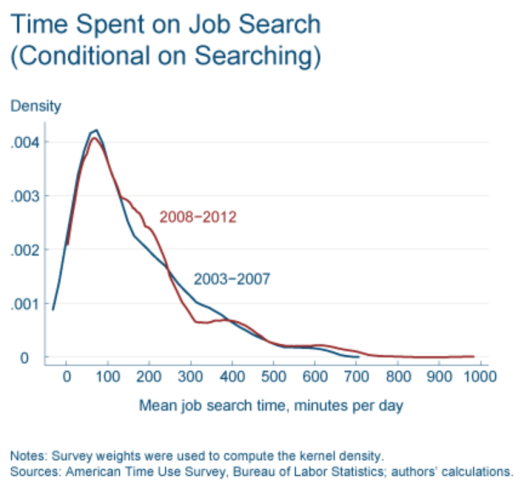
While our findings do not rule out the existence of discouraged workers, we found that total job search time has increased in recent years. Our broader finding is that the job search patterns of the unemployed have changed in the aftermath of the Great Recession, with important differences by educational attainment, age, and gender, including decreases in search time for some groups. Understanding these differences could help us to understand not only recent changes in the labor market, but also in educational attainment, household formation, and other important processes driving our economy.
Chosen excerpts by Job Market Monitor. Read the whole story at Job Search Before and After the Great Recession :: Dionissi Aliprantis, Anne Chen, and Chris Vecchio :: Economic Trends :: 08.12.14 :: Federal Reserve Bank of Cleveland.



 Job Market Monitor
Discussion
No comments yet.