RECENT IMMIGRATION PATTERNS
During the 1990s, more immigrants arrived in the United States than in any previous decade: between 1990 and 2000, the number of foreign-born U.S. residents rose by thirteen million to total thirty-two million. According to the best estimates of demographers, about nine million of these newcomers were legal immigrants. If two million emigrated, as the Census indicates, then the number of unauthorized foreigners rose by six million in the 1990s.
Three major types of foreigners arrive in the United States: immigrants, nonimmigrants, and unauthorized foreigners. By U.S. law, immigrants are persons entitled to live and work permanently in the country and, after five years, become naturalized U.S. citizens. There are four major types of immigrants:
- By far the largest category includes relatives of U.S. residents; 63 percent of the one million immigrants admitted in 2001 had family members already in the United States who petitioned the U.S. government to admit them.
- The second-largest category was employment-based, 179,000 immigrants and their families admitted for economic or employment reasons.
- The third group was refugees and asylees, 108,000 foreigners granted safe haven in the United States.
- The fourth group is dominated by diversity and other immigrants, persons who applied for a U.S. immigrant visa in a lottery open to those from countries that sent fewer than 50,000 immigrants to the United States in the previous five years.
Nonimmigrants are foreigners who come to the United States to visit, work, or study. There are no limits on most types of nonimmigrants; the United States is willing to accept far more than the twenty-nine million foreign tourists and business visitors who arrived in 2001.
Foreign workers are more controversial. The 991,000 foreign workers admitted in 2001 represented almost 50 percent of the net growth of U.S. employment, which expands by about two million a year. About two-thirds of the foreign workers were professionals who received H-1B visas that allow them to stay in the United States for up to six years, and become immigrants if they can find a U.S. employer to sponsor them for an employment-based visa by showing that qualified U.S. residents are not available to fill their jobs. A sixth of the foreign workers were unskilled workers who did jobs that ranged from harvesting tobacco to cleaning hotels in resort areas.
The H-1B program illustrates the controversies that surround foreign worker programs. On one side are those who argue that the United States must scour the world for the best computer programmers, for instance, in order to remain globally competitive and that there should be few immigration barriers between U.S. employers and the workers they want to hire, for example, from India. On the other side are those who argue that U.S. employers should do more to train and retrain U.S. workers to fill vacant jobs. Making it too easy to fill jobs with foreigners, they argue, will increase employer dependence on immigrant workers over time.
Unauthorized foreigners, also known as undocumented workers and illegal aliens, are foreigners who enter the United States without inspection at ports of entry or who enter legally but then violate the terms of their entry by, for example, going to work after admission as a tourist or not departing as scheduled. The number of unauthorized foreigners is not known, but the best estimates indicate that the number rose from three million in 1980 to four million in 1986, just before 2.7 million foreigners were legalized under the Immigration Reform and Control Act of 1986. The number of unauthorized foreigners fell in the late 1980s, rose sharply in the early 1990s, rose at a slower rate in the mid-1990s, and then rose very fast in the late 1990s.
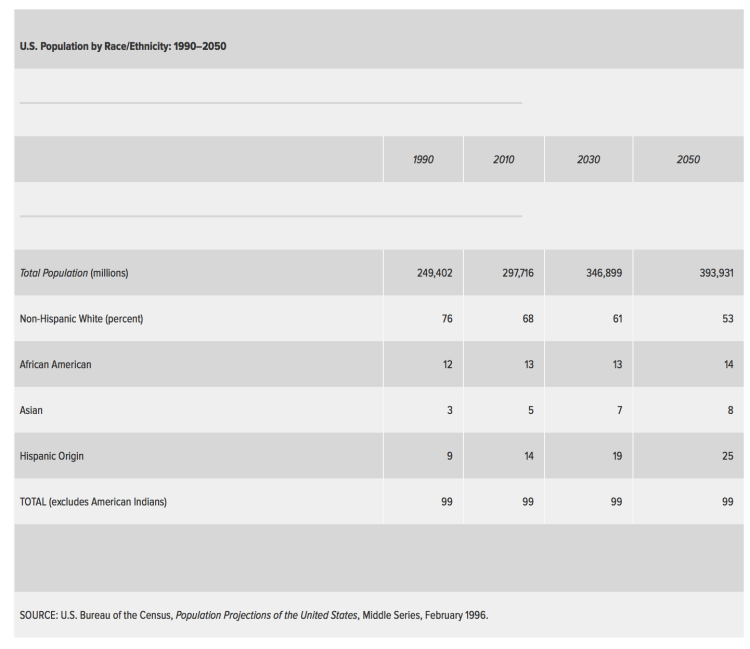
Chosen excerpts by Job Market Monitor. Read the whole story at Making and Remaking America: Immigration into the United States | Hoover Institution.
Related Posts
US in Maps – The biggest immigrant groups by state
The data used to create the map are from the Department of Homeland Security. In 2012, slightly more than 1 million people were granted legal permanent resident status in the U.S. (Legal permanent residents may also be referred to as “permanent resident aliens” or “green card holders.”) About 15 percent of these new immigrants are … Continue reading
Brain Waste among US immigrants / Above 75 percent for those with a master’s degree
Many highly educated immigrants coming to the U.S. without a job lined up have been unable to find work at their level of education, leading to considerable “brain waste,” Purdue University researchers have found. Agricultural economics professors Brigitte Waldorf and Raymond Florax were on a team of researchers who analyzed data from the U.S. Census … Continue reading
Immigrants in US – Those who came more than 30 years ago were the most likely to speak only English at home Census finds
Those who came to live in the United States more than 30 years ago were the most likely to speak only English at home. The foreign born who have lived in the United States for longer periods were much more likely to speak only English at home than recent entrants to the country (Figure 7). …Continue reading
US – Highly educated immigrants raise native wages
mmigrants to the US are drawn from both ends of the education spectrum. This column looks at the effect of highly educated immigrants – in particular, those with degrees in Science, Technology, Engineering, or Mathematics – on total factor productivity growth. The authors find that foreign STEM workers can explain 30% to 60% of US … Continue reading



 Job Market Monitor
Discussion
No comments yet.