The 2012 Aboriginal Peoples Survey (APS) examined a diverse range of education experiences among First Nations people living off reserve, Inuit and Métis. Based on a thematic approach, data were collected that allow an in-depth exploration of factors associated with education outcomes. The present report focuses on the education and employment experiences of adults aged 18 to 44 – a cohort who had recently been enrolled in the school system or were pursuing postsecondary education.
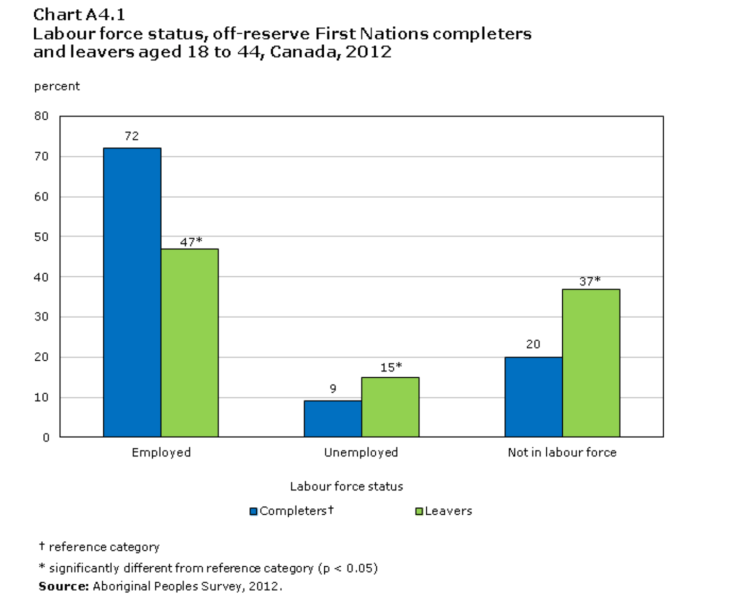
- A higher share of completers than leavers were employed at the time of the 2012 APS: 72% versus 47% for off-reserve First Nations people; 71% versus 44% for Inuit; and 80% versus 61% for Métis.
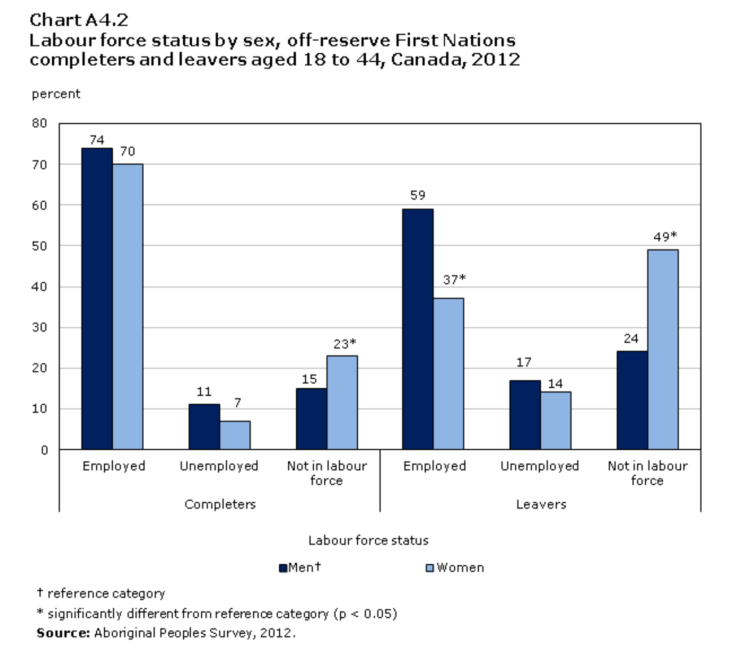
- Among completers, the percentages of men and women who were employed did not differ. This was also true for Inuit leavers. However, off-reserve First Nations and Métis male leavers were more likely than female leavers to have a job.
- For First Nations people living off reserve and Métis, the median employment income range for completers was $10,000 higher than that for leavers; for Inuit completers, the median income range was $20,000 higher.
- A shortage of jobs, a lack of education or training, and work inexperience were commonly reported as reasons for not being able to find work by unemployed off-reserve First Nations people, Inuit, and Métis aged 18 to 44. Other reasons included “no transportation available” for First Nations people living off reserve; “not knowing where to look for work” for Inuit; and “not knowing what type of work they wanted” for Métis.
Chosen excerpts by Job Market Monitor. Read the whole story at




 Job Market Monitor
Discussion
No comments yet.