The situation of high unemployment for black men is not new. It has persisted for decades, and scholars, sociologists, economists, policy makers, and advocates have brought attention to various aspects of this challenge and put forth solutions. Yet, it is seemingly an intractable situation. In 2012, three years after the end of the recession, the black male unemployment rate was in the double digits for every age category up to age 65. This was not the case for any other racial group. In 2010, half of working black men were employed in the two occupational clusters with the lowest average earnings. The situation was the same in 2000, and in 1990. In addition to being disproportionately represented in low-wage occupations, black men are much more likely than white men to be working part-time and to experience longer durations of unemployment.
In 2012 only 15 percent of black male teens and 49 percent of those 20 to 24 were working – far less than their white male counter-parts. These young men represent a tremendous pool of potential talent that deserves the opportunity to rise to greater heights in the labor market and overcome the barriers that constrained the progress of past generations. Reaching those heights – access to high wage jobs, skilled careers, and upward mobility – in today’s labor market and in the future will require academic and occupational credentials far beyond just high school completion. The education and employment statistics presented in the body of this paper suggest that there is still much peril for these young men as they attempt to navigate the labor market.
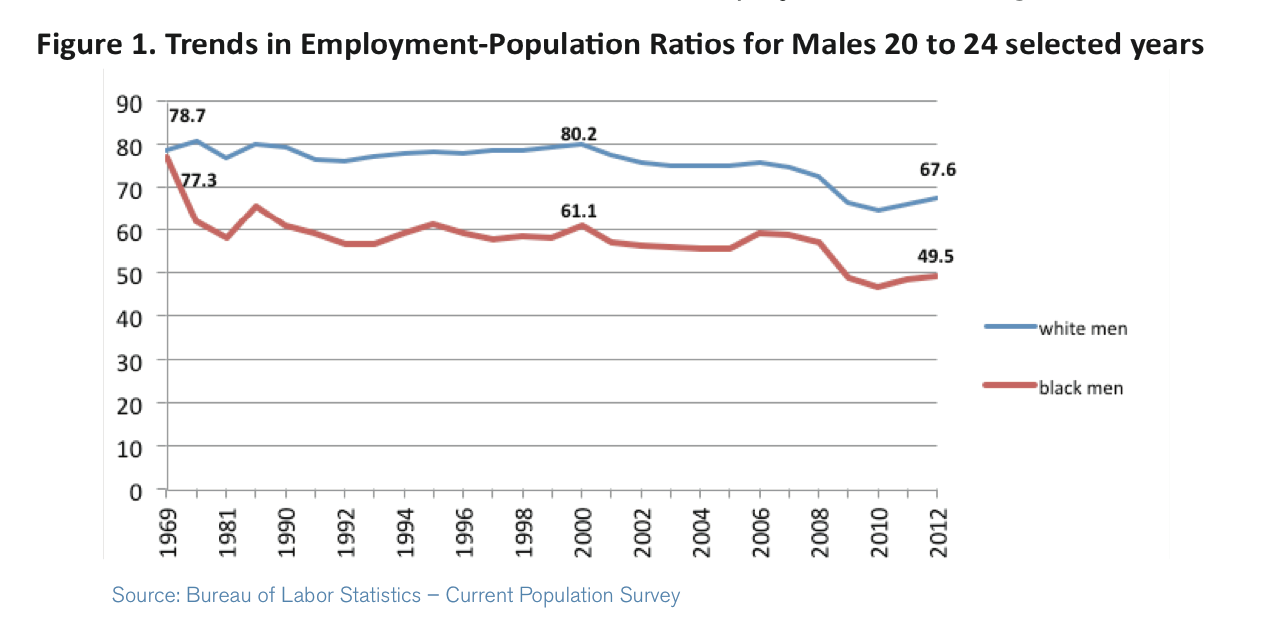
Employment for young black males aged 16 to 24 has been steadily declining since the 1970s. Looking back over the past 40 years, young black male employment has lagged substantially behind the rates for young white males and the national average. Official unemployment rates only include those who are actively looking for work. They don’t include those who have become discouraged and have stopped looking. Thus the more accurate indicator of employment status for this age group is the percent of those in an age category who are working — also referred to as the employment-population ratio.
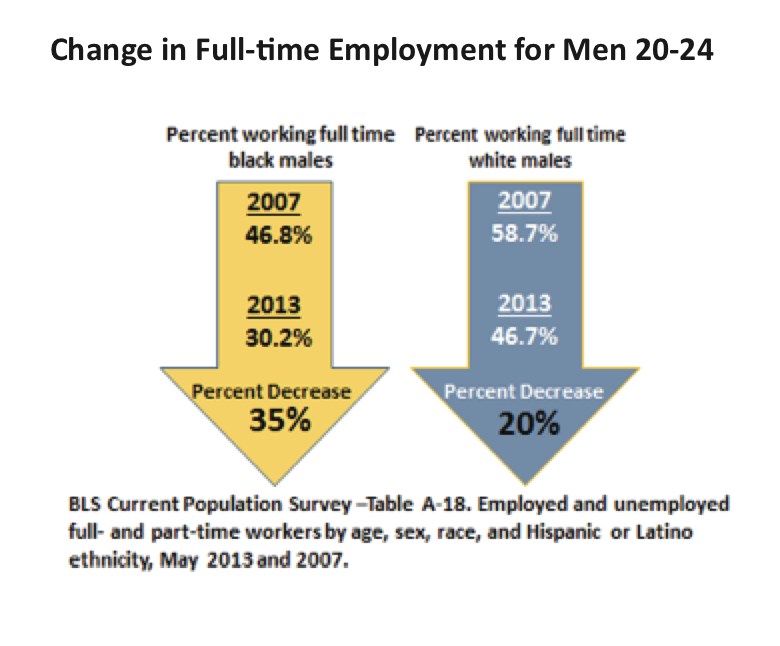
The “Great Recession,” from 2007 to 2009, further exacerbated the employ- ment situation for black men. While all groups suffered during the recession, black men – in particular young black men – experienced a much lower rate of employment during the recession and much slower growth in employment post-recession.

Chosen excerpts by Job Market Monitor. Read the whole story at

Via



 Job Market Monitor
I enjoy your internet site, I have shared it on facebook.
I hope that is alright.
Posted by Computer repair in new castle De | December 9, 2013, 11:42 pmThx
Posted by Michel Cournoyer | December 10, 2013, 9:36 am