Large investments of time and money are made by government, employers and workers in education and training. For the economy to thrive, the best use needs to be made of the skills produced. This report provides new evidence on whether employers in Britain are doing so and whether jobs are being upskilled.
- Qualification requirements of jobs have risen over the last quarter of a century. By 2012 jobs requiring degrees on entry reached an all time high, while jobs requiring no qualifications fell to historically low levels.

- Yet, overall the evidence for continued upskilling is mixed, because there has also been a shortening of training and learning times for jobs – a reversal of trends previously recorded. The importance of computing skills at work continued to grow, albeit less rapidly than in the past, but the rise in most other generic skills came to a halt.
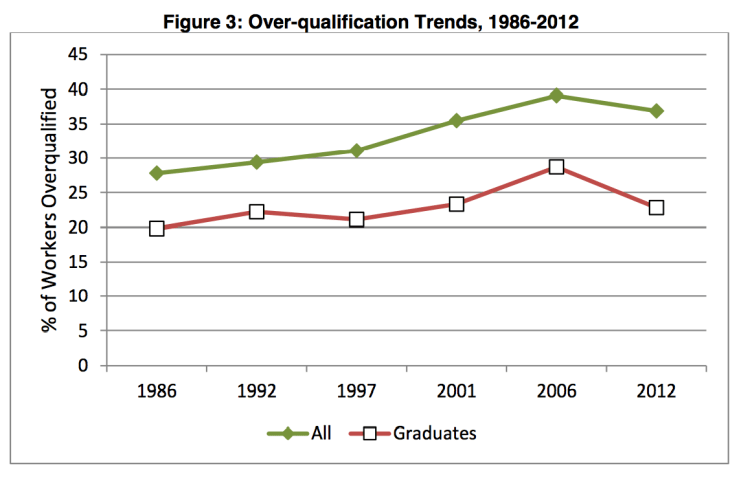
- For the two decades from 1986 to 2006 the prevalence of over-qualification had been rising, but it fell between 2006 and 2012. Although mismatches remain quite high, this turnaround may signal more effective use of qualifications at work by employers.
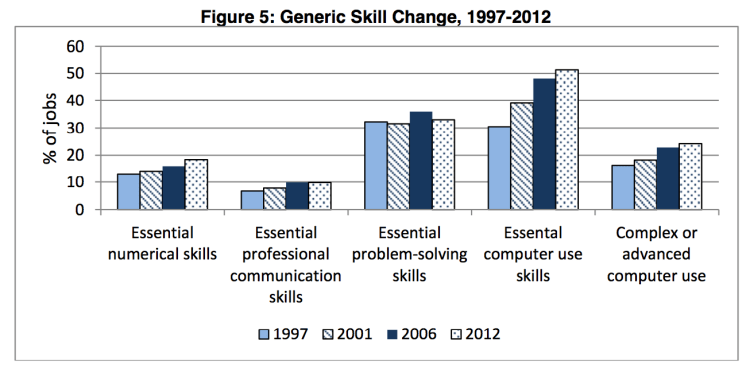
- The use of generic skills was on the rise between 1997 and 2006, but has barely changed since 2006. Among ten generic skills, the changes have been modest, with just two moving significantly upwards and one downwards.
 Read the whole story at




 Job Market Monitor
Reblogged this on ergo res sunt and commented:
O que vai acontecer à mão-de-obra pouco qualificada?
Posted by João de Sousa | July 3, 2013, 8:40 amReblogged this on Energy.
Posted by emilyjames121 | July 3, 2013, 9:16 am