In the fifth year after the outbreak of the global financial crisis, global growth has decelerated and unemployment has started to increase again, leaving an accumulated total of some 197 mil- lion people without a job in 2012. Moreover, some 39 million people have dropped out of the labour market as job prospects proved unattainable, opening a 67 million global jobs gap since 2007. Despite a moderate pick-up in output growth expected for 2013–14, the unemployment rate is set to increase again and the number of unemployed worldwide is projected to rise by 5.1 million in 2013, to more than 202 million in 2013 and by another 3 million in 2014. A quarter of the increase of 4 million in global unemployment in 2012 has been in the advanced economies, while three quarters has been in other regions, with marked effects in East Asia, South Asia and Sub-Saharan Africa. Those regions that have managed to prevent a further increase in unemployment often have experienced a worsening in job quality, as vulnerable employment and the number of workers living below or very near the poverty line increased.

The continuing nature of the crisis has worsened labour market mismatches, intensifying downside labour market risks
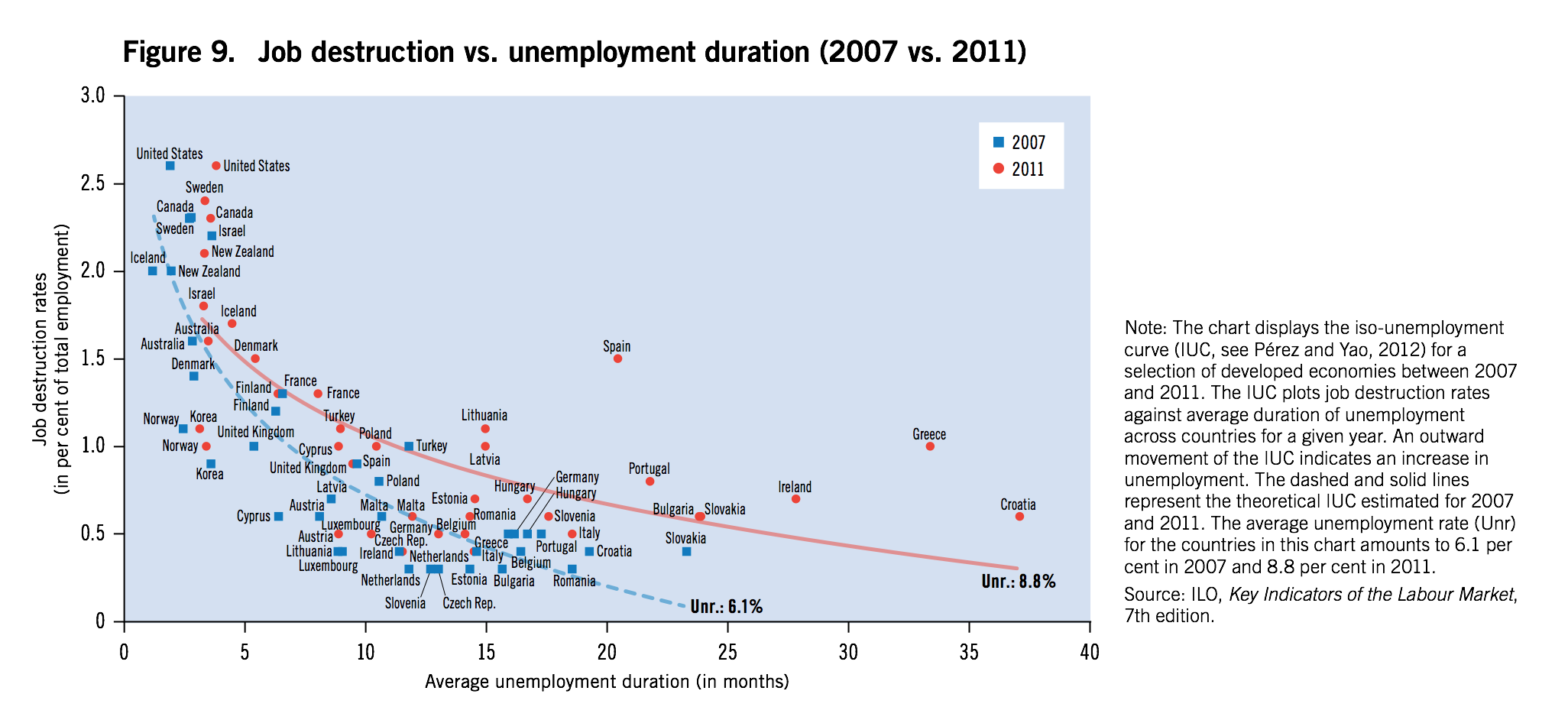
The length and depth of the labour market crisis is worsening labour market mismatch, con- tributing to extended spells of unemployment. As the crisis spreads through international trade, occupations concentrated in exporting industries are particularly vulnerable and in several countries their importance in total employment has declined by significant margins. New jobs that become available often require competences that the unemployed do not pos- sess. Such skill and occupational mismatches will make the labour market react more slowly to any acceleration in activity over the medium run, unless supporting policies to re-skill and activate current jobseekers are enhanced.
The jobs crisis pushes more and more women and men out of the labour market
Labour force participation has fallen dramatically, in particular in advanced economies, masking the true extent of the jobs crisis. The problem is particularly severe in the developed economies and the EU region where the labour force participation rate declined by close to one percentage point and is expected to recede further as long-term unemployment and a weak economic outlook discourages people from staying in the labour market. As a consequence, the employ- ment-to-population ratio has fallen sharply – in some cases 4 percentage points or more – and has not yet recovered even in cases where the unemployment rate has started to decline.

Youth remain particularly affected by the crisis
Young people remain particularly stricken by the crisis. Currently, some 73.8 million young people are unemployed globally and the slowdown in economic activity is likely to push another half million into unemployment by 2014. The youth unemployment rate – which had already increased to 12.6 per cent in 2012 – is expected to increase to 12.9 per cent by 2017. The crisis has dramatically diminished the labour market prospects for young people, as many experience long-term unemployment right from the start of their labour market entry, a situation that was never observed during earlier cyclical downturns.
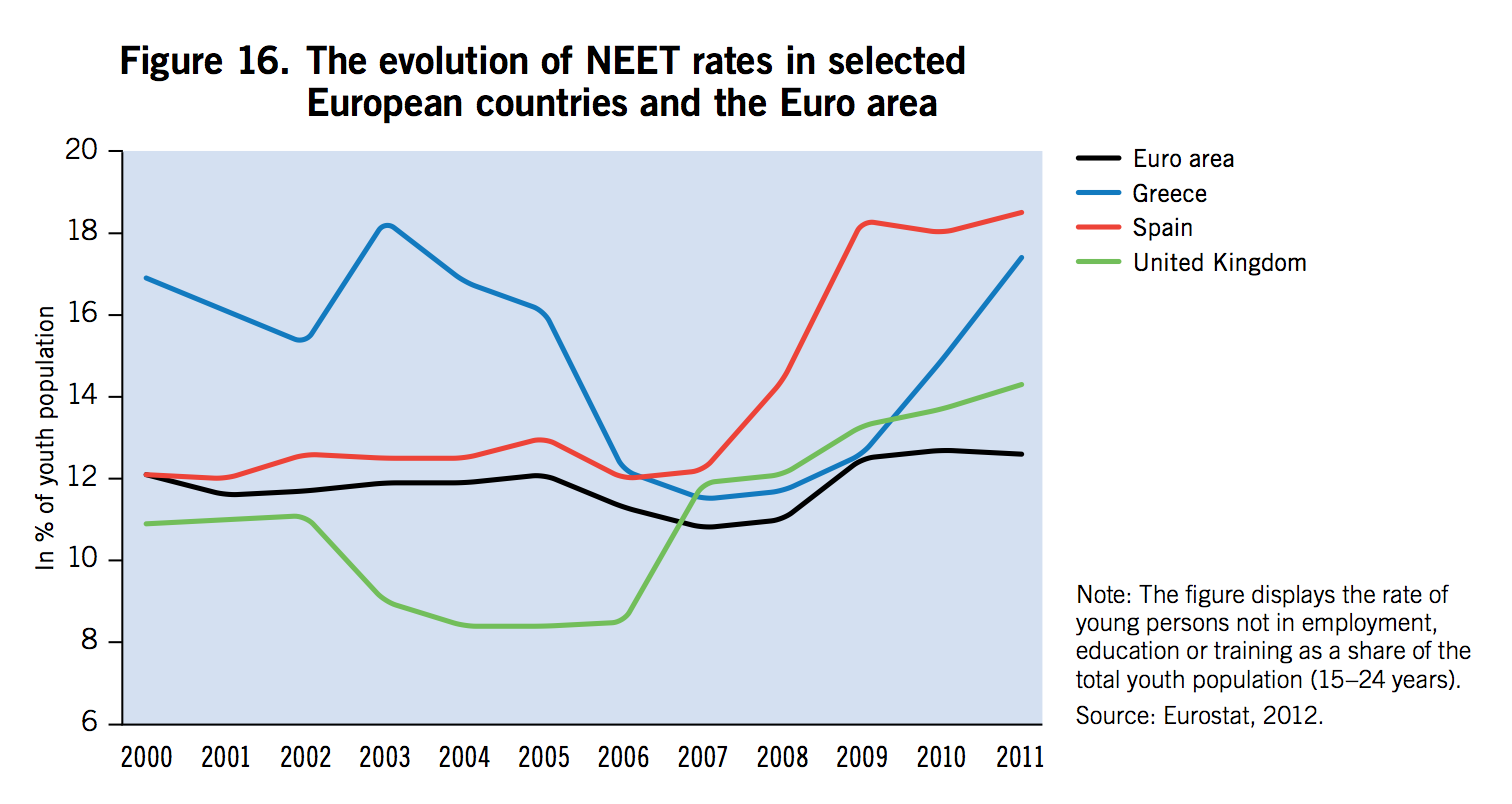
Currently, some 35 per cent of all young unemployed have been out of a job for six months or longer in advanced economies, up from 28.5 per cent in 2007. As a consequence, an increasing number of young people have become discouraged and have left the labour market. Among European countries where this problem is particularly severe, some 12.7 per cent of all young people are currently neither employed nor in education or training, a rate that is almost two percentage points higher than prior to the crisis. Such long spells of unemployment and discouragement early on in a person’s career also damage long-term prospects, as professional and social skills erode and valuable on-the-job experience is not built up.
Chosen excerpts by Job Market Monitor

via Global Employment Trends 2013: Recovering from a second jobs dip.



 Job Market Monitor
Discussion
Trackbacks/Pingbacks
Pingback: Global unemployment hit 200mn last year says ILO, and it will worsen | Job Market Monitor - June 3, 2014