Before the Covid-19 pandemic, less than a fifth of Americans worked remotely. Even in seemingly remotable tasks like call-center work, remote work was uncom- mon. This rarity was surprising since most workers were willing to take pay cuts to work at home (Mas and Pallais, 2017), and working remotely seemed to boost productivity in call-centers (Bloom et al., 2015).3 It would seem that call-center firms could pay remote workers less to do more. So, were call-center firms making mistakes that the pandemic could correct? Or were there other pieces to the puzzle of remote work’s rarity in remotable jobs?
We analyze remote work’s impacts in the American call-centers of a Fortune 500 firm, which hired both remote workers (N=344) and on-site workers (N=1,592) before Covid-19. Pre-pandemic, managers expressed reservations about remote workers’ productivity. This intuition was borne out in the data: remote workers answered 12 percent fewer calls per hour than on-site workers, despite handling calls randomly routed from the same queue.
The source of the lower productivity, however, remained unclear. It’s possible that in our setting remote work reduces productivity, and any worker would be less productive at home. Workers may struggle with low motivation and self-control problems out of the office, particularly under relatively modest incentive pay.
Yet it’s also possible that less productive workers choose remote jobs. Indeed,even in the Chinese call-center where remote work boosted productivity, remote work unraveled (Bloom et al., 2015). Working at home halved workers’ promotion chances so came to be seen as something only unproductive workers would choose. The firm subsequently discontinued remote work. Concerns about remote work’s promotion consequences are widespread (Barrero et al., 2022) and may influence who chooses remote jobs. Thus, adverse selection could trap firms in a prisoner’s dilemma: all firms might be better off offering remote work, but any individual firm might not do so out of fear of attracting less productive workers.
We use the office closures brought on by Covid-19 to help differentiate between remote work’s impacts on worker productivity and worker selection in our Amer- ican call-center context. If remote work reduces productivity, then transitioning to remote work will cause formerly on-site workers to be less productive, thereby narrowing the initial gap in productivity. If, however, less productive workers choose remote jobs, then the gap in productivity will persist (or potentially grow) once everyone is remote.
Empirically, we find that the productivity gap narrowed but did not disappear in the months following the office closures. When the offices closed, the hourly calls of formerly on-site workers fell by 4 percent relative to that of already remote workers (p-value = 0.017) off of a base of 3.8 calls per hour.7 Yet even when ev- eryone was remote, workers who had originally chosen to be remote continued to be 8 percent less productive than those who had originally chosen to be on-site (p- value = 0.0002). Together, these results indicate a third of the initial productivity gap was due to the negative treatment effect of remote work, with the remaining two thirds due to the negative selection into remote work.
We probe our parallel-trends assumption that remote and on-site hires were sim- ilarly affected by the shocks of the pandemic. Our results are robust to allowing for differential effects of the pandemic based on workers’ demographics, parental responsibilities, and local geographic characteristics. In a placebo check, we find no similar differential changes in productivity around placebo periods, including the previous holiday rush, which saw similar fluctuations in consumer demand as those during the onset of the pandemic. In a complementary design, we find similar productivity declines around voluntary transitions from on-site to remote work before the pandemic.
Remote work not only reduces the quantity but also the quality of calls. In sur- veys we conducted, workers mentioned that working remotely made it harder to quickly consult with coworkers. This difficulty was reflected in an 11 percent in- crease in customer hold-times for workers who transitioned from on-site to remote work during the office closures, compared to those who were already remote (p- value = 0.028). Remote work also increased customer call-back rates by 3 percent, suggesting that workers were less likely to fully answer customers’ initial ques- tions when remote (p-value = 0.045). The negative effects are driven by less expe- rienced workers, who might either wait longer for advice from more experienced colleagues when remote or forgo this advice and answer queries less completely. However, we do not find effects of remote work on customer satisfaction scores, suggesting that the degradation in call quality is meaningful but limited.
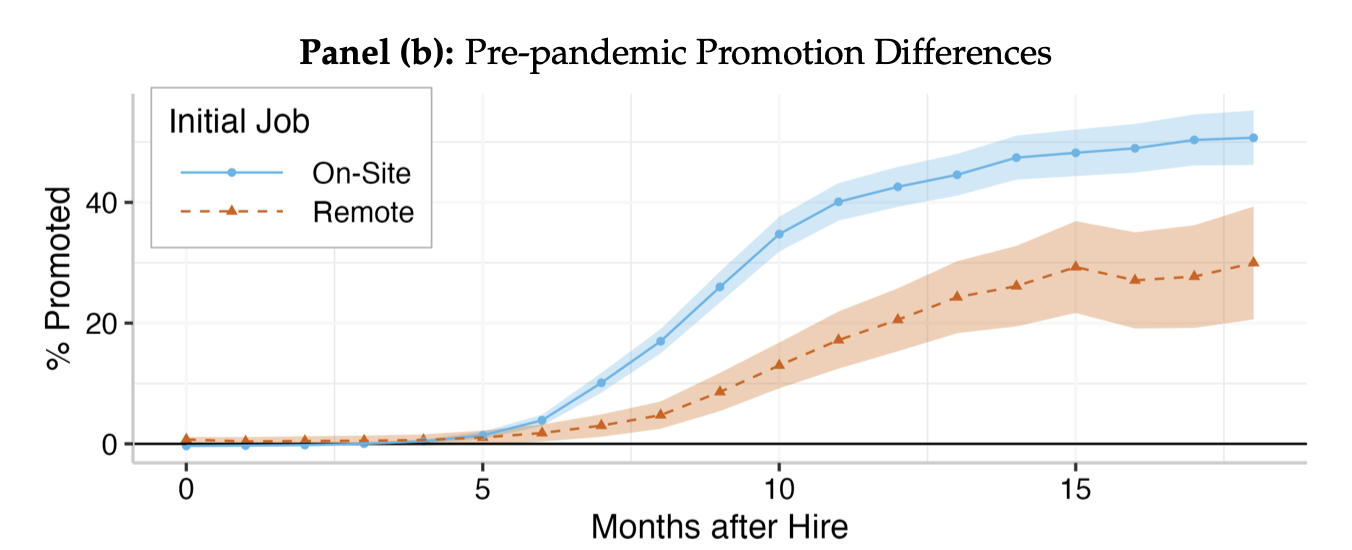
We find that remote work negatively impacts workers’ career trajectories. Remote work reduces the frequency of one-on-one meetings with managers and training sessions devoted to developing workers’ skills. These negative effects may have contributed to remote workers’ lower promotion rates pre-pandemic. Before the offices closed, remote workers were promoted at less than half the rate of their on- site peers; once the offices closed, this difference in promotion rates disappeared.
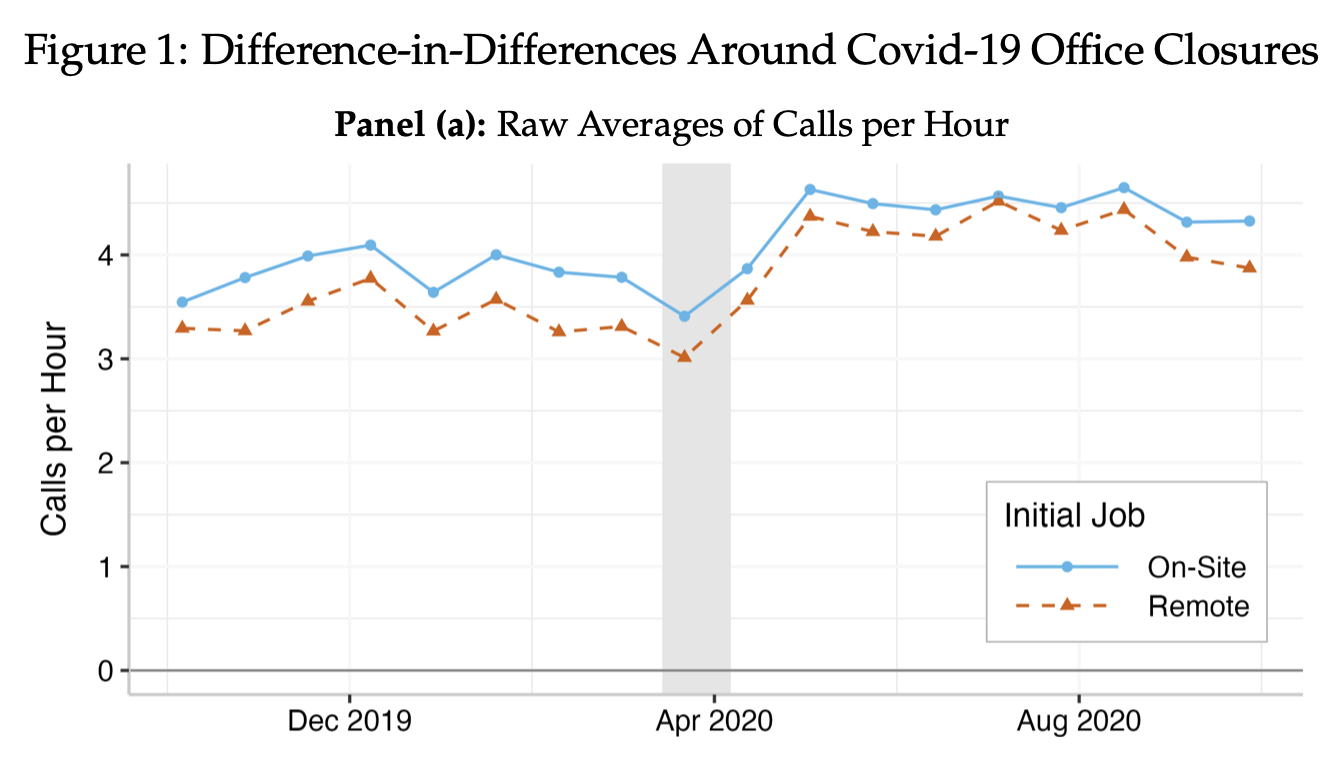
Figure 2: Effect of Remote Work on Workers’ Careers
Chosen excerpts by Job Market Monitor. Read the whole story @ Working Remotely? Selection, Treatment, and the Market for Remote Work – FEDERAL RESERVE BANK of NEW YORK



 Job Market Monitor
Discussion
No comments yet.