Stabilizing immigration will take some steam out of demand
The federal government is taking steps to reduce immigration, but the measures will not shrink housing demand.
In November, it announced keeping the permanent immigration target in 2026 unchanged from 500,000 in 2025. This will still be up from the 2024 target level of 485,000. In January, the government further said it would cap the issuance of study permits for international students for two years starting in September 2024. And in March, it indicated it would reduce the proportion of temporary workers in Canada from 6.6% to 5% by 2027—which is a 20% decrease in the non-permanent resident population.
These measures will curb Canada’s record population growth in the years ahead, but average growth between now and 2030 will still be faster than in any of the 25 years before 2018.
Under our base-case projection, population growth would ease from a six-decade high of 3% in 2023 to about 1.3% by 2030. This would add 3.6 million more Canadians by 2030 (from 2023 levels), with much of the increase coming from new permanent residents. We estimate this would lead to the formation of 1.9 million new households over that period or an average of just over 275,000 per year. That’s a more than 15% increase from the 2016-2022 average. Demographic pressures on housing demand may come off the boil, but it won’t entirely subside anytime soon.
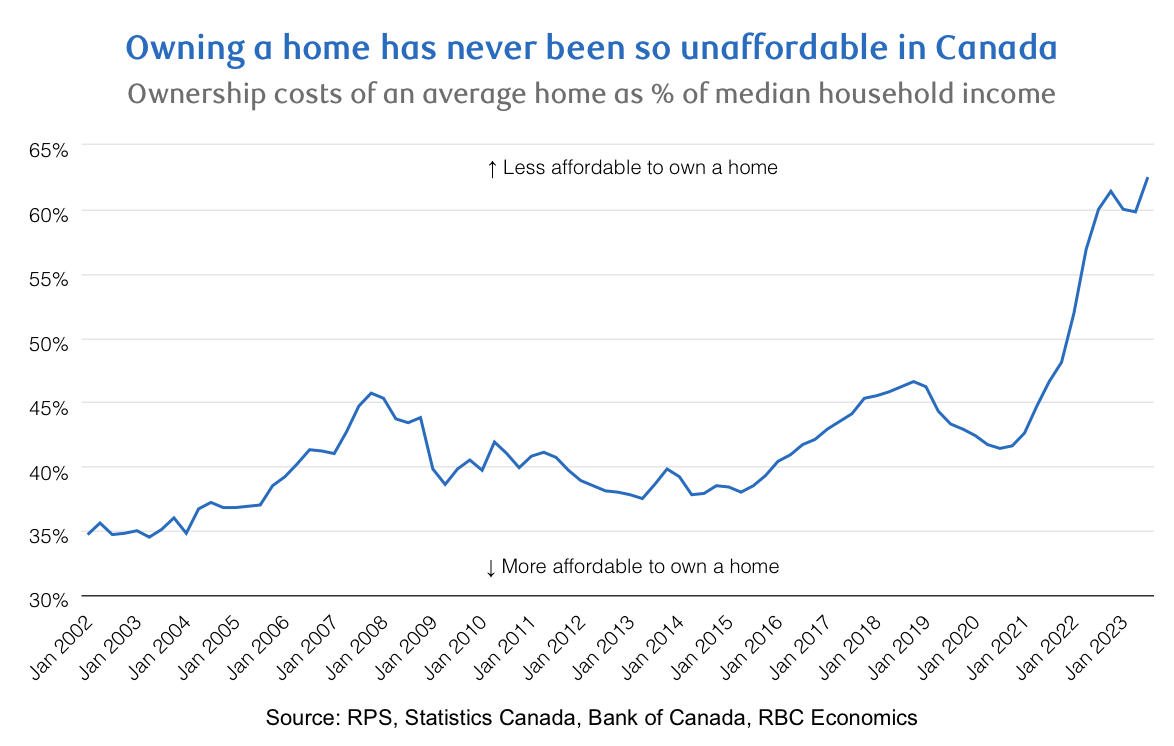
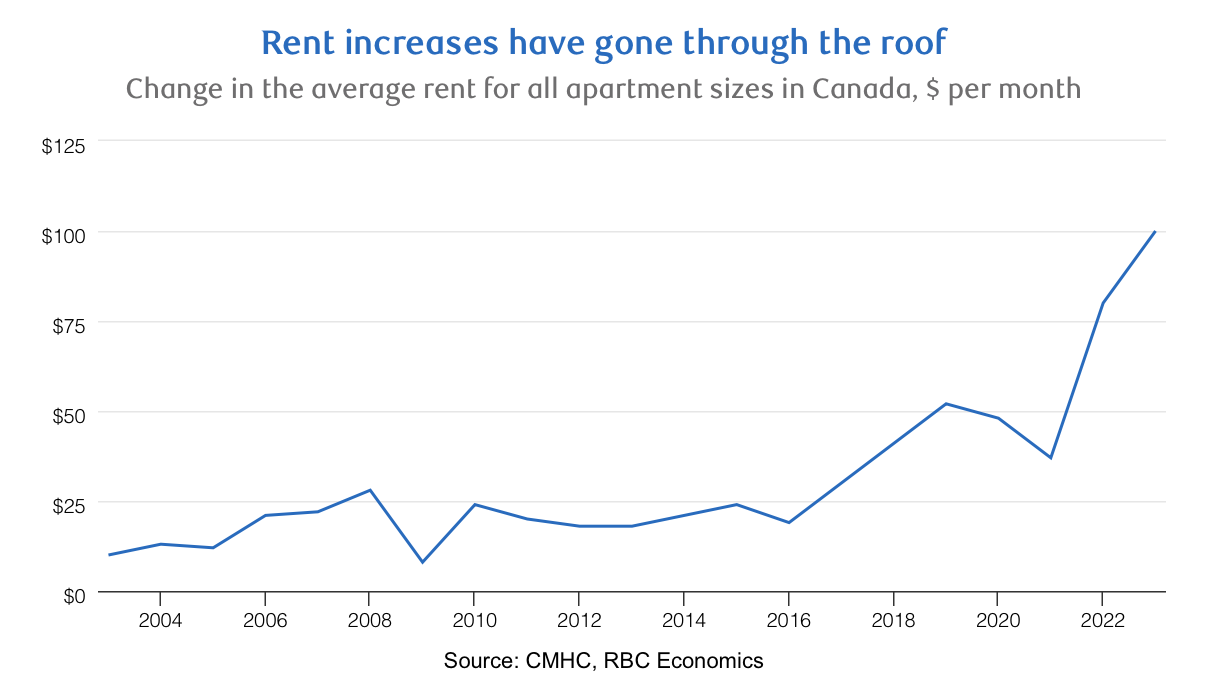
Cutting immigration more aggressively would also not instantly restore affordability. It would slow down the growth in housing demand, not shrink it. It would ease upward pressure on home prices and rent only as long as the increase in demand undershoots the expansion of the housing stock—reducing the supply gap.
However, the downside of significantly cutting immigration would be considerable for Canada’s economy over the long run. The population is aging rapidly with at least 500,000 baby boomers reaching retirement age each year until the end of this decade. Our economic growth potential would be hampered if their departure from the labour force isn’t replaced by newcomers.
A tall order for homebuilders
The pace of housing construction would need to jump by nearly half in Canada just to meet future demographic growth.
If building new housing were only relied upon to meet future demand, housing completions would have to rise from an average of 218,000 in the past three years to about 320,000 annually over the 2023-2030 period (accounting for a normal rate of attrition in the existing stock). Higher deliveries would need to happen in the near term given our expectation for peak population growth in 2023-2024.
However, the construction industry has a capacity issue. The level of housing production needed is far above anything ever achieved in Canada. The all-time peak for completions was 257,000 in 1974. The 47% increase needed from recent levels would seriously conflict with production capacity limits. Much of it has to do with labour constraints. Builders already struggle to attract and retain workers. The job vacancy rate in the construction sector (5.1% in Q3 2023) is among the highest across Canadian industries. This could be difficult to resolve over the longer term.
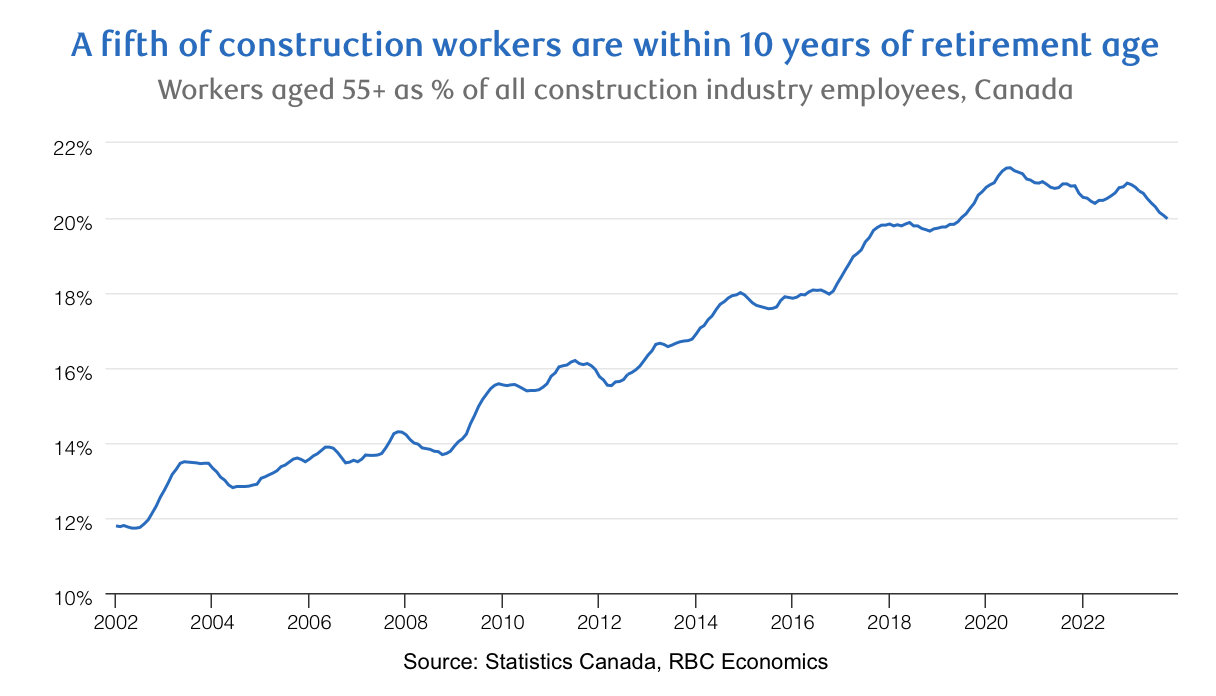
The sector’s aging workforce risks perpetuating the labour shortage. One in five construction workers are at or will reach retirement age within the next 10 years. This represents 330,000 workers to replace if they do retire, making it that much harder to expand the sector’s production capacity.



 Job Market Monitor
Discussion
No comments yet.