his handbook on lll is an attempt to capture the holistic, all-encom- passing vision of lll and recast it as practical guidance for education stakeholders. rather than providing an exhaustive account of lll in all its forms, the purpose of this publication is to articulate what lll is so that it may be understood, recognized, promoted and applied in concrete terms, through national policy-making and the development of national imple- mentation strategies.
Chapter 1 of this handbook defined lll, presenting UneSCo’s under- standing of lll and its key dimensions. the case was then made for the promotion of lll, equipping the reader with a series of evidence-based arguments on how lll can ameliorate some of the large-scale and often drastic issues facing the world. Chapter 1 thus provided the starting point for a policy-maker, government official, institutional leader, facili- tator or researcher to advance lll as a policy response to immediate challenges and long-term deficiencies in learning systems.
for lll to move from being a concept or an ideal to a catalyst for trans- formations in people’s learning opportunities and experiences, it requires development at the policy level. Chapter 2 therefore defined lll policy and the policy-making process, as well as presenting several factors for the creation of effective lll policy. these factors show that, fundamen- tally, lll policy should be aligned with national and local contexts, feature a comprehensive vision for lll, establish governance arrangements, be financially viable, use evidence as a basis for monitoring and evaluation, and involve consultations for participatory lll policy-making.
Chapter 3 focused on the implementation of lll, addressing diverse forms of implementation through the prism of the national lll imple- mentation strategy. this chapter demonstrated how implementation strategies can accommodate and strengthen lll opportunities in formal education as well as through non-formal and informal learning. to create links between learning modalities, guidance was provided on flexible learning pathways and how to create them using surrounding policies such as national qualifications frameworks and measures for the recognition, validation and accreditation of learning outcomes. Subsequently, the chapter addressed the value of iCt for lll and the important role of multi-level governance in lll implementation.
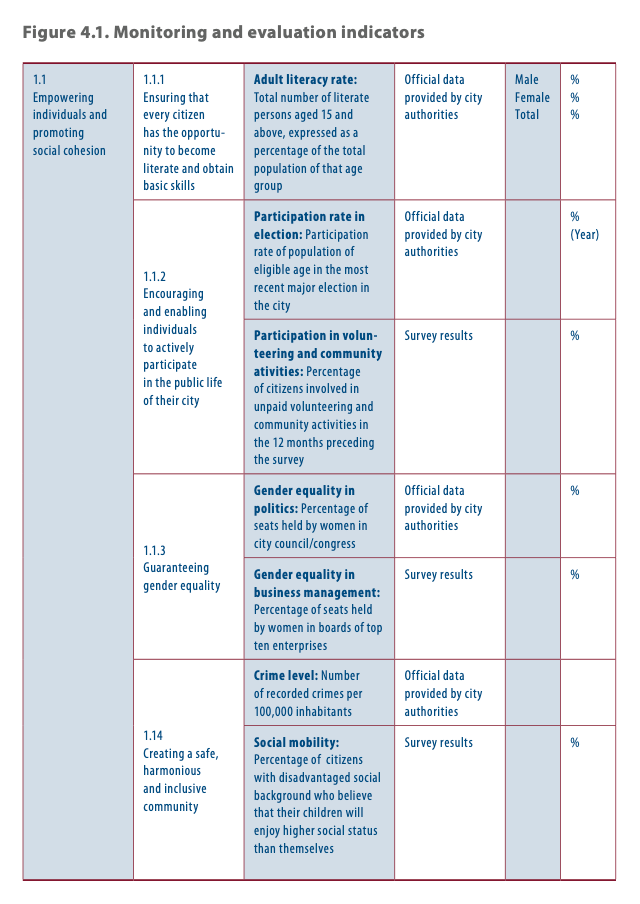
Chapter 4 then shifted to the local level, starting with an overview of lll in urban areas and placing the focus on the UneSCo gnlC learning city model. the City beta teaching case study demonstrated the lll policy- making process in concrete terms and revealed how considerations relevant to the design of lll implementation strategies can be applied to a specific lll policy.
Source: Making lifelong learning a reality: a handbook – UNESCO Bibliothèque Numérique



 Job Market Monitor
Discussion
Trackbacks/Pingbacks
Pingback: Qualifications Frameworks in 2022 – Global inventory of national and regional frameworks | Job Market Monitor - March 7, 2024