This morning we got (almost) the full set of labour market data up to the end of 2023. The release sheds light on a whole host of important policy issues, from how tight the labour market is to the scale of the rise in worklessness due to ill health. So, what have we found out?
The labour market has continued to cool
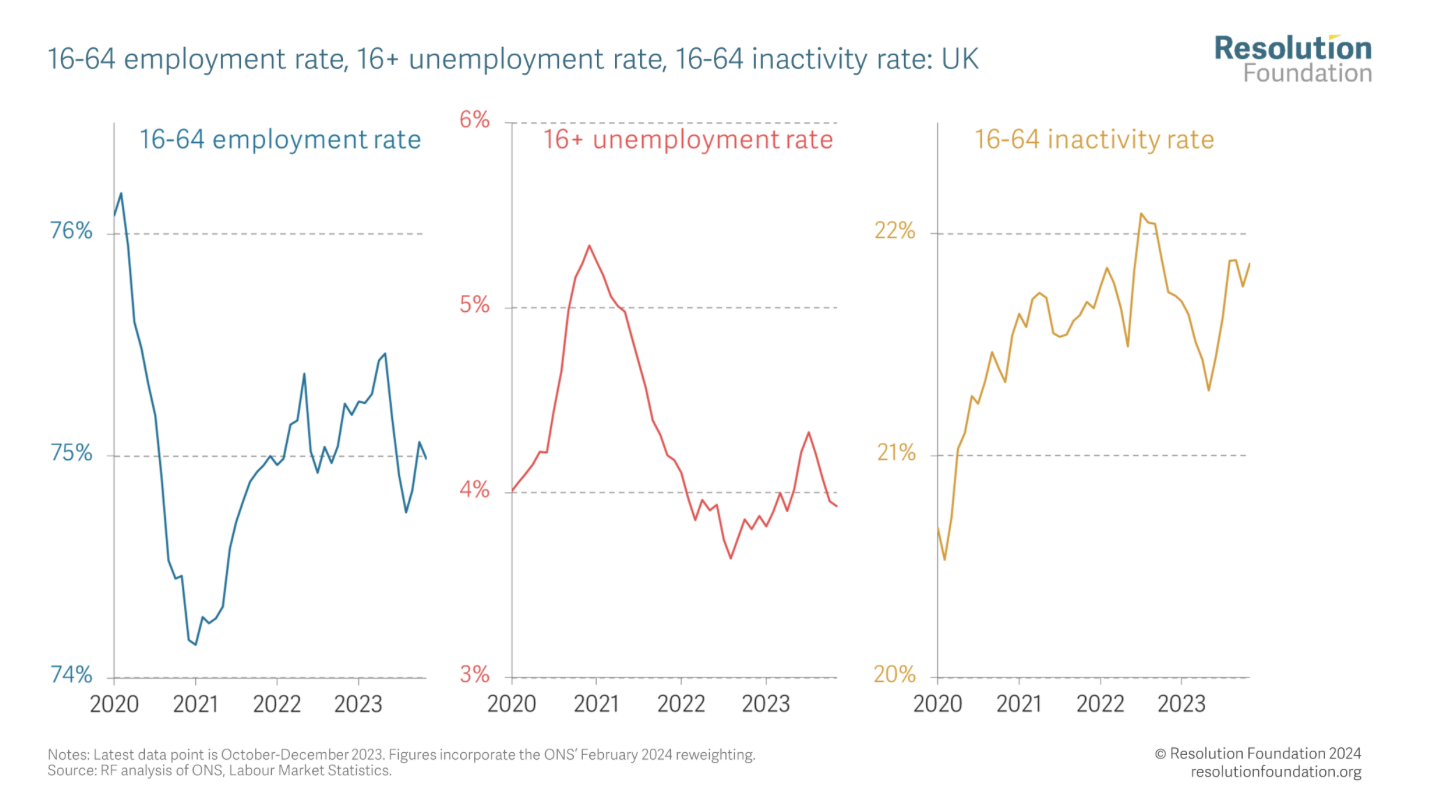
First, the data shows a familiar story on the headline trends: as with the past few months, the labour market has broadly continued to gradually cool, but without a sharp turning point.
We can see this most clearly in vacancies. The number of job openings has fallen for the 19thmonth in a row, having been going down since the summer of 2022, following a post-lockdown hiring boom. But it’s worth bearing in mind that the level of vacancies remains above pre-Covid-19 levels – and the fall in vacancies in the latest period was the smallest since May-July 2022.
The unemployment rate remains low, at just 3.8 per cent. But there is less good news on employment, which has flatlined at around 75 per cent, down from 76.2 per cent on the eve of the pandemic (when the employment rate was also trending upwards). So, unemployment is low, but employment is also low – and that reflects the fact that economic inactivity has continued to rise (more on that later in this blog).
Chosen excerpts by Job Market Monitor. Read the whole story @ A deep dive into the latest labour market statistics • Resolution Foundation



 Job Market Monitor
Discussion
No comments yet.