-
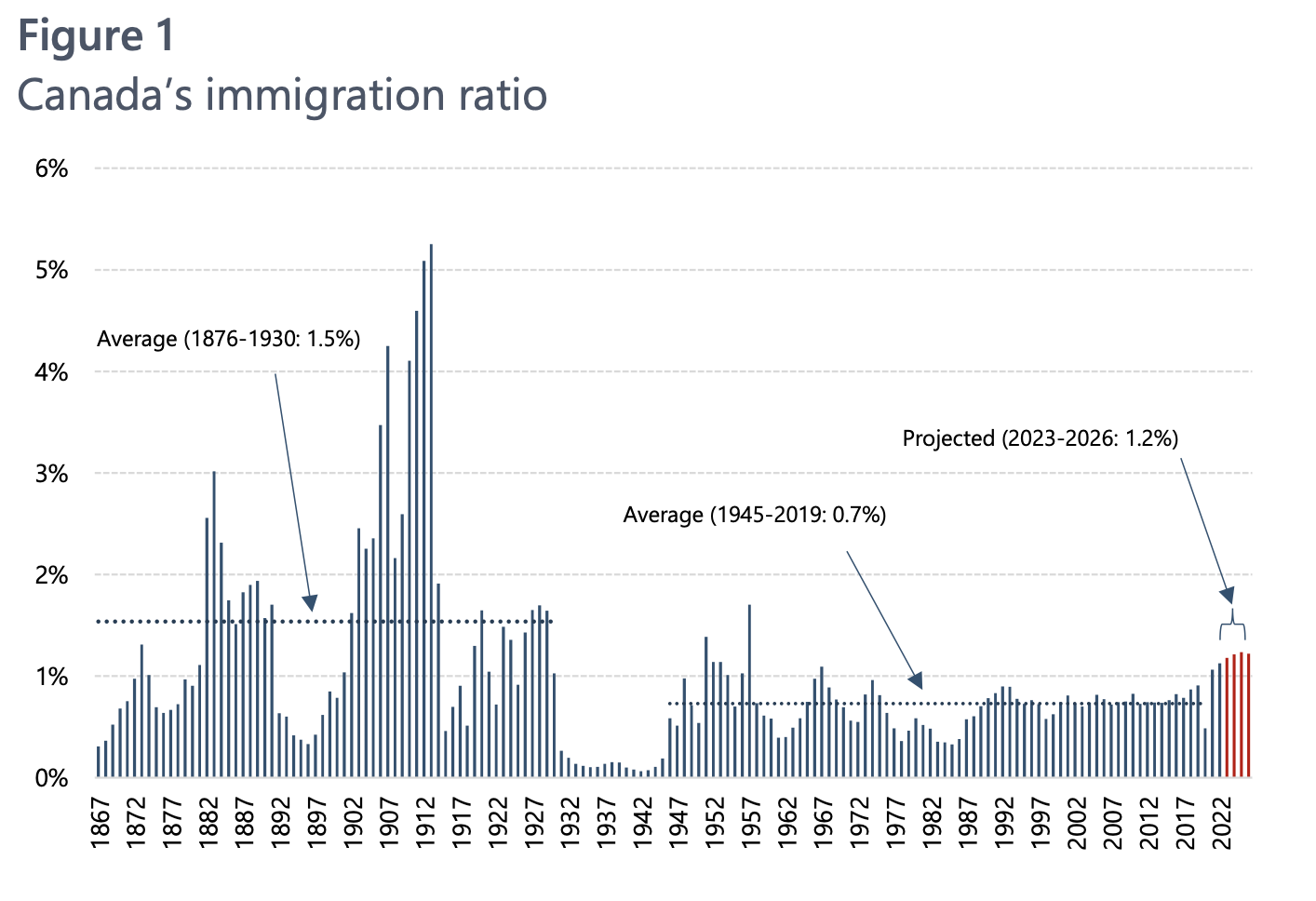
The federal government announced substantial increases in its planned immigration targets: reaching 500 thousand people for the years 2025 and 2026. In this report, we look at some recent evolution of median total incomes of new immigrants so as to inform expectations regarding that policy change.
-
From 2014 to 2018 the median total income of new-immigrant tax-filers rose from 55 per cent of the median total income of all tax-filers, to 78 per cent.
-
Trends driving that change include greater pre-landing Canadian work experience, a shift of source-countries to south Asia, and greater family connections of incoming migrants. These trends are discernible from the mid-2000s.
-
Immigrants from India made the largest contribution to that gain.
-
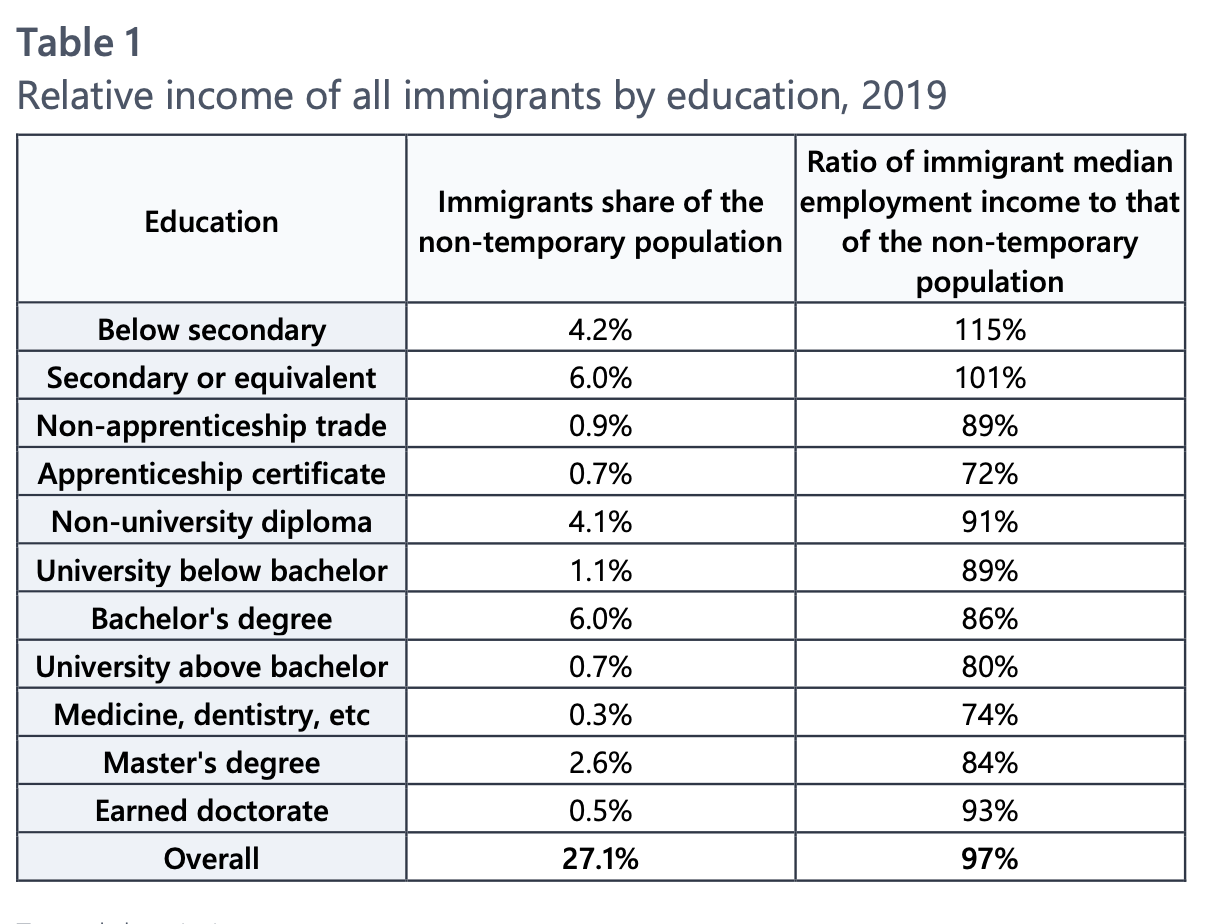
The increase in relative income is dominated by professional groups such as engineers, applied scientists, etc.
-
A disproportionate share of the reduced income gap between new immigrants and all tax filers (45% in 2014, versus 22% in 2018) is attributable to those living in Ontario.
-
Lower relative incomes of new immigrants could create a temporary drag on Canadian measured productivity growth through a compositional effect. Though that effect would be removed as the cohort of new immigrants integrate into the labour force, the arrival of new immigrants each year would re-initiate the impact. The recent smaller gaps between the incomes of new immigrants and the Canadian median could reduce that compositional effect on measured productivity. At the outer bound, productivity growth in Canada could be increased by as much as 0.21 percentage points if the gap were eliminated.
Chosen excerpts by Job Market Monitor. Read the whole story @ Income dynamics of new immigrants to Canada



 Job Market Monitor
Discussion
No comments yet.