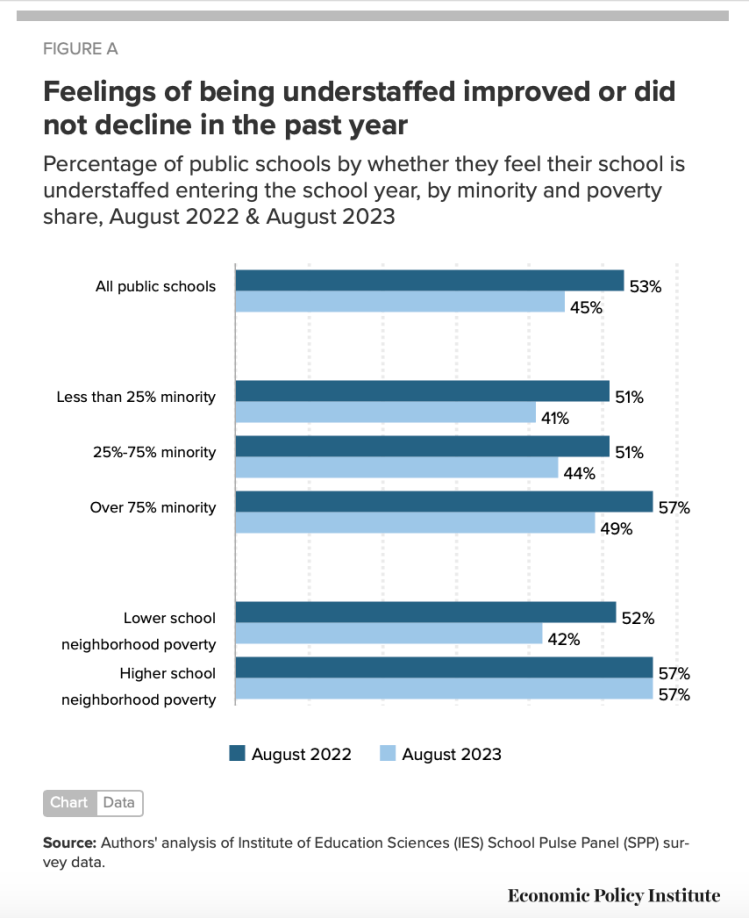
The COVID-19 pandemic greatly exacerbated a long-standing and widespread teacher shortage in schools. By mid-2022, several indicators of teaching shortages and staffing stress were at record highs. Recent data from the School Pulse Panel (SPP) show that understaffing stress in schools has relented somewhat in the past year, though progress remains modest and uneven. The SPP also indicates that funding from the American Rescue Plan (ARP) has helped close some of these staffing gaps and address pressing needs in the nation’s schools.
While schools have been struggling to fill vacancies long before the pandemic due to chronic low pay and compensation, the stress of teaching during the pandemic made the teacher shortage even worse. A RAND 2022 report showed that 73% of teachers reported having “frequent job-related stress” compared with 35% of working adults, which can contribute to otherwise qualified potential teachers taking positions in other fields. This degradation of non-wage-related working conditions means that schools need to pay teachers more to retain them and adequately staff schools, yet this salary increase has not happened. In 2022, the teacher pay penalty—the gap in pay between teachers and similarly educated workers in other professions—hit a new high of 26.4%.
Key findings:
- New School Pulse Panel data show that educators’ feelings of being understaffed fell by eight percentage points in the past year, suggesting an improvement from pandemic heights of understaffing stress amid a widespread teacher shortage.
- Some improvement in feelings of being understaffed may be linked to American Rescue Plan (ARP) funds. SPP data show that 37% of public schools created positions with ARP funds.
Of these schools, 15% created positions for academic interventionists, 14% for mental health professionals, and 6% for academic tutors. - But disparities filling teaching vacancies remain: While difficulty filling vacancies declined in majority white schools and in schools in higher-income neighborhoods, it increased in schools in lower-income neighborhoods and in schools with greater than 75% minority students.
Chosen excerpts by Job Market Monitor. Read the whole story @ The teacher shortage shows small signs of improvement, but it remains widespread | Economic Policy Institute



 Job Market Monitor
Discussion
Trackbacks/Pingbacks
Pingback: K-12 Teachers in US – A significant decline in key elements of educators’ engagement | Job Market Monitor - March 7, 2024
Pingback: Teacher in US – Low job satisfaction and few are optimistic about the future | Job Market Monitor - April 15, 2024