This is the third report in CEDA’s series on the workforce challenge facing Australia’s aged-care sector. Workforce challenges across the aged-care sector are now preventing many providers from operating at full capacity. Those in regional and remote areas are the most affected. The 2023 report outlines the causes and flow-on effects of the worker shortage, in particular low wages, a lack of affordable housing and the impact on the healthcare system.
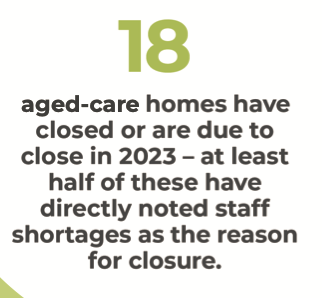
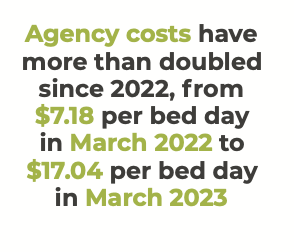
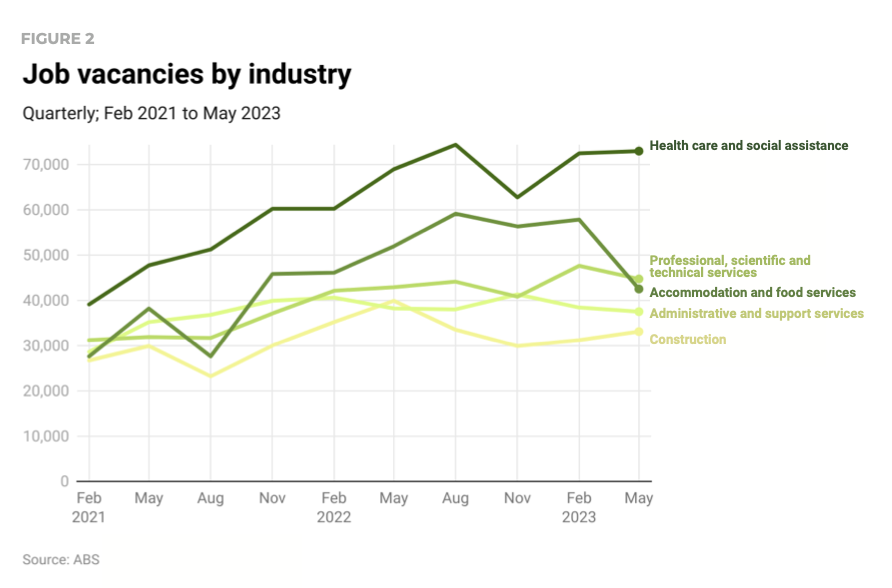
Key findings include: (1) In March 2023 the average occupancy rate across all residential aged care places was 86 per cent; (2) Regional areas are the most affected, with some residential facilities operating at a capacity of just 50 per cent; (3) At least 18 aged care homes have closed or are due to close in 2023 – at least half of which have directly noted staff shortages as the reason for closing; (4) Job vacancies in health care and social services remain the highest of any industry – showing the widespread demand for workers; (5) The lack of capacity in aged care facilities is adding pressure to hospitals – for example, in New South Wales from December 2021 to June 2022 the number of regional patients awaiting discharge to an aged-care facility nearly tripled; (6) Industry data shows that agency costs per bed day have more than doubled since 2022 – to $17.04 per bed day in March 2023 from $7.18 per bed day in March 2022; and (7) Data from the Department of Health and Aged care shows that 53 per cent of all aged care facilities are operating at a loss.
To meet the aged-care challenge we must take steps to boost the workforce in the short term, while continuing to improve longer-term workforce outcomes. The following measures should be prioritised: (1) Essential skills visa for personal-care workers – Recruit personal-care workers directly by introducing a new ‘essential skills visa’ to allow workers to migrate with long-term residency opportunities. This visa would only be for areas of critical need such as aged care, childcare, disability and healthcare; (2) User-pays system with income or asset thresholds – Introduce a user-pays system for aged-care clients who meet certain income or asset thresholds, to help ensure the long-term viability of the sector; and (3) Address nationwide housing shortages – Additionally, we must address the nationwide housing shortage to allow essential workers to live near their workplace. We must prioritise key worker housing in regional areas under the national Housing Accord and look at options for rental assistance such as the National Rental Affordability Scheme.
Source: CEDA – Duty of care: Aged-care sector running on empty



 Job Market Monitor
Discussion
No comments yet.