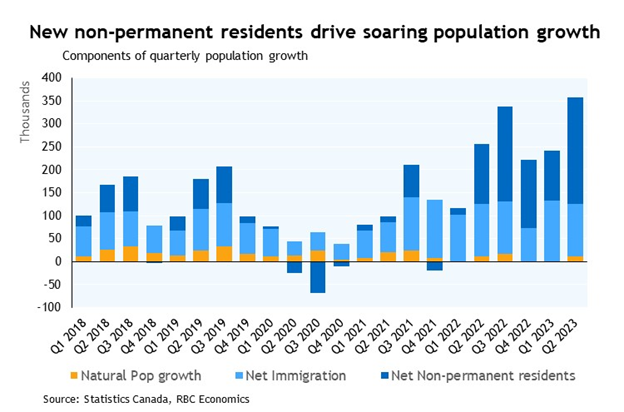
- Population growth at July 1st (3.0%) marked the highest rate recorded over a 12-month period since 1957. Net international migration accounted for nearly 98% of the growth.
- Over the past decade, Canada’s pace of population growth has eclipsed much of the world, exceeding India, China, Central and South America, the U.S., and Europe.
- If this pace of growth were to continue, Canada’s population would double within 25 years.
- The population rose +0.9% in Q2 from Q1, the strongest growth rate since the early 1970s. A surge in non-permanent residents (NPRs) accounted for nearly two-thirds of the growth, bringing annual growth in non-permanent residents (+46%) to at least a 50-year high.
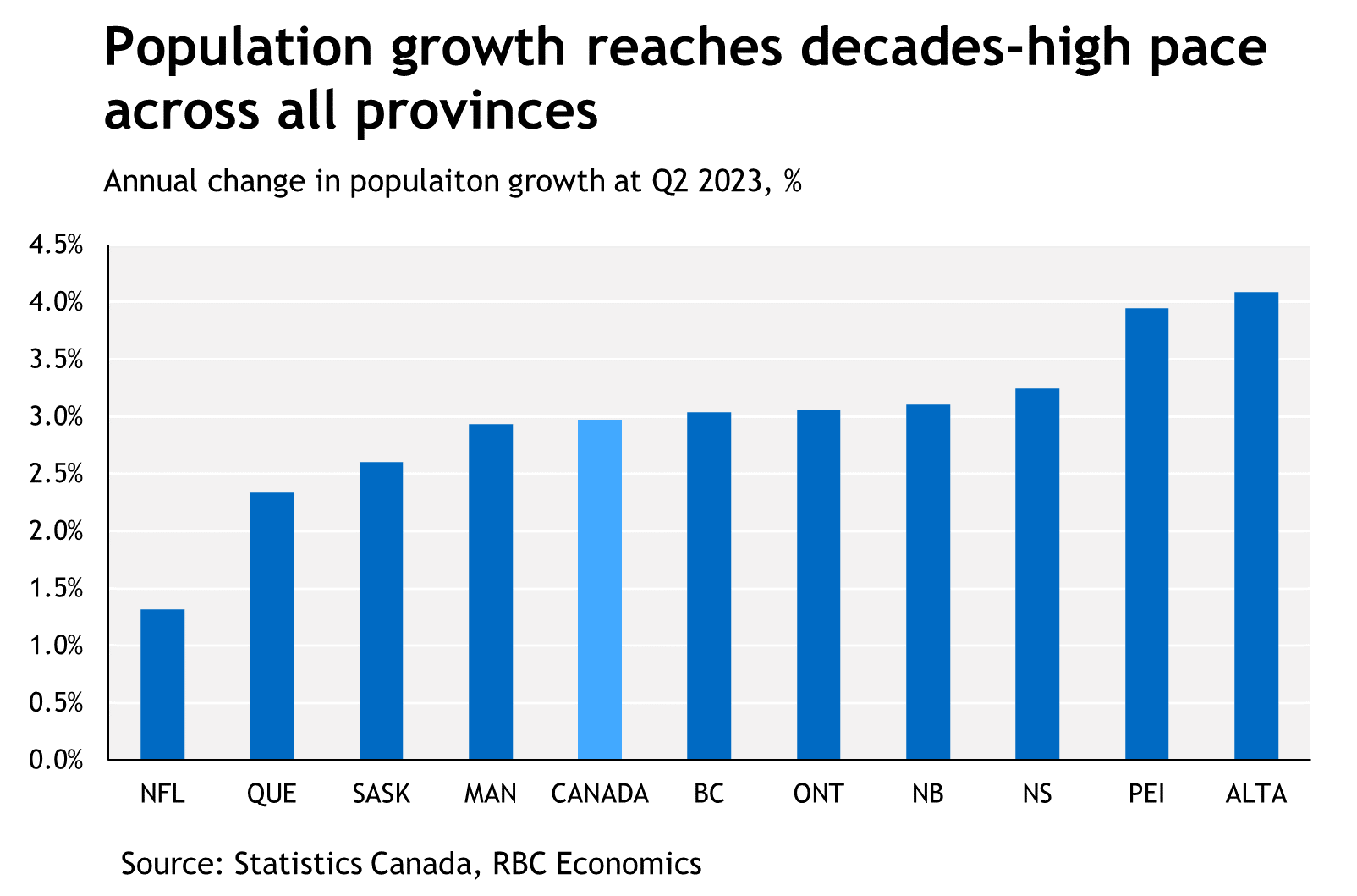
- Alberta now boasts the fastest rate of population growth in Canada at 4.1% year-over-year as of Q3. Similar to trends seen at the national level, population growth in the province was boosted by non-permanent residents – which more than doubled in the last 12 months. Alberta also recorded the highest number of net-interprovincial migrants this year with a record-breaking 56,000 people. That’s the highest annual net-interprovincial gain recorded for any Canadian province in over 50 years.
- Quebec’s population growth rate lagged almost all other provinces. On account of stricter of stricter immigration policies than most other provinces, Quebec’s population grew by just 2.3% in the 12 months before July 1, 2023. The share of newcomers settling in Quebec has been dwindling for nearly a decade. Now sitting at just 13.8% – a large departure from the 21.3% recorded in 2013 – Quebec’s share of international immigrants has dropped below that of B.C. Nonetheless, this was still the fastest pace of population growth on record for this province.
- A similar narrative can be told in Newfoundland & Labrador which posted the slowest population growth of all the provinces (+1.3%); yet registered the highest pace in more than 50 years.
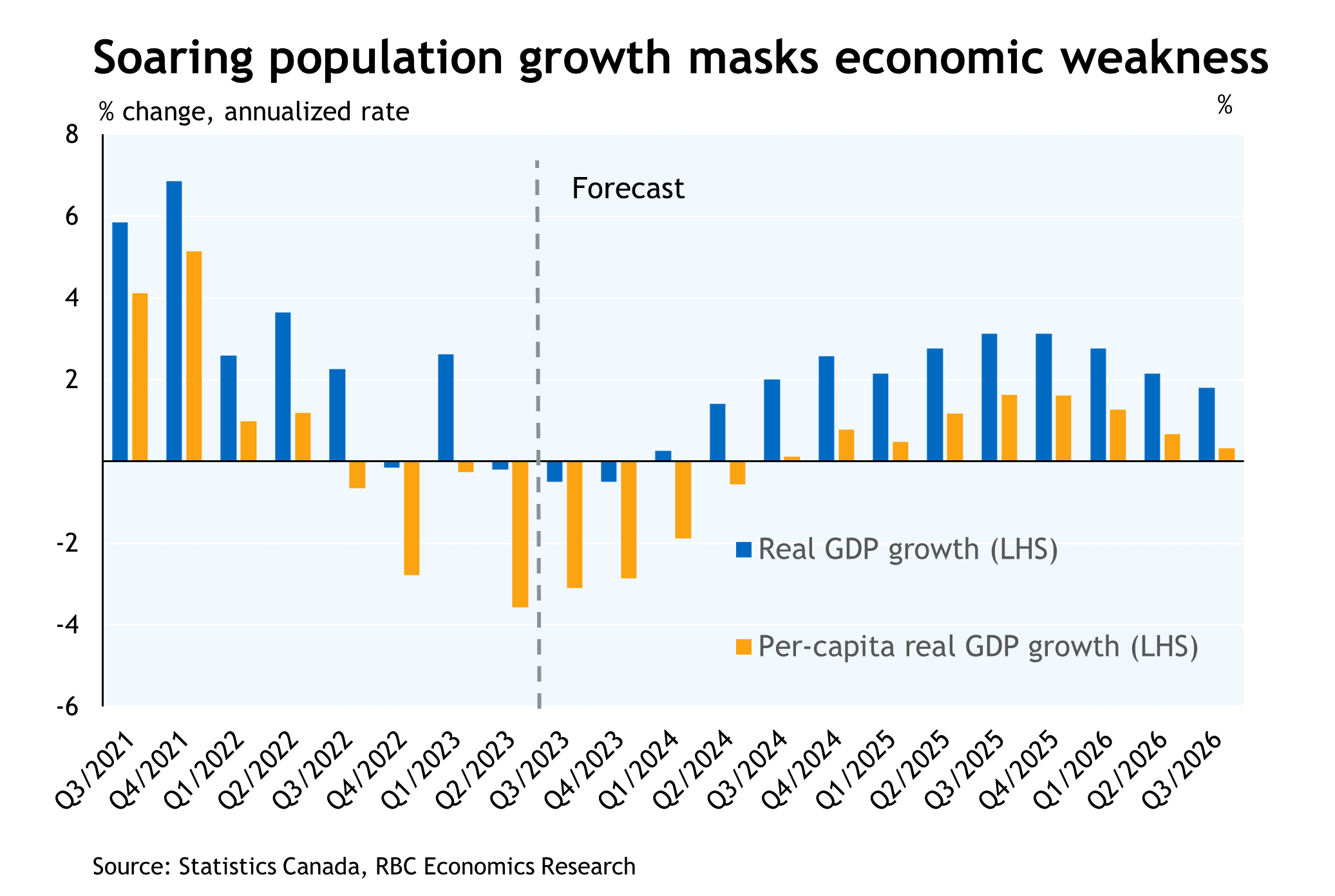
Bottom line: Canada’s exceptionally strong population growth is masking a faster deterioration than would ordinarily be implied by measures like GDP. Population growth adds to GDP by increasing demand in the economy as well as the supply of workers. On a per-person basis, real GDP growth has declined for four consecutive quarters. Controlling for population growth, per-capita GDP declined by 3.5% at an annualized rate by our calculation (compared to a printed 0.2% decline.) That is consistent with signs of softening in labour markets. The unemployment rate is not impacted by changes in population growth and has increased half a percentage point from the spring.
Chosen excerpts by Job Market Monitor. Read the whole story @ RBC Royal Bank



 Job Market Monitor
Discussion
No comments yet.