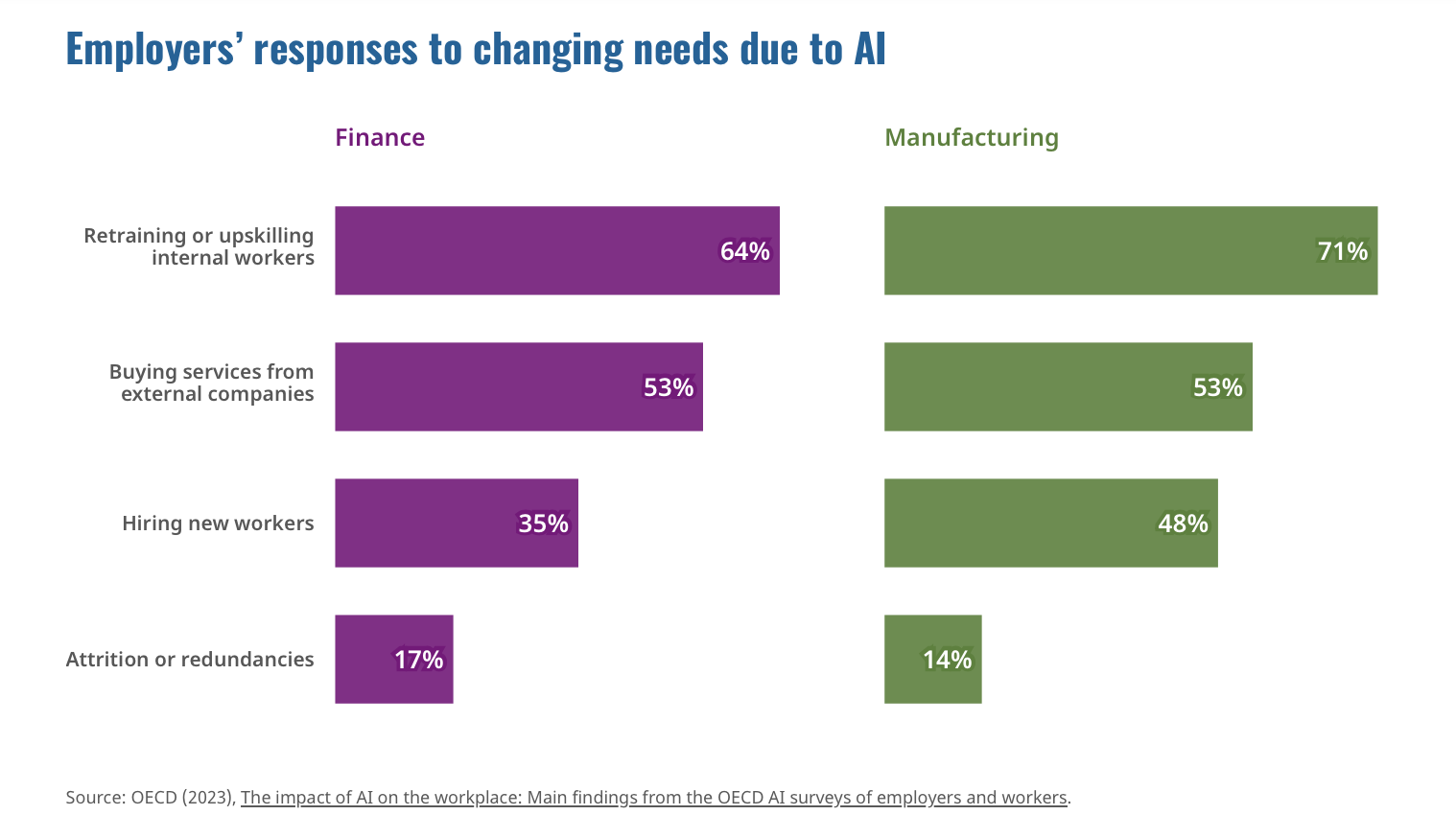
While firms’ adoption of AI is still relatively low, rapid progress including with generative AI (e.g. ChatGPT), falling costs and the increasing availability of workers with AI skills suggest that OECD countries may be on the brink of an AI revolution. It is vital to gather new and better data on AI uptake and use in the workplace, including which jobs will change, be created or disappear, and how skills needs are shifting. When considering all automation technologies including AI, 27% of jobs are in occupations at high-risk of automation. Initial findings from a new OECD survey of AI’s impact in the manufacturing and finance sectors of seven countries highlight both the opportunities and risks that AI brings.
OECD job markets remain tight even though the global economy has slowed substantially since 2021. Employment has fully recovered since the COVID-19 crisis and unemployment is at its lowest level since the early 1970s. While nominal hourly wages have risen, to date they have not kept up with inflation, leading to a drop in real wages in almost all OECD countries.
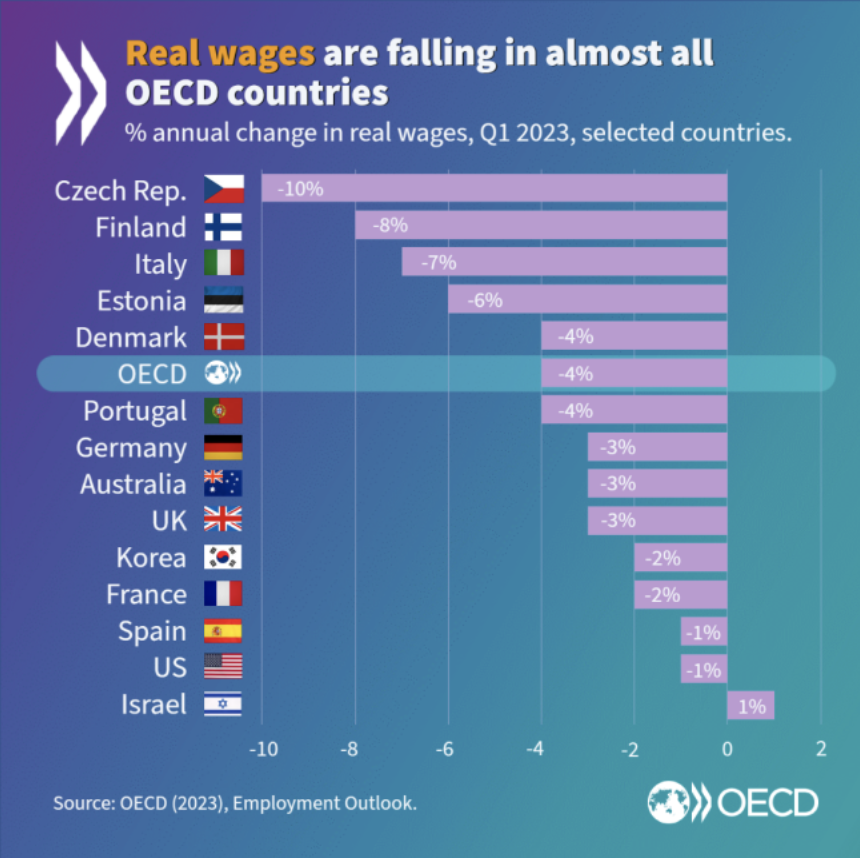
Source: OECD Employment Outlook



 Job Market Monitor
Discussion
Trackbacks/Pingbacks
Pingback: AI and the Future of Skills – Healthy human adults share some basic skills that AI systems do not have | Job Market Monitor - January 24, 2024
Pingback: AI and the Future of Work – Almost 40 percent of global employment is exposed to AI, with advanced economies at greater risk | Job Market Monitor - January 25, 2024
Pingback: Artificial intelligence (AI) and Skills – High-exposure occupations comprise a third of all vacancies in OECD countries in the sample | Job Market Monitor - April 30, 2024