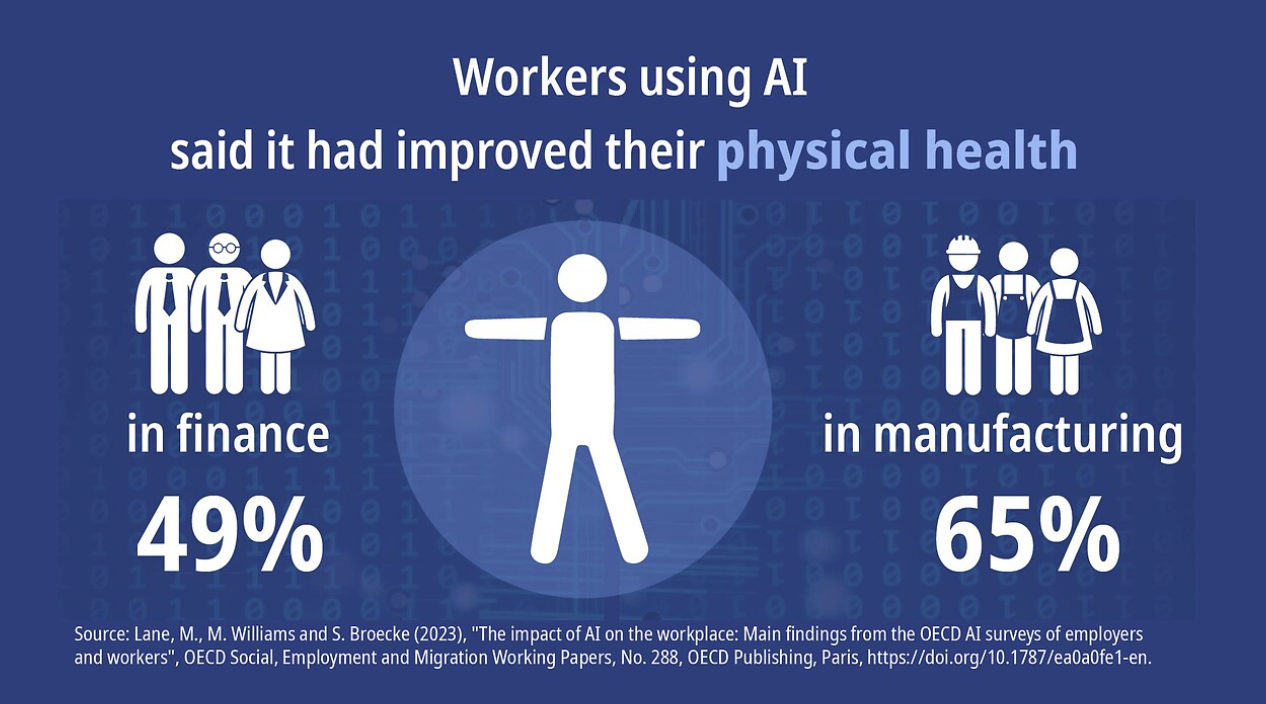
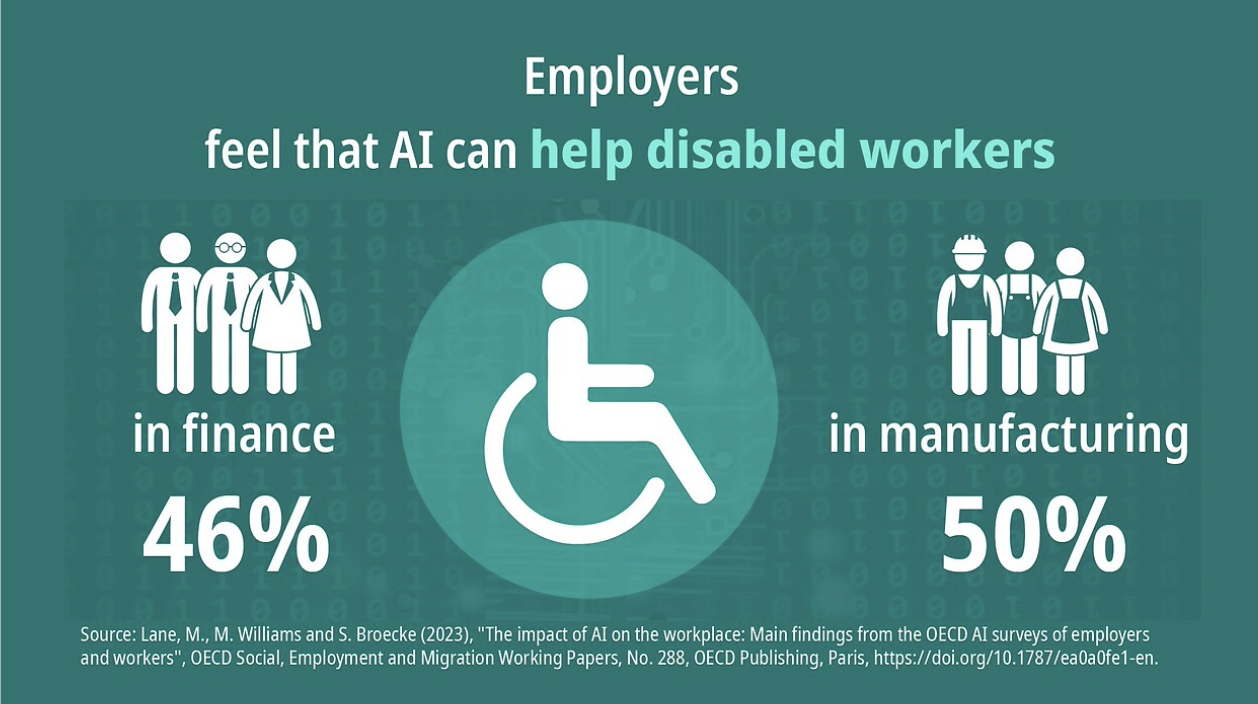
In 2022, the OECD gathered data on the impact of AI on people and their workplaces, in the manufacturing and finance sectors of seven countries. The findings show that AI use at work can lead to positive outcomes for workers around job satisfaction, health and wages. Yet there are also risks around privacy, work intensity and bias. The survey revealed a clear divide between what workers think about AI use in their jobs today and their fears for the future. The results highlight the urgent need for policy action now, to ensure that no one is left behind.



The development and adoption of artificial intelligence (AI) will have an important impact on skill needs, as they will modify the task and skill composition of jobs and the distribution of occupations in the economy. Adult learning systems will need to quickly adapt to these rapid transformations.
A chapter addresses two related questions: What is the specific impact of AI on skill needs? And how can adult learning systems be better designed and implemented to meet these needs? The main findings of the chapter are:
- As a result of AI development and adoption, some skills can be increasingly replicated by technologies. This is the case for manual and fine psychomotor abilities, as well as cognitive skills such as expression and comprehension, planning, and advising. ChatGPT, an AI model that made headlines recently for its performance in language tasks, is a striking example of how AI development and adoption are accelerating, which suggests that the impact of AI, including on skill needs, might be larger in the near future.
- At the same time, skills needed to develop and maintain AI systems, and to adopt, use and interact with AI applications, will become more important. In some cases, specialised AI skills will be required, but the shift in skill needs is much broader, and there will be growing demand for basic digital and data science skills, as well as for complementary cognitive and transversal skills. As AI becomes widespread, it will be increasingly important for workers in various occupations to possess a broad range of skills to effectively develop and interact with AI systems.
- Training for specialised AI skills requires a combination of formal higher education and on-the-job learning. Basic AI knowledge or “AI literacy” should be taught at different levels of formal education, including in schools.
- Training for AI should be provided not only to vulnerable groups (low-skilled and older workers in particular) to help them adapt to the changes AI will bring to the workplace, but also to higher-skilled workers and managers, to foster AI development and adoption.
- Following adoption, companies tend to provide training for AI. Yet, the lack of appropriate skills remains a major barrier to AI adoption. Firms may under-invest in training for AI for several reasons including the existence of an important informational gap around AI and the fact that the benefits of training for AI may be wider than the firm.
- Public policies have an important role to play to promote greater training provision by employers, to ensure an integrated approach to skills development for AI at all stages of the lifecycle, from initial education to lifelong learning, and to encourage diversity in the AI workforce.
- Although most policies and strategies for AI recognise the importance of skills, few propose sufficient measures to develop them.
- Greater use of AI could be made to improve the design, targeting and delivery of training. Several examples of its use already exist, but they are currently limited. Yet, using AI in training also poses non-negligible risks. These risks need to be considered carefully and properly addressed before the use of AI in training becomes more widespread.
Source: OECD Employment Outlook



 Job Market Monitor
Discussion
Trackbacks/Pingbacks
Pingback: AI and the Future of Skills – Healthy human adults share some basic skills that AI systems do not have | Job Market Monitor - January 24, 2024
Pingback: AI and the Future of Work – Almost 40 percent of global employment is exposed to AI, with advanced economies at greater risk | Job Market Monitor - January 25, 2024
Pingback: Artificial intelligence (AI) and Skills – High-exposure occupations comprise a third of all vacancies in OECD countries in the sample | Job Market Monitor - April 30, 2024