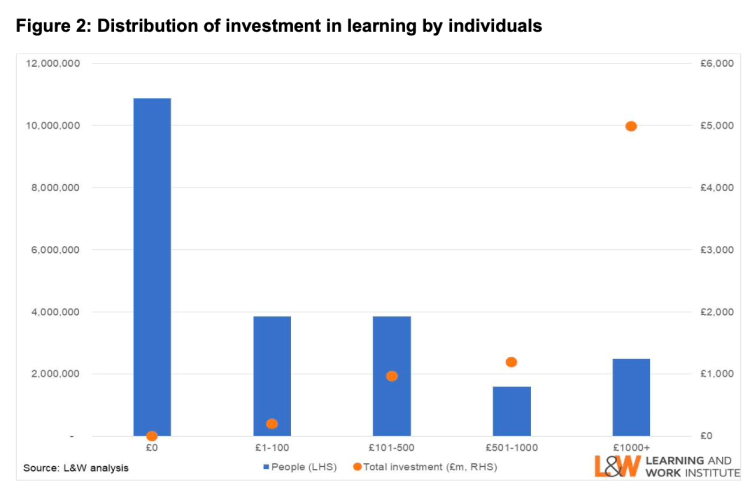
People invest £7.3 billion a year and £55 billion worth of time in learning. This is more than the Government and employers invest in learning and skills, but there are stark inequalities between groups. This report provides the most detailed snapshot seen of which groups of adults are investing in learning, and how much, and lays bare stark inequalities in learning. It calls for a new Lifelong Learning Entitlement to simplify the overly complex system, boost participation in learning by those currently most likely to miss out and boost the UK economy.
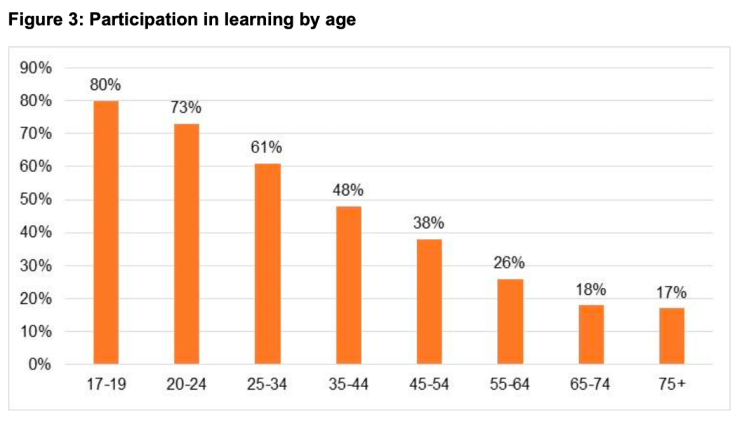
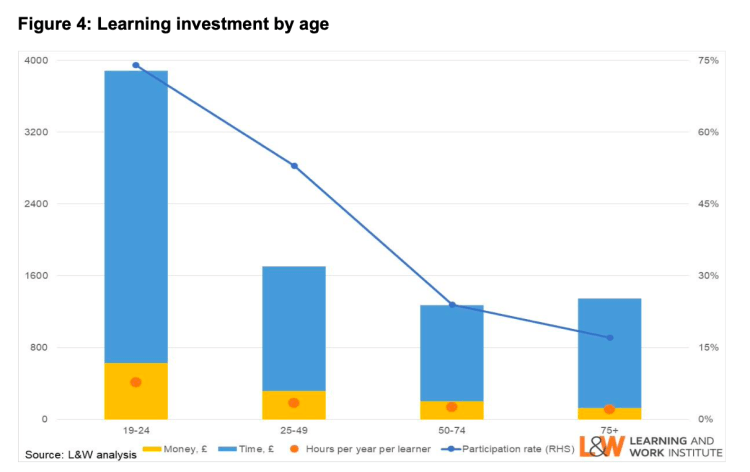
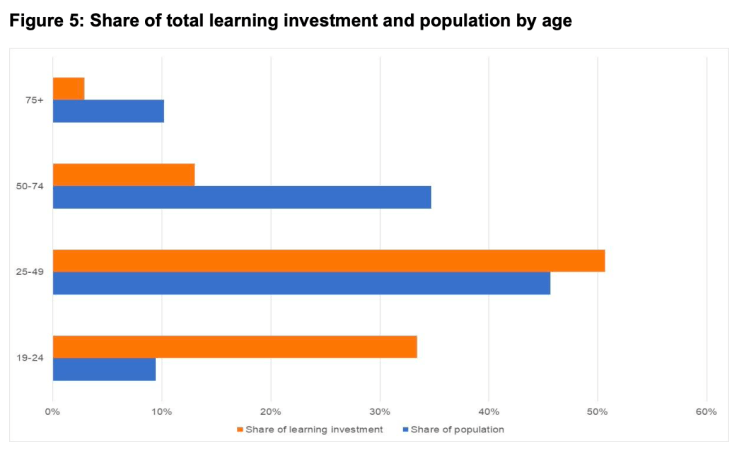
Based on analysis of Learning and Work Institute’s long-running Adult Participation in Learning Survey, the research finds that younger people are three times more likely to participate in learning than older people and also invest three times as much per year (£3,900 v £1,300). This lower investment by older people is a problem given longer working lives and economic change require people to update their skills more often through life. The same is true of investment by region and country. People in London (£1,400) invest more than double per person compared to the South East (£565) and Scotland (£624).
This could put ‘levelling up’ at risk given the impact learning has on economic growth and individual opportunity. The data come after previous L&W research showed that Government investment in skills is set to be £1 billion lower in 2025 compared to 2010, and that employer investment in training per employee has fallen 28 per cent since 2005. Taken together, they suggest the UK is under-investing in skills and learning, and risks staying stuck in the middle of the pack by international standards. This would put future growth and prosperity at risk.
Increasing participation in learning requires understanding why people do and don’t take part in learning. Research shows that people have a range of motivations to learn, particularly interest in the subject (37%); developing as a person (36%); and to improve job skills (25%). The most common reasons for not taking part in learning were: I don’t want to (29%); cost (29%); feeling too old (28%); and time pressures (16%).
The drivers for learning are therefore a mix of personal and work benefits and situational, institutional and dispositional. Yet most policy is focused on tuition costs and, to a lesser extent, costs of barriers such as transport with maintenance support focused on higher education students. At the same time, there has been a revolution in flexible (particularly online and blended) learning delivery that has supported growth in self-directed learning.
We need to ensure learning is high profile, tailored to individual motivations, and more accessible and affordable. We recommend a new Lifelong Learning Entitlement giving extra help with the costs of learning, including:
- Learning places. We should promote learning and make it easy to access everywhere, based on diverse motivations to learn and the ‘tipping points’ that affect people’s decisions. Partners in an area should design plans to make everywhere a learning place, promoting learning through public services including social prescribing in health services and encouraging employers to support non-work learning.
- Informed choices. People need good information and advice to make informed choices about learning. The Government should publish data on the economic and social outcomes of learning building on similar examples in the US, develop clear career pathways showing where learning can lead, and widen access to careers advice by building local careers networks of trusted institutions like housing associations.
- Help with course costs. We need better and simpler help. The new Lifelong Learning Entitlement, based on level of learning or income, could simplify communication of current complex entitlements to learning that depend on age, location, level and type of learning. Additionally, all adults should have a Learning Account with a universal entitlement of £5,000, targeted top ups and co-investment by people and employers.
- Help with living costs. We need more help: support below higher education level is limited and patchy. The Lifelong Learning Entitlement should include strengthening the Right to Request Time to Train to include all accredited learning, extend it to all firms, and strengthen to a right to time off (rather than just to request) at large firms. People accessing this right, and those out of work but not on benefits studying a first level 3, would be entitled to a maintenance loan. For people on benefits, the Train and Progress rule should allow study for up to one year (up from the current 12 weeks) where their Work Coach agrees.
- Flexiblelearning.Weneedtobuildontheemergingflexiblelearningrevolution, thinking how best we can support, encourage, incentivise, test and trial new forms of learning that better fit around people’s work and home lives. This should be built into funding and commissioning models, and practical support given to providers.



 Job Market Monitor
Discussion
No comments yet.