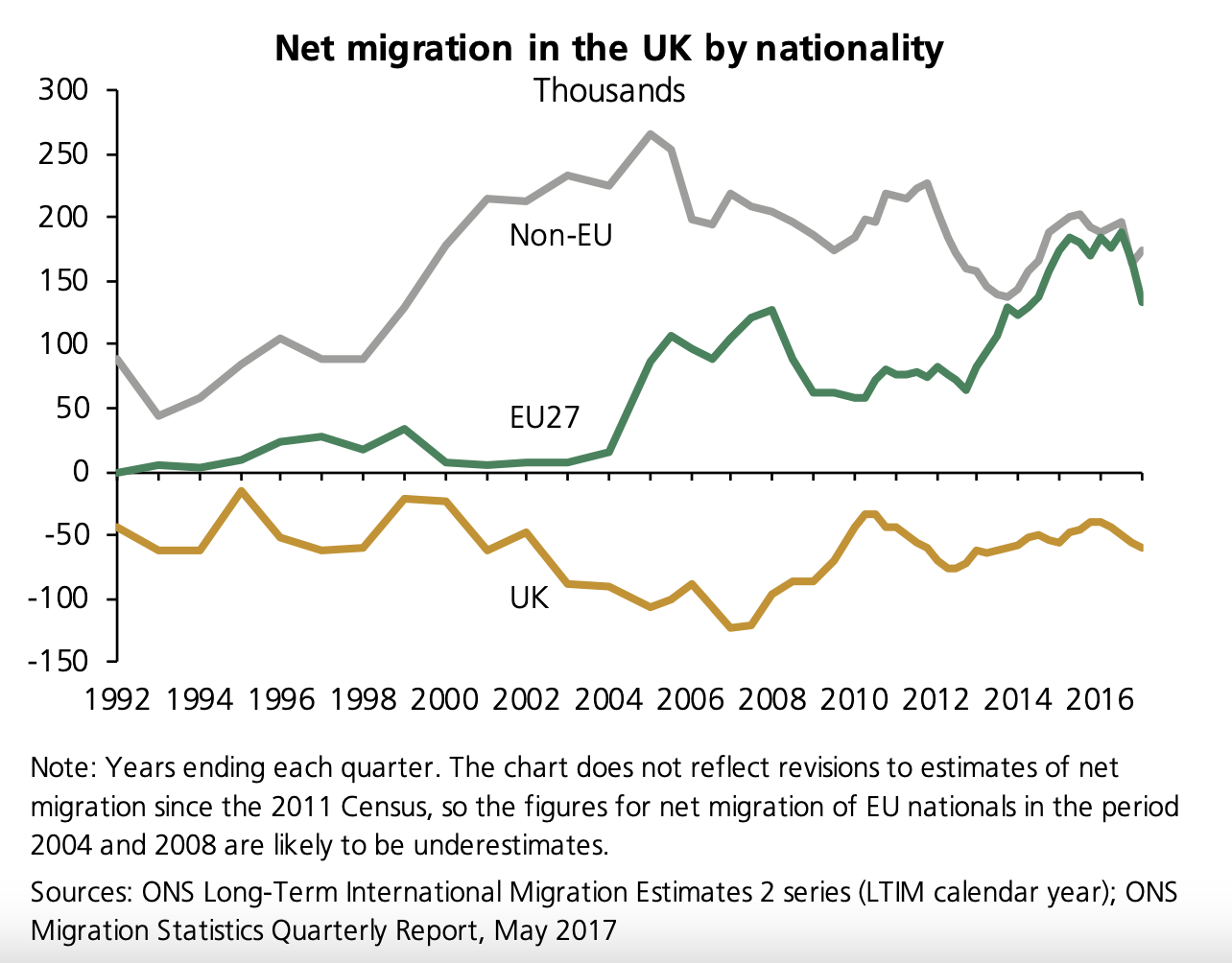
This briefing paper provides an overview of nationals of other EU countries who are working in the UK: how many are employed in the UK, what kind of work do they do and where do they live, and how numbers have changed over time.
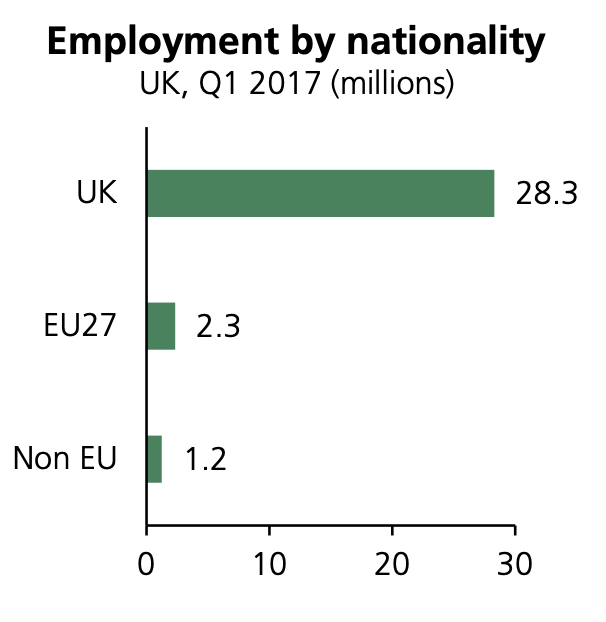
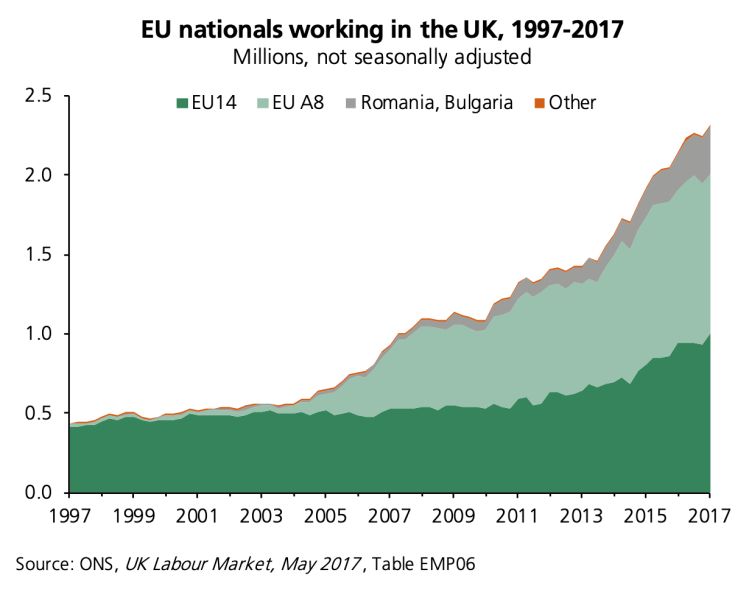
In the first quarter of 2017, there were 2.32 million nationals of EU27 countries (i.e. all EU countries excluding the UK) working in the UK, just over 7 per cent of all people in employment. This compares to 0.4 million EU27 nationals working in the UK in 1997, when they comprised 2 per cent of all people in employment. This total includes around 1.00 million nationals of EU14 countries (members of the EU before 2004) and 1.32 million nationals of countries which have joined the EU since 2004. Around a third of workers from EU27 countries lived in London in 2016 (34 per cent), although this is down from 45 per cent in 2003. Over this period, all regions (including London) saw large increases in the number of workers from EU27 countries.
Workers from EU27 countries are more likely to be employed in low-skilled elementary occupations than UK nationals: just under a quarter (23 per cent) worked in elementary occupations in 2016 compared to 10 per cent of UK nationals. EU nationals are also more likely to be employed in skilled trades occupations and as process, plant or machine operatives. However, a higher proportion of EU27 nationals are ‘over-educated’ for the job they are doing compared to UK nationals. Around 38 per cent of workers from the EU27 held a higher qualification than was typical for people working in that occupation in 2013-15, compared to 15 per cent of workers from the UK. The occupational profile of EU nationals varies by country of nationality within the EU. Workers from EU14 countries were more likely to be employed in higher-skilled professional or managerial occupations than UK nationals in 2016, while workers from the rest of the EU (countries that joined after 2004) are more concentrated in lower-skilled occupations. The proportion of workers who are over-educated for their job was similar for both groups.
The proportion of the workforce who are EU nationals is much higher in some industries than in others. In 2016, 33 per cent of people working in the manufacture of food products were EU27 nationals. Other industries with a high proportion of workers from EU27 countries included accommodation (19 per cent) and warehousing and support for transport (18 per cent).
Source: Employment of other EU nationals in the UK – House of Commons Library



 Job Market Monitor
Discussion
No comments yet.