This report summarises the outcomes of the first (micro) phase of the thematic country reviews (TCRs) on upskilling pathways in France, which reflect the points of view of both the beneficiaries of the outreach and guidance schemes and services under investigation, and the professionals involved in their implementation.
The TCR on UP for France focuses on outreach and guidance for low-skilled adults and on the crosscutting dimensions of governance and financial and non- financial support for these two areas. The research investigates the extent to which the actors who offer financial and non-financial support coordinate with each other, articulate their services and develop innovative, concerted and adapted strategies and methods. Their aim is to reach out and provide learning guidance (1) to low- skilled adults in the logic of building an individualised and seamless or continuous learning and/or employment pathway (2).
Summary of main messages
The multifactorial problems faced by the people furthest from training and employment lead to an increasing complexity of support actions and a progressive shifting towards forms of comprehensive support for the individual. From an institutional perspective, this requires a major change and de- compartmentalisation between, for instance, the Departments (responsible for the application of social support policies), the Regions (responsible for steering guidance and training policies) and the PES actors (fulfilling the task of offering labour market integration opportunities). This would encourage crosscutting of purposes, interconnecting public action fields that were not previously very connected (guidance, training, medical and social actors, socio-cultural actors, housing, companies, associations). In particular, the dichotomy operated in France between the actors operating with employees and those intervening with unemployed adults would need to be challenged.
Low-skilled adults often accumulate more than one obstacle and they need more time and resources for outreach and to guide themselves towards an upskilling and employment pathway, which is not always factored into the design of services. The advisers themselves may be overwhelmed by, and unprepared both professionally and psychologically to deal with, often complex situations of exhausted, suffering and burnt out people. The location of potential beneficiaries in remote areas and the needs of those employed in micro and small enterprises are issues that require particular attention for providing outreach and support.
The findings also illustrate a situation where the aim of systematic individualised support is not always met. Actual practice shows that the level of individualisation varies and depends on factors such as the number of beneficiaries and on the means the scheme provider can deploy on every single site. Limited resources lead to a sort of rationalisation that itself leads to a prevalence of collective activities (often classroom-based) or the making up of groups by level of education.
On the aspect of seamless pathways, besides the issue of de- compartmentalisation between actors and services, it also turns out that guidance users are not usually followed up during their upskilling and/or employment project. Guidance stops once the individual has built his/her personal project and has moved into the training or employment phase. Ensuring a systematic follow up requires time, stable human resources over time (an appropriate number and profiles) and significant means.
The second phase of the study will build on these findings to discuss the challenges identified with meso level stakeholders, which will be selected in the upcoming phase of methodology preparation.
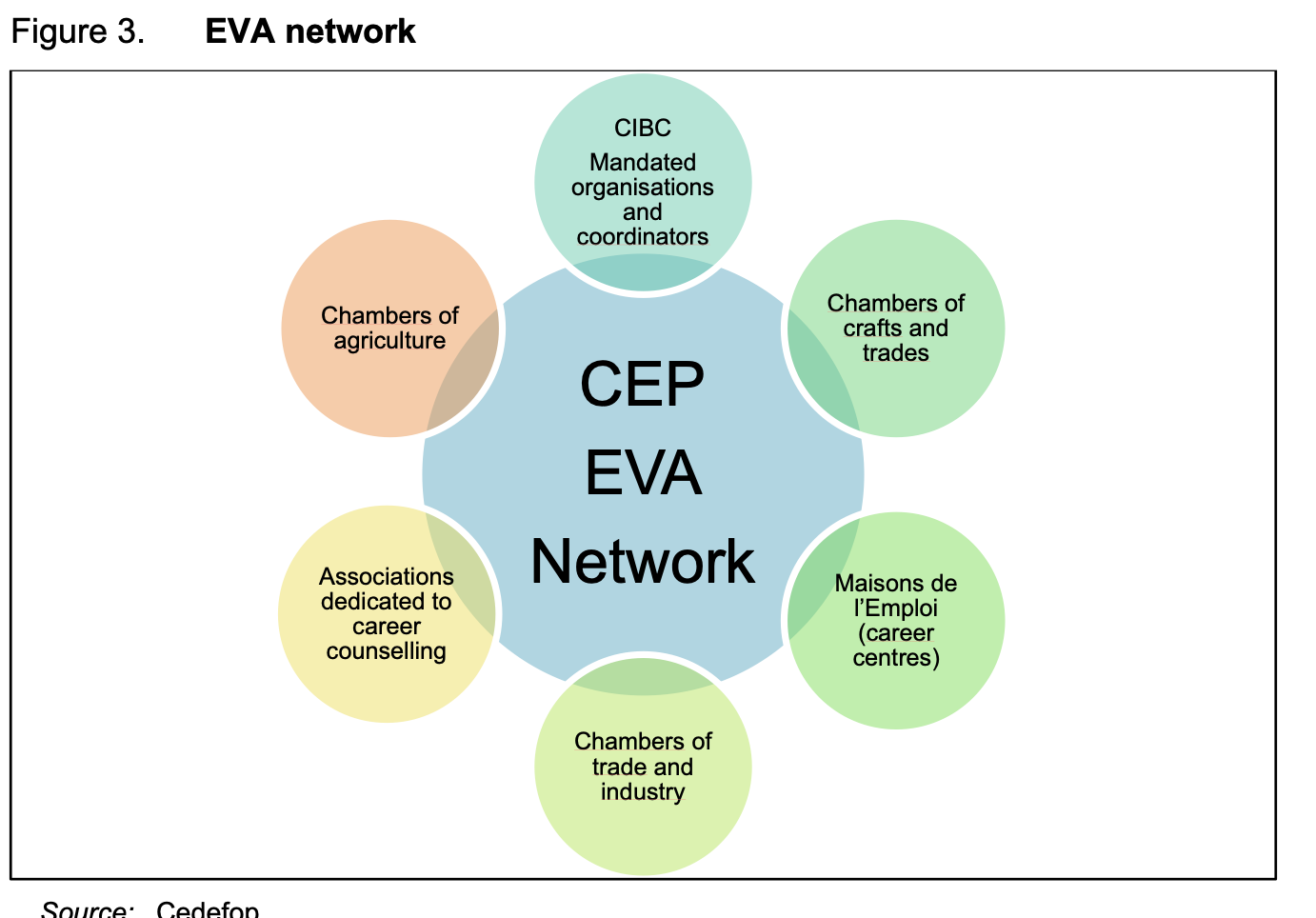

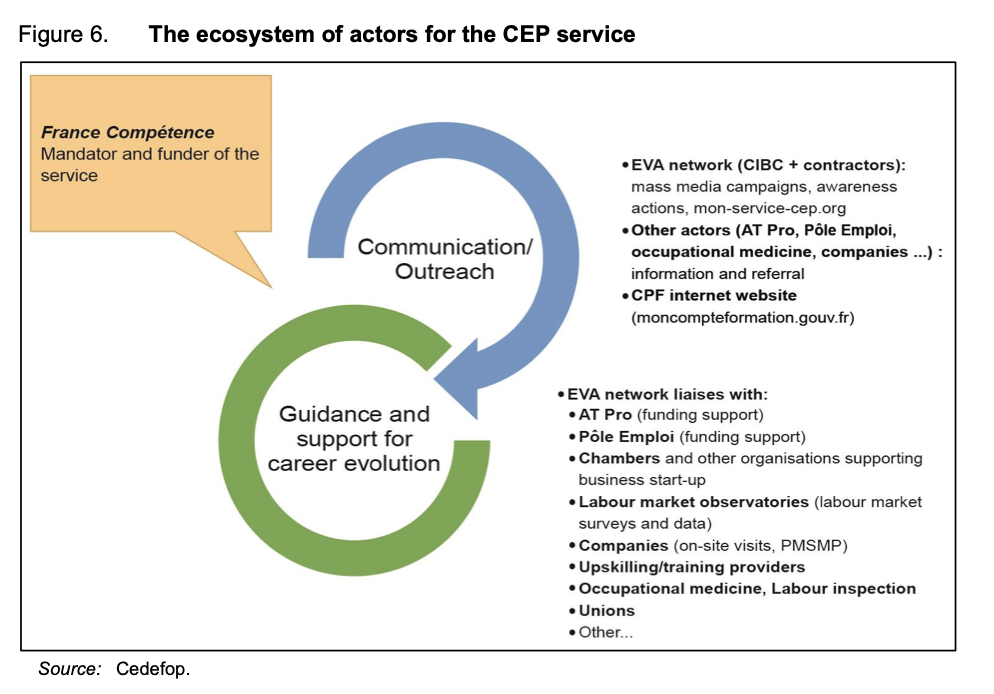
Source: Thematic country review on upskilling pathways for low-skilled adults in France | CEDEFOP



 Job Market Monitor
Discussion
Trackbacks/Pingbacks
Pingback: Upskilling Pathways in Canada – Need to do more to connect working adults to opportunities | Job Market Monitor - July 3, 2023