Everyone in the workforce will come face-to-face with the challenges of caregiving at one point during their career – some just may not realize it yet.
Maybe they are caring for a loved one now, or have in the past, or anticipate needing to serve in this role one day. It’s an issue that can spring up overnight and last for years. From sudden health emergencies to chronic diseases, caregiving eventually touches us all in one way or another.
Think of the legions of dedicated employees who are working full-time jobs across the country and uproot their personal lives and careers to provide care, support and affection to those in need – for a newborn, a sick child, an adult family member with a life-limiting disease, a sibling, an aging parent or grandparent, or a friend. For many, caregiving is comparable to holding down a second job, and the lines between their work and personal lives become blurry, at best, when the care of a loved one is top-of-mind. Tethered by an emotional struggle to leave unpaid caregiving at home, these people must go to work and are expected to perform at the highest level.
Caregiving disrupts virtually every aspect of an employee’s day-to- day activities and job responsibilities, and can include:
› preparing meals
› providing personal care
› handling finances
› managing medications
› helping with bathing and dressing – and more.
Today, the scope of caregiving has broadened for working Americans who are often tasked with varied, intermittent responsibilities to help navigate health coverage, drive to doctors’ appointments, participate in therapy sessions, identify assisted living or alternative housing options, or provide other “behind the scenes” support. Even when they are at work, caregivers can feel distracted by the growing and often unexpected list of duties that require timely attention or await them at home. They are often forced to take time off from work and careers to accomplish everything that needs to get done.
Caregiving affects employees on a daily basis, with some workers devoting 20+ hours a week to their caregiving responsibilities. They are also spending thousands of dollars in out-of-pocket expenses and performing nursing care duties with little to no training.
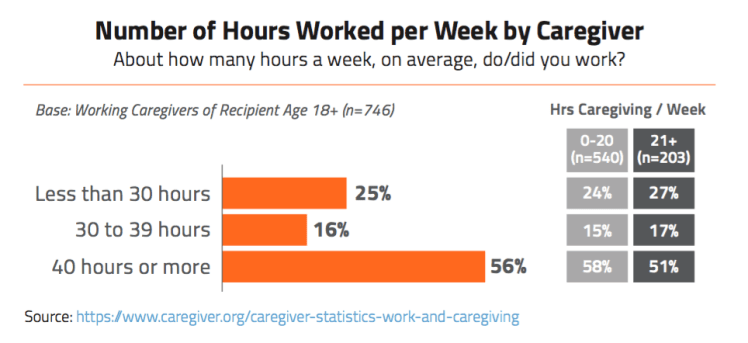
On the other hand, many people consider it an honor to provide caregiving, and in many instances, these individuals sacrifice work/life balance and risk losing their jobs. Among caregivers who are employed or who have been employed during their time as caregivers, some have had to reduce their hours or job responsibilities, take leave from their position, quit their job or retire early to accommodate their caregiving duties.
Employers Responding
For employers wondering which of their employees are currently or may soon become caregivers, the answer is simple: All of them. It’s not a question of if, but when.
Fortunately, it’s possible to get in front of the problem by empowering employees to more easily tackle their caregiving challenges and reduce some of the stress and anxiety they encounter along the way.
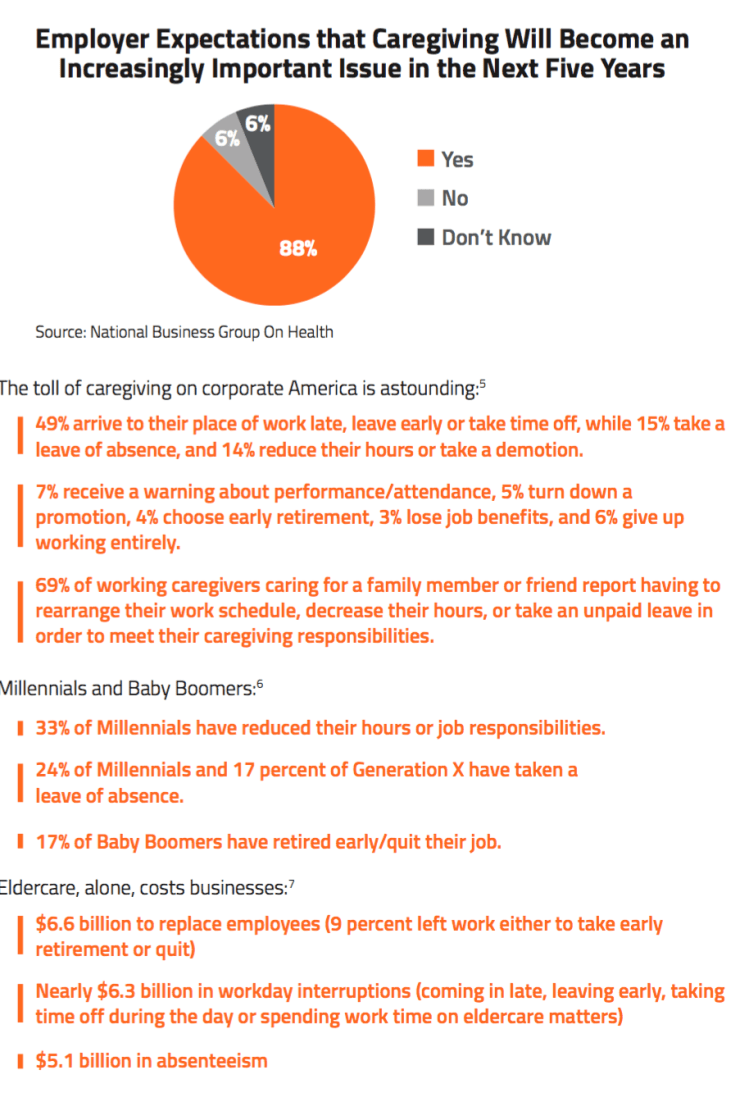
While employee caregivers face challenges that lead to such high absenteeism and workday interruption costs, only:
- 53% of employers offer flexible work hours/paid sick days
- 32% offer paid family leave
- 23% offer employee assistance programs and
- 22% allow telecommuting regardless of employee caregiving burden
Fortunately, a growing number of compassionate, forward-thinking public and private sector employers have taken steps to support their employee caregivers by offering paid leave or other programs.
But more can be done.
Chosen excerpts by Job Market Monitor. Read the whole story at Download Cariloop White Paper – “Taking Care of Caregivers”
* A caregiver is defined as an unpaid spouse, partner, family member, friend, or neighbor who plays a critical role in helping a loved one with daily activities and medical tasks.



 Job Market Monitor
Discussion
No comments yet.