In 2017 immigrants made up nearly 14 percent of the U.S. population, a sharp increase from historically low rates of the 1960s and 1970s, but a level commonly reached in the 19th century. Given native-born Americans’ relatively low birth rates, immigrants and their children now provide essentially all the net prime-age population growth in the United States.
These basic facts suggest that immigrants are taking on a larger role in the U.S. economy. This role is not precisely the same as that of native-born Americans: immigrants tend to work in different jobs with different skill levels. However, despite the size of the foreign-born population, immigrants tend to have relatively small impacts on the wages of native-born workers. At the same time, immigrants generally have positive impacts on both government finances and the innovation that leads to productivity growth.
The foreign-born share of the U.S. population has returned to its late-19th-century level.

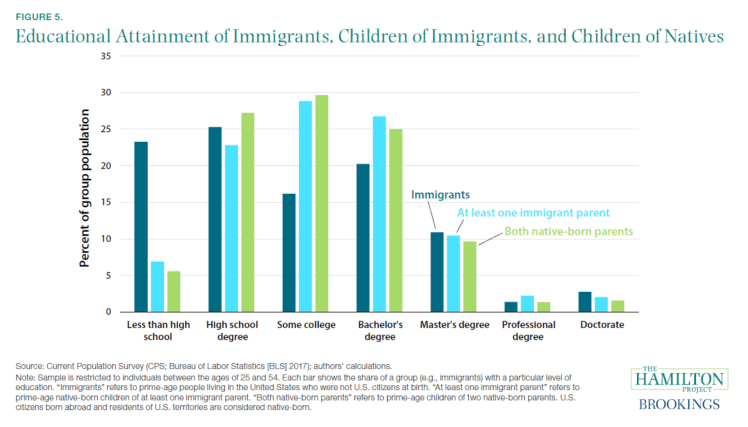
Immigrants are 4 times more likely than children of native-born parents to have less than a high school degree, but are almost twice as likely to have a doctorate.
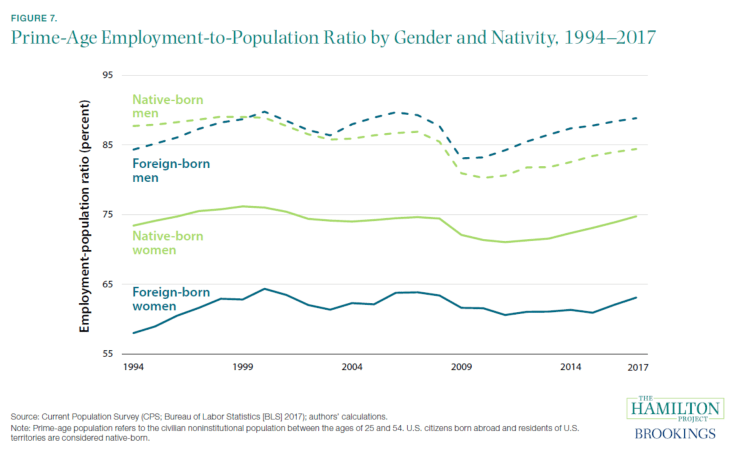
Prime-age foreign-born men work at a higher rate than native-born men, but foreign-born women work at a lower rate than native-born women.
Output in the economy is higher and grows faster with more immigrants.

Chosen excerpts by Job Market Monitor. Read the whole story at A dozen facts about immigration



 Job Market Monitor
Discussion
No comments yet.