The low unemployment rate is leading employers to recruit and hire people they might otherwise screen out, such as people with disabilities or criminal backgrounds. The effects are also showing up in the data: The number of people who cite disability as a reason for not working has recently fallen, reversing a decades-long trend.
But if the goal is to substantially increase the employment of people with disabilities, as envisioned by the Americans with Disabilities Act (ADA), then a low unemployment rate won’t be sufficient. Employment rates among people with disabilities are very, very low: Only 40 percent of adults with disabilities in their prime working years (ages 25-54) have a job, compared to 79 percent of all prime-age adults. Employment is central to the goals articulated by the ADA—equality of opportunity, full participation, independent living, and economic self-sufficiency—but there is clearly more work to do on that front.
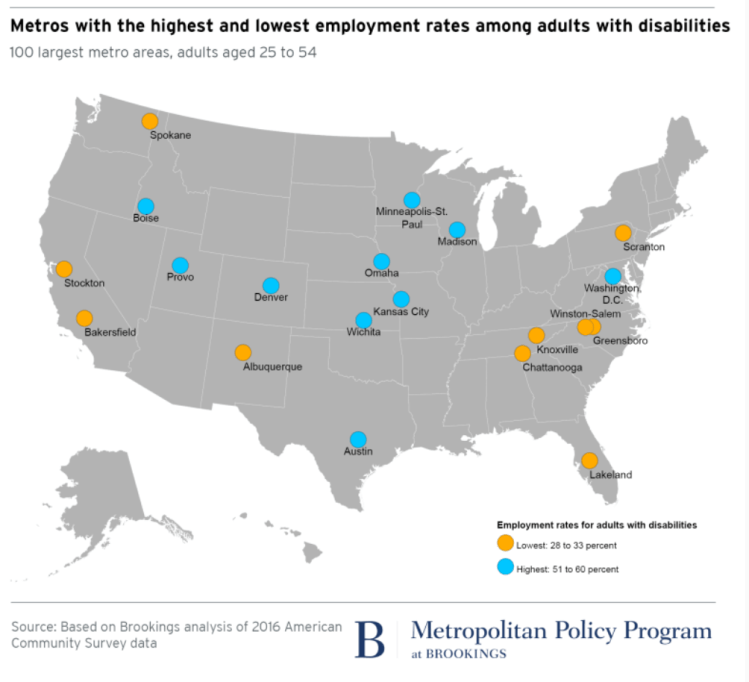
Chosen excerpts by Job Market Monitor. Read the whole story at Only four out of ten working-age adults with disabilities are employed



 Job Market Monitor
Discussion
No comments yet.