In today’s dynamic world of work, the path to opportunity—for both individuals, and organizations—is changing.
The short shelf life of skills and a tightening labor market are giving rise to a multitude of skill gaps. Businesses are ghting to stay ahead of the curve, trying to hold onto their best talent and struggling to ll key positions. Individuals are conscious of staying relevant in the age of automation.
Enter the talent development function—the organizational leaders creating learning opportunities to enable employee growth and achievement. They have the ability to guide their organizations to success in tomorrow’s labor market, but they can’t do it alone.
Our research shows that today’s talent developer is being asked to balance competing demands from executives, managers, and employees alike: They must play a critical role in shaping future workforce strategy, while delivering hyper-relevant content to support employee needs of today, and cater these vast e orts to a multi-generational workforce with varied learning preferences.
To balance these competing demands, talent development leaders today are embracing the role of “relationship builder”—cultivating the relationships that are the backbone of a learning culture that thrives in a workforce of constant change.
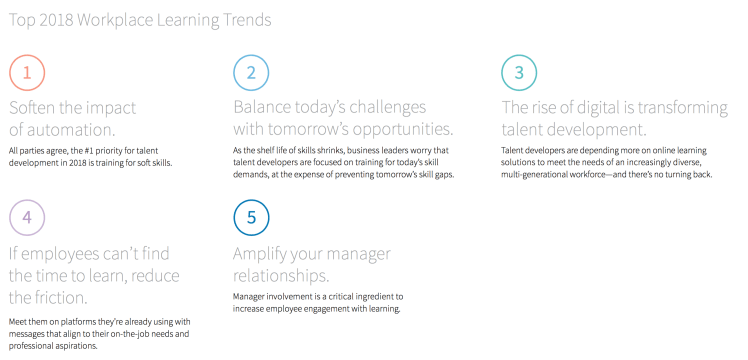
Chosen excerpts by Job Market Monitor. Read the whole story at Workplace Learning & Development Report 2018 | LinkedIn Learning



 Job Market Monitor
Discussion
No comments yet.