Designing a Future Economy is Design Council’s 2017 report investigating the 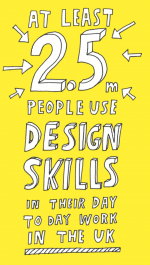 skills used in design, the link between these skills and productivity and innovation, and how they align with future demand for skills across the wider UK economy. It is a unprecedented study testing a new methodology as well as definitions of design.
For the first time, Designing a Future Economy systematically maps the skills associated with design in the UK and measures the economic value those using these skills generate.
Our full report provides a detailed picture of the skills used by designers, with in-depth data on the value of design to the UK economy, as well as analysis of how these skills are acquired and developed by design firms. A shorter executive summary of key findings is also available for download.
The report includes findings such as:
Designers fuse knowledge of design and cognitive abilities – like visualisation or problem solving with technical skills, such as drawing, coding or modelling, depending on their role. By categorising the skills important to designers, we have also been able to identify where these same skills are used by non-designers.Workers with design skills contribute £209bn to the UK economy (GVA).People who use design skills are 47% more productive than the average UK worker, delivering almost £10 extra per hour in GVA.43% of workers using design skills are in jobs requiring and generating innovation, compared with an average for the wider UK workforce of just 6%.But we estimate that skills shortages and gaps amongst those already working in design-skilled occupations costs the UK economy £5.9bn per year.

Chosen excerpts by Job Market Monitor. Read the whole story at Designing a Future Economy report | Design Council



 Job Market Monitor
Discussion
No comments yet.