In the United States, the richest 1 percent have seen their share of national income roughly double since 1980, to 20 percent in 2014 from 10 percent. This trend, combined with slow productivity growth, has resulted in stagnant living standards for most Americans.
No other nation in the 35-member Organization for Economic Cooperation and Development is as unequal, and none have experienced such a sharp rise in inequality.
In Denmark, the share of income going to the top 1 percent rose to 6 percent from just 5 percent. In the Netherlands, there was essentially no increase from 6 percent levels. Britain (6 percent to 14 percent) and Canada (9 percent to 14 percent) had notable increases in top-income earnings, but not as large as those in the United States…
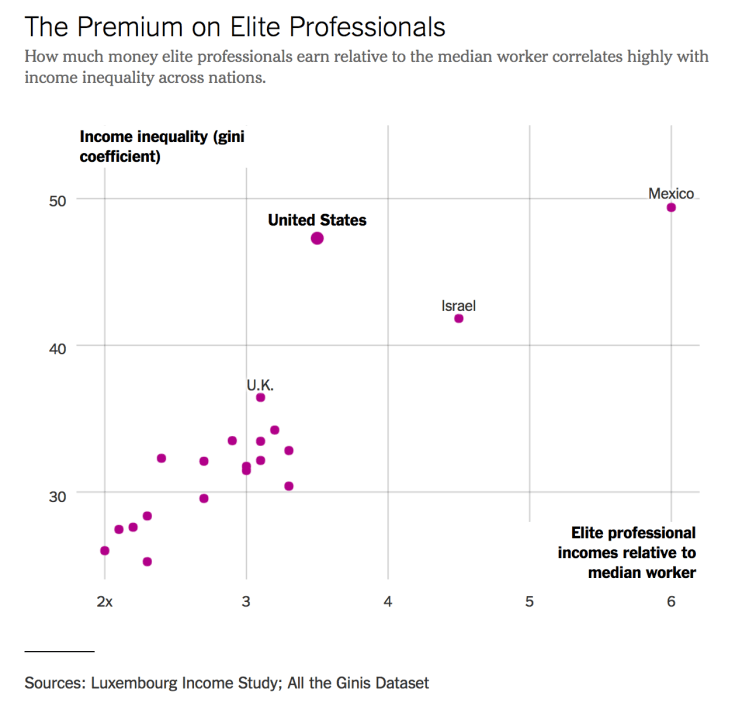
Almost all of the growth in top American earners has come from just three economic sectors: professional services, finance and insurance, and health care, groups that tend to benefit from regulatory barriers that shelter them from competition.
The groups that have contributed the most people to the 1 percent since 1980 are: physicians; executives, managers, sales supervisors, and analysts working in the financial sectors; and professional and legal service industry executives, managers, lawyers, consultants and sales representatives.
Without changes in these largely domestic services industries — finance, health care, the law — the United States would look like Canada or Germany in terms of its top income shares.
Chosen excerpts by Job Market Monitor. Read the whole story at Myths of the 1 Percent: What’s Putting People at the Top – The New York Times



 Job Market Monitor
Discussion
No comments yet.