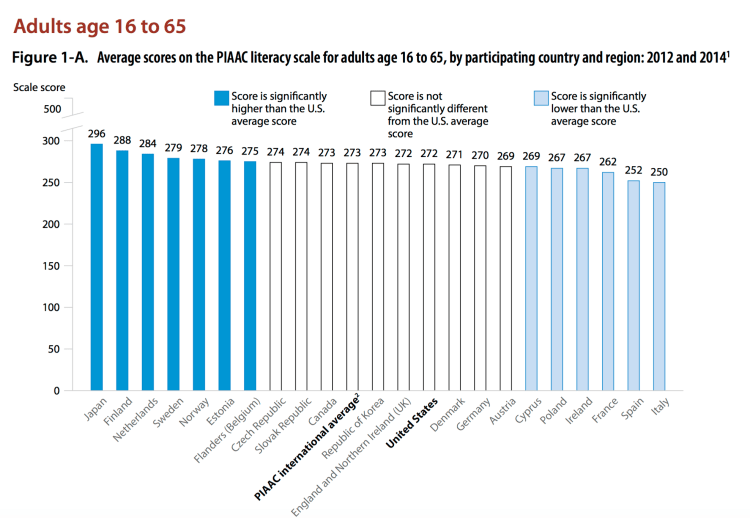
In literacy, the U.S. average score (272) was not measurably different than the PIAAC international average score (273) (see figure 1-A). Compared with the PIAAC international average distribution of literacy skills, the United States had a larger percentage of adults performing at both the top and the bottom of the distribution (13 versus 12 percent at Level 4/5, and 18 versus 16 percent6 at Level 1 and below, see figure 2-A).
In numeracy and problem solving in technology-rich environments, the United States performed
below the PIAAC international average. In numeracy, the U.S. average score was 12 points lower than the PIAAC international average score (257 versus 269), and in problem solving in technology-rich environments, the U.S. average score was 9 points lower than the international average (274 versus 283).

Chosen excerpts by Job Market Monitor. Read the whole story at Program for the International Assessment of Adult Competencies (PIAAC) 2012/2014: first look



 Job Market Monitor
Discussion
No comments yet.