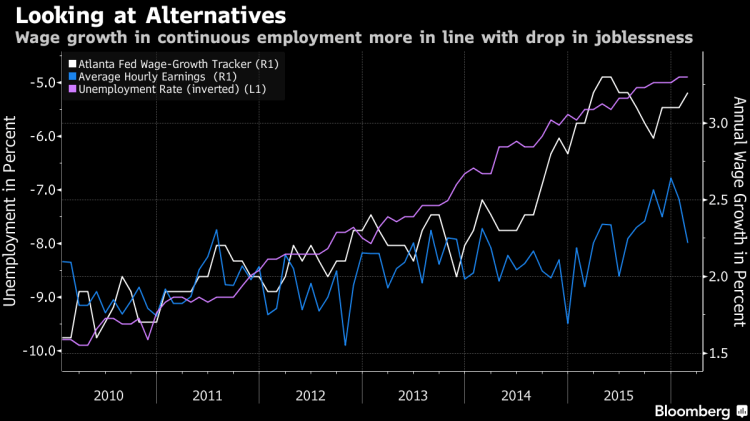
Wage growth — described as slow and unconvincing by Federal Reserve officials plotting their path to higher interest rates — is more robust by some measures than commonly acknowledged due to changes in the composition of the workforce. With unemployment close to the lowest in eight years, accelerating pay gains would force Fed Chair Janet Yellen to step up her gradual approach to lifting borrowing costs if inflation starts to rise.
Policy makers have identified wages as one of the most disappointing features in a labor-market recovery that has seen the biggest back-to-back annual payroll gains in 16 years, the jobless rate cut in half and a recent surge in the labor force. The data are being distorted by the retirement of highly paid baby boomers just as lower-wage workers re-enter the workforce after being sidelined during the last recession, according to Fed analysts.
“The signal is muddied so we shouldn’t use it as an indicator that the labor market is weaker than we observe when we look at the unemployment rate,” Mary Daly, associate director of research at the San Francisco Fed, said in an interview. “Absent the changes in labor-force composition, we would have seen wage growth come up more consistently with the decline of unemployment.”
Chosen excerpts by Job Market Monitor. Read the whole story at Wages Are Imperfect Window Into Health of U.S. Labor Market – Bloomberg



 Job Market Monitor
Discussion
No comments yet.