When it comes to earnings, majors matter more than degrees. Over a career, the report finds, college graduates earn $1 million more than high school graduates on average. But averages are misleading: college graduates with the highest-paying majors earn $3.4 million more than the lowest-paying majors.
Using Census data, The Economic Value of College Majors analyzes wages for 137 college majors, including the wages of graduates who go on to earn advanced degrees. It also details the most popular majors, the majors most likely to lead to an advanced degree, and the economic benefit of earning an advanced degree by undergraduate major.
“We’ve known for a while that all degrees are not created equal, that your major has a large effect on your ability to get a job and work your way up a career ladder,” said Anthony P. Carnevale, the center director and the report’s lead author. “But a college major isn’t destiny. For example, the top 25 percent of humanities and liberal arts majors earn more than the bottom 25 percent of engineering majors.”
The report’s major findings are:
- Eighty percent of college students study a major linked to careers, while 20 percent major in humanities, liberal arts, social sciences, and arts.
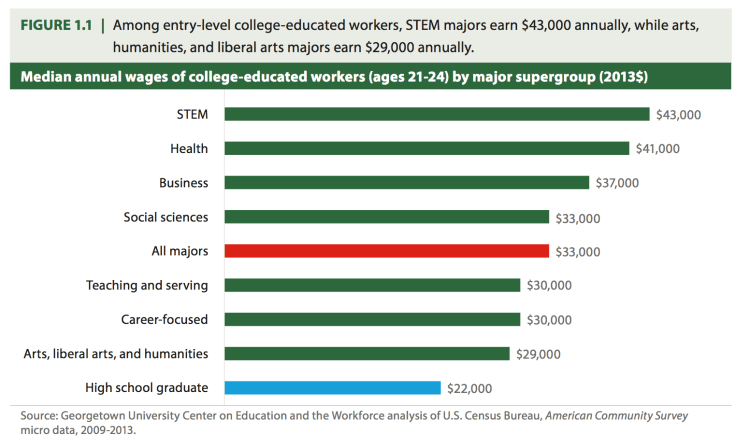
- STEM (science, technology, engineering, and mathematics), health, and business majors are the highest paying, leading to average annual wages of $37,000 or more at the entry level and an average of $65,000 or more annually over the course of a recipient’s career.
- Of the 25 highest-paid majors, economics and business economics are the only two that are not in a STEM field.
- The 10 majors with the lowest median earnings are: early childhood education ($39,000); human services and community organization ($41,000); studio arts, social work, teacher education, and visual and performing arts ($42,000); theology and religious vocations, and elementary education ($43,000); drama and theater arts and family and community service ($45,000).
- Business and STEM majors — two of the highest paying — are also the most common, accounting for 46 percent of college graduates.The report also finds that graduate degrees lead to higher earnings, especially for Bachelor’s degree holders who majored in health and medical preparatory programs, zoology, and biology.
Chosen excerpts by Job Market Monitor. Read the whole story at The Economic Value of College Majors | CEW Georgetown.



 Job Market Monitor
Discussion
No comments yet.