In 2011, according to CBO’s estimates, average household market income—a comprehensive income measure that consists of labor income, business income, capital income (including capital gains), and retirement income—was approximately $81,000. Government transfers, which include benefits from programs such as Social Security, Medicare, and unemployment insurance, averaged approximately $13,000 per household. The sum of those two amounts, which equals before-tax income, was about $94,000, on average. Federal taxes as examined in this report comprise four separate sources: individual income taxes, payroll (or social insurance) taxes, corporate income taxes, and excise taxes. Taken together, those taxes were about $17,000 per household, on average, in 2011. Thus, average household income after taxes was about $77,000, and the average federal tax rate (federal taxes divided by before-tax income) was 17.6 percent.
How Were Income and Federal Taxes Distributed in 2011?
Before-tax income was unevenly distributed across households in 2011. Average before-tax income among households in the lowest one-fifth (or quintile) of the distribution of before-tax income was approximately $25,000 in 2011, CBO estimates (see table below). Among households in the middle income quintile, average before-tax income was about $66,000. Relative to those two income groups, households in the highest income quintile had average before-tax income that was much higher—approximately $246,000.
Overall, federal taxes are progressive, meaning that average tax rates generally rise as income increases. Households in the lowest income quintile paid about $500 in federal taxes in 2011, on average, which amounted to an average federal tax rate of about 2 percent, CBO estimates. Households in the middle quintile paid about $7,000 in federal taxes, and households in the highest quintile paid about $58,000 in federal taxes, which results in average federal tax rates of approximately 11 percent and 23 percent, respectively.
As a result of the progressive federal tax structure, households in the highest quintile of before-tax income paid a greater share of federal taxes in 2011 than they received in before-tax income, while households in each of the other quintiles paid a smaller share of federal taxes than they received in before-tax income (see figure below). Households in the highest income quintile received a little more than half of total before-tax income and paid more than two-thirds of all federal taxes in 2011. In contrast, households in the lowest income quintile received approximately 5 percent of total before-tax income in 2011 and paid less than 1 percent of all federal taxes, CBO estimates.
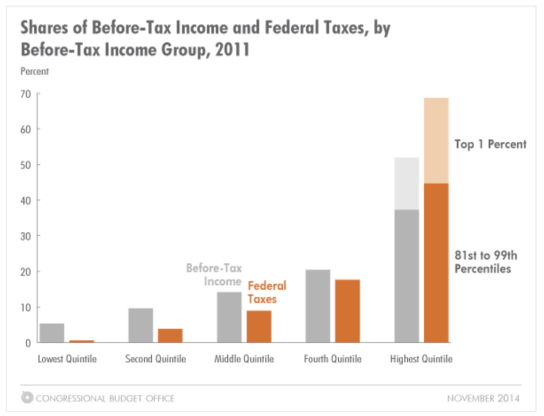
The progressive federal tax structure also results in a distribution of after-tax income that is slightly more even than that of before-tax income. Households in the lowest income quintile received approximately 6 percent of after-tax income in 2011, compared with 5 percent of before-tax income, and households in the highest income quintile received about 48 percent of after-tax income, compared with 52 percent of before-tax income, CBO estimates.
Chosen excerpts by Job Market Monitor. Read the whole story at The Distribution of Household Income and Federal Taxes, 2011 | Congressional Budget Office.



 Job Market Monitor
Discussion
No comments yet.