Preparing for the 2020 workforce is critical to business strategy, growth, and performance. To understand the challenges and opportunities, Oxford Economics and SAP surveyed over 2,700 executives and more than 2,700 employees in 27 countries during the second quarter of 2014.
Based on survey responses, this report shows that many companies lack the structure, strategy, culture, solutions and resources to manage employees effectively. In order to succeed, a number of factors need to be addressed, including the role and relevance of people strategy; changing demographics and evolving definitions of work; leadership ability and cultivation; employee wants and needs; and talent development.
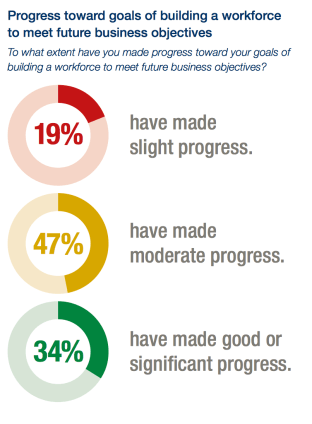
In order to succeed, companies must move decisively on several fronts. They need to:
- Prepare for increasing diversity, changing employee demographics, and evolving definitions of work.
- Gain a better understanding of incoming Millennial employees.
- Enhance employee engagement by providing the incentives and benefits that people actually want.
- Improve executive leadership skills and cultivation.
- Foster a culture of continuous learning that develops talent and empowers workers while capturing and retaining vital knowledge.
Big changes are coming to the workplace. The nature of employment itself is undergoing a transformation. So is the composition of the labor pool, as the entrance of the Millennial generation, along with globalization and social change, increases employee diversity. Understanding and accommodating these changes is critical to managing the 2020 workforce, but doing so will require companies to take a more strategic approach to HR—and to equip themselves with the right tools to manage the new workplace.

Chosen excerpts by Job Market Monitor. Read the whole story at Oxford Economics.



 Job Market Monitor
Discussion
No comments yet.