In the first quarter of this year, 63% of Trendsetter companies told us they’d add staff in the next quarter, the highest level we’ve seen in several years. So we weren’t particularly surprised when the US Bureau of Labor Statistics announced that June’s unemployment rate had dropped to 6.1%. In fact, average unemployment in 2Q14 was more than a full percentage point below what we saw in the previous quarter and has budged only slightly since then, rising to 6.2% in July.
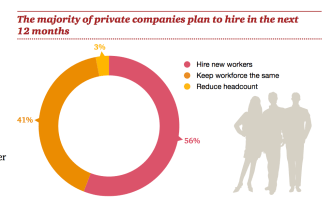
In our latest survey, a still healthy 56% of Trendsetter businesses told us they’ll add employees to their workforce over the next year, though this was down from the prior quarter’s high-water mark. Should we be concerned? Not especially; after all, a mere 3% of firms reported that they plan to cut back headcount. Still, any hiring is apt to be narrowly targeted. Overall, the planned hires would represent a net increase of 1.8% above current employee levels. A year ago, this figure was 3.2%, and it’s been drifting down over the past six quarters.
One reason for this may be that finding qualified workers has proved chronically difficult for a number of Trendsetter companies. The challenge partly stems from demographic shifts. Roughly one-third of Trendsetter companies plan to invest in replacing Baby Boomers, who will take a wealth of knowledge and skills with them as they leave the workforce. But the main hiring goal is to match talent with the needs of the business.
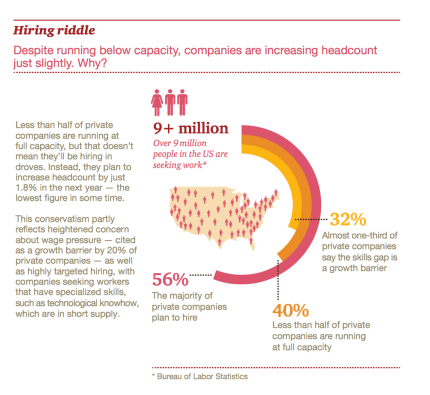
For instance, 67% of Trendsetter companies will devote HR dollars to attracting, developing, and retaining workers who can keep pace with technological advances.
Finding the right people with the right skills – at the right place and cost – will require more than hanging up a “help wanted” sign. When we asked geographically expanding Trendsetter businesses why they’re heading into new US markets, they said that tapping a better skills base was their top reason. We heard the same story when we asked Trendsetter companies why they’re pursuing M&A, joint ventures, and strategic alliances – 54% said their chief objective was to access skilled employees.2
“The survey results remind us that good hiring isn’t just an HR issue,” says PwC’s Ken Esch. “Workforce planning needs to be tied closely to a company’s business objectives. The overall number of anticipated hires may be small, but if the vacancies are for critical roles? An inability to fill those could quickly turn into a growth barrier for businesses.”
Finally, we’ve been told to expect wage increases to flatten. Current employees should see an average increase of 2.62% in hourly wages over the next year, down from 2.70% last quarter. We view this slight pullback in wages and hiring as a matter of the economy catching its breath for a moment before resuming a steady if slow climb upward.
Chosen excerpts by Job Market Monitor. Read the whole story at Private companies outperform economy, but plan to hire little: PwC.



 Job Market Monitor
Discussion
No comments yet.