The economic impact of migration has been intensively studied but is still often driven by ill-informed perceptions, which, in turn, can lead to public antagonism towards migration. These negative views risk jeopardising efforts to adapt migration policies to the new economic and demographic challenges facing many countries.
This edition of Migration Policy Debates looks at the evidence for how immigrants affect the economy in three main areas: The labour market, the public purse and economic growth.
Labour markets
- Migrants accounted for 47% of the increase in the workforce in the United States and 70% in Europe over the past ten years.
- Migrants fill important niches both in fast-growing and declining sectors of the economy.
- Like the native-born, young migrants are better educated than those nearing retirement.
- Migrants contribute significantly to labour-market flexibility, notably in Europe.
The public purse
- Migrants contribute more in taxes and social contributions than they receive in benefits.
- Labour migrants have the most positive impact on the public purse.
- Employment is the single biggest determinant of migrants’ net fiscal contribution.
Economic growth
- Migration boosts the working-age population.
- Migrants arrive with skills and contribute to human capital development of receiving countries.
- Migrants also contribute to technological progress.Understanding these impacts is important if our societies are to usefully debate the role of migration. Such debates, in turn, are essential to designing policies in areas like education and employment that maximise the benefits of migration, especially by improving migrants’ employment situation.This policy mix will, of course, vary from country to country. But the fundamental question of how to maximise the benefits of migration, both for host countries and the migrants themselves, needs to be addressed by many OECD countries in coming decades, especially as rapid population ageing increases demand for migrants to make up shortfalls in the workforce.
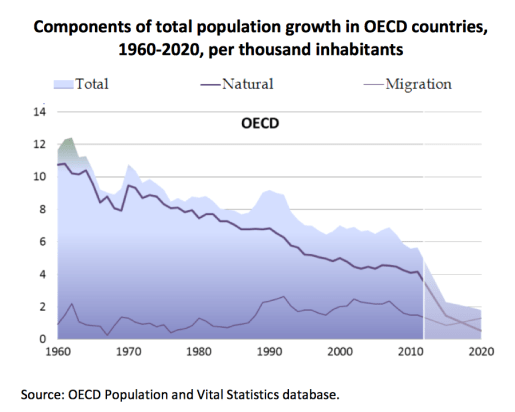
Chosen excerpts by Job Market Monitor. Read the whole story at Is migration good for the economy?
Related articles
- International migration / Labour migration decreased in 2010 finds OECD
- Europe / Two million jobs available for migrants says European Union (EU) Ambassador Guy Ledoux in Asia
- 25% international students in OECD region are from China or India
- Managing Skilled Economic Migration in Europe
- UK / Employment rate among migrant men higher than for Brits
- Immigration, ‘not a problem’ writes OECD
- OECD / The number of tertiary educated immigrants in the OECD increased by 70% in the past to 27 million
- Chinese overseas students / 72 percent are unable to find long-term jobs overseas




 Job Market Monitor
Discussion
No comments yet.