“The first World Happiness Report presented the widest body of happiness data available, and explained the scientific base at hand to validate and understand the data” write the editors John Helliwell, Richard Layard and Jeffrey Sachs in The World Happiness report. (Quotes to follow)
Now that the scientific stage has been set, we turn this year to consider more specific issues of measurement, explanation, and policy.
Chapter 2 presents data by country and continent, and for the world as a whole, showing the levels, explanations, changes and equality of happiness, mainly based on life evaluations from the Gallup World Poll. Despite the obvious detrimental happiness impacts of the 2007-08 financial crisis, the world has become a slightly happier and more generous place over the past five years. Because of continuing improvements in most supports for better lives in Sub-Saharan Africa, and of continued convergence in the quality of the social fabric within greater Europe, there has also been some progress toward equality in the distribution of well-being among global regions.
There have been important continental cross- currents within this broader picture. Improvements in quality of life have been particularly notable
Latin America and the Caribbean, while reductions have been the norm in the regions most affected by the financial crisis, Western Europe and other western industrial countries; or by some combi- nation of financial crisis and political and social instability, as in the Middle East and North Africa.
Chapter 4 considers the objective benefits of subjective well-being. The chapter presents a broad range of evidence showing the people who are emotionally happier, who have more satisfying lives, and who live in happier communities, are more likely both now and later to be healthy, productive, and socially connected. These benefits in turn flow
more broadly to their families, workplaces, and communities, to the advantage of all.
The ranking
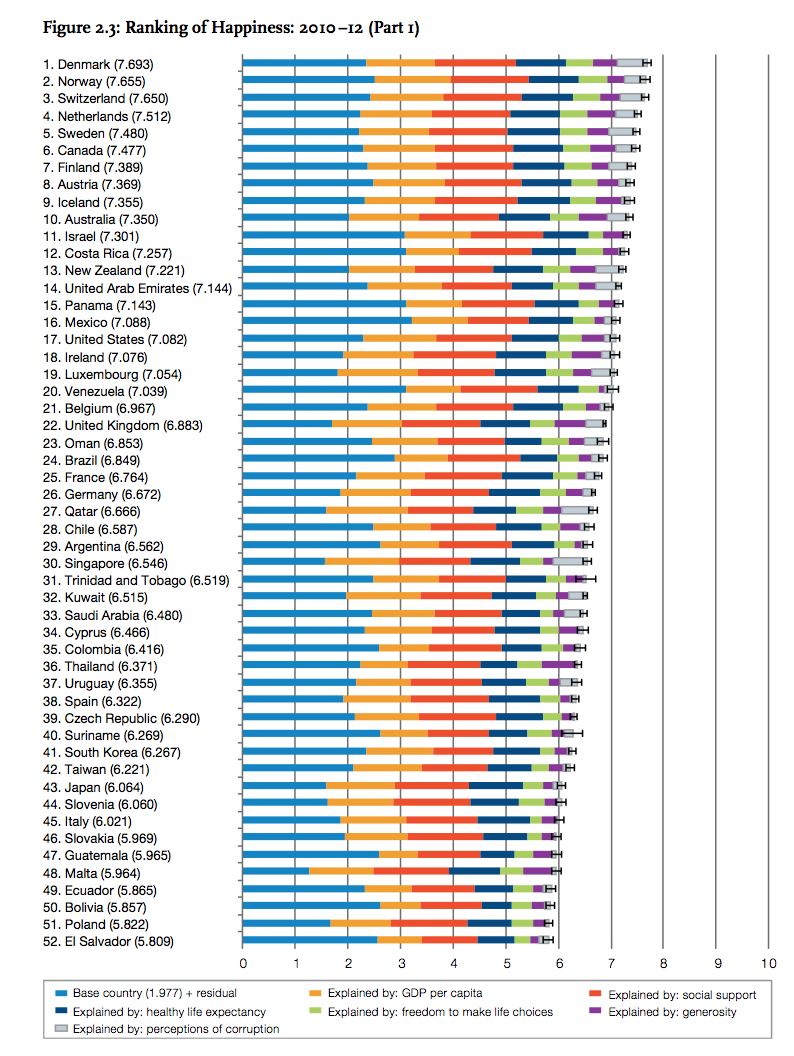
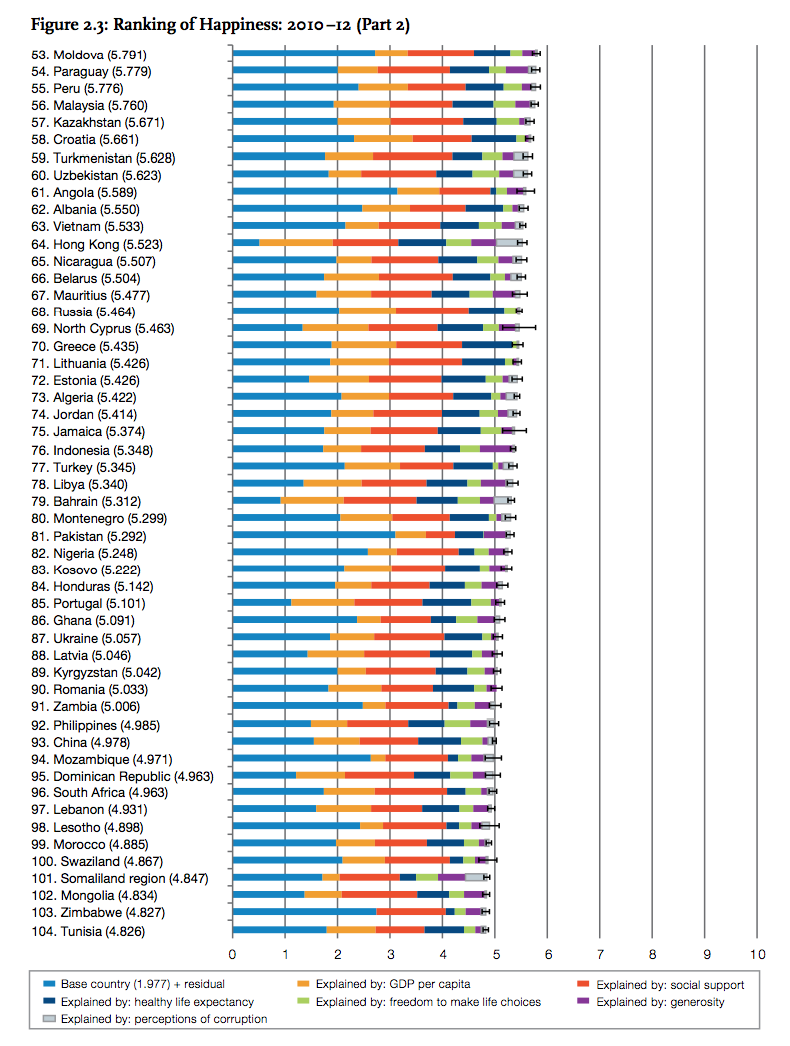
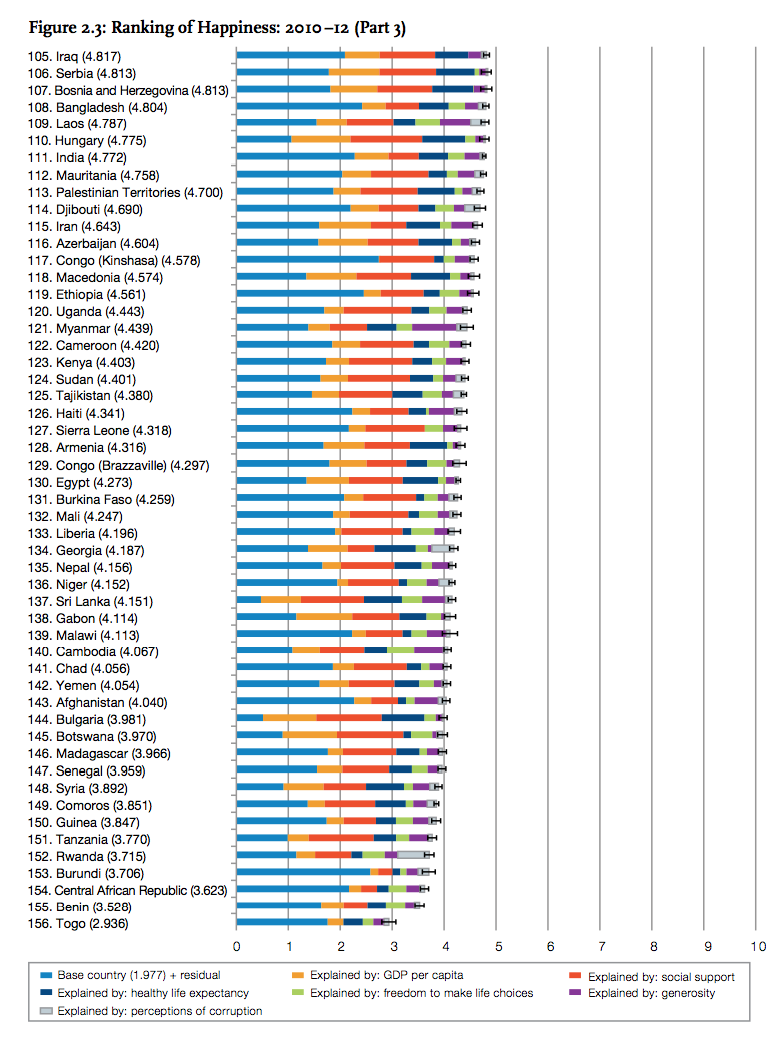
In conclusion, there is now a rising worldwide demand that policy be more closely aligned with what really matters to people as they themselves characterize their lives. More and more world leaders including German Chancellor Angela Merkel, South Korean President Park Geun-hye and British Prime Minister David Cameron, are talking about the importance of well-being as a guide for their nations and the world. We offer the 2013 World Happiness Report in support of these efforts to bring the study of happiness into public awareness and public policy. This report offers rich evidence that the systematic measurement and analysis of happiness can teach us much about ways to improve the world’s well-being and sustainable development.
Chosen excerpts by Job Market Monitor. Read the whole story at
 Source: The World Happiness report
Related Post
U.N. | First World Happiness Report Launched
The happiest countries in the world are all in Northern Europe (Denmark, Norway, Finland, Netherlands). Their average life evaluation score is 7.6 on a 0-to-10 scale. The least happy countries are all poor countries in Sub-Saharan Africa (Togo, Benin, Central African Republic, Sierra Leone) with average life evaluation scores of 3.4. But it is not … Continue reading »



 Job Market Monitor
Discussion
No comments yet.