A long term look
The Unemployment rate for 20 to 24 years is has been higher than the overall rate since the BLS has produced those two series, except for a couple of months at the beginning of the 50’s when the job market was at full employment.

Each recession has worsened the relative situation for the youth. They are indicated by shaded areas in the graphs.
The next figure shows the difference between youth (20-24) unemployment rate and the overall civilian rate.
The unemployment gap for youth, which has climbed to 7 %, has never been durably below 5 % since the last recession. Something permanent in character has changed, for worse. This is not counting the discouraged effect…
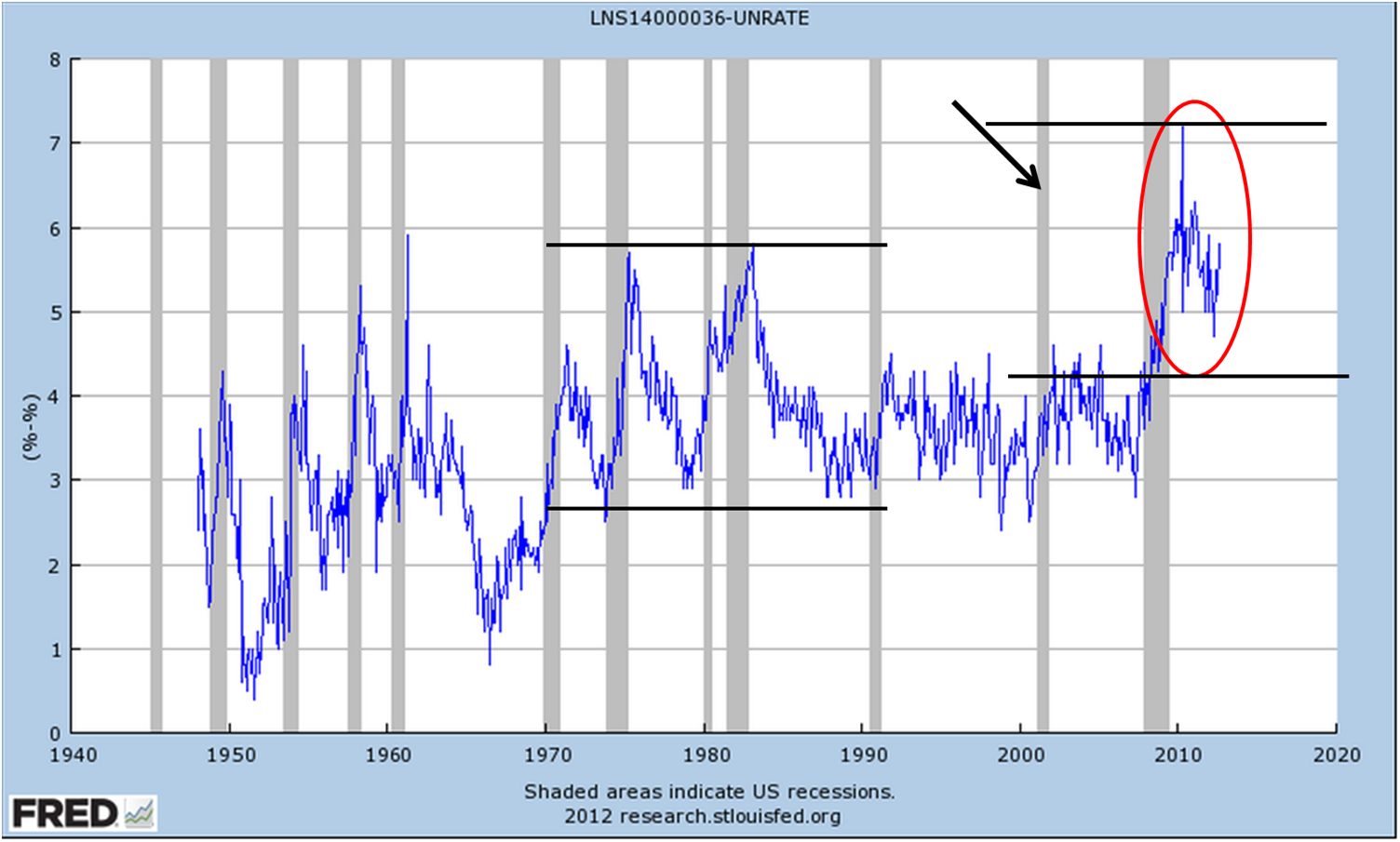
Sopurce: Fred and Job Market Monitor
Hardest Hit: The August 2012 Young Adult Unemployment Report
Unlike the overall labor force, young adults saw unemployment rates rise in the month of August.
The Bureau of Labor Statistics released a disappointing employment report this morning, showing job growth that fell below economists’ expectations. The overall unemployment rate declined in August to 8.1 percent, but that drop was due to workers leaving the labor force rather than the month’s employment gains. Like their older colleagues, young workers also fled the labor market, but their exit did not cushion the lack of opportunity; unemployment rates rose among this population for the first time since summer began.
The drop in the labor force participation rate among workers ages 20 to 24 was greater than that of any other age group last month. For many students under 25, August presents the end of the working season as the fall semester begins. But even considering the exodus of college students from the labor market, the change in participation among this age group is striking. Just 69.7 percent of these young adults are working or looking for work — that’s more than 1 percent fewer than in the month of July and the lowest labor force participation rate in almost 40 years. Workers leave the labor market when they believe that the payoff to job-seeking does not make up for its costs – that is, when their hopes for employment diminish to the point where looking for work seems like a waste of time. With a 13.9 percent unemployment rate, the prospects for 20 to 24-year-olds are not as bright as those of older workers – and they are getting worse. Despite a 1.1 percent net loss in participation, the unemployment rate rose from 13.5 in July to 13.9 in August. That means that fewer people are looking for jobs, and more of those who are looking cannot find them…

via Hardest Hit: The August 2012 Young Adult Unemployment Report – The Demos Blog – PolicyShop.



 Job Market Monitor
Discussion
Trackbacks/Pingbacks
Pingback: US Youth / More Are Homeless « Job Market Monitor - December 19, 2012