Across the US, populations are aging, and talent pools are shrinking. Minnesota is no exception. The state’s 12,000 lakes will be no match for the impending Demographic Drought brought about by declining fertility rates, an aging population, rising retirements, and falling net migration.
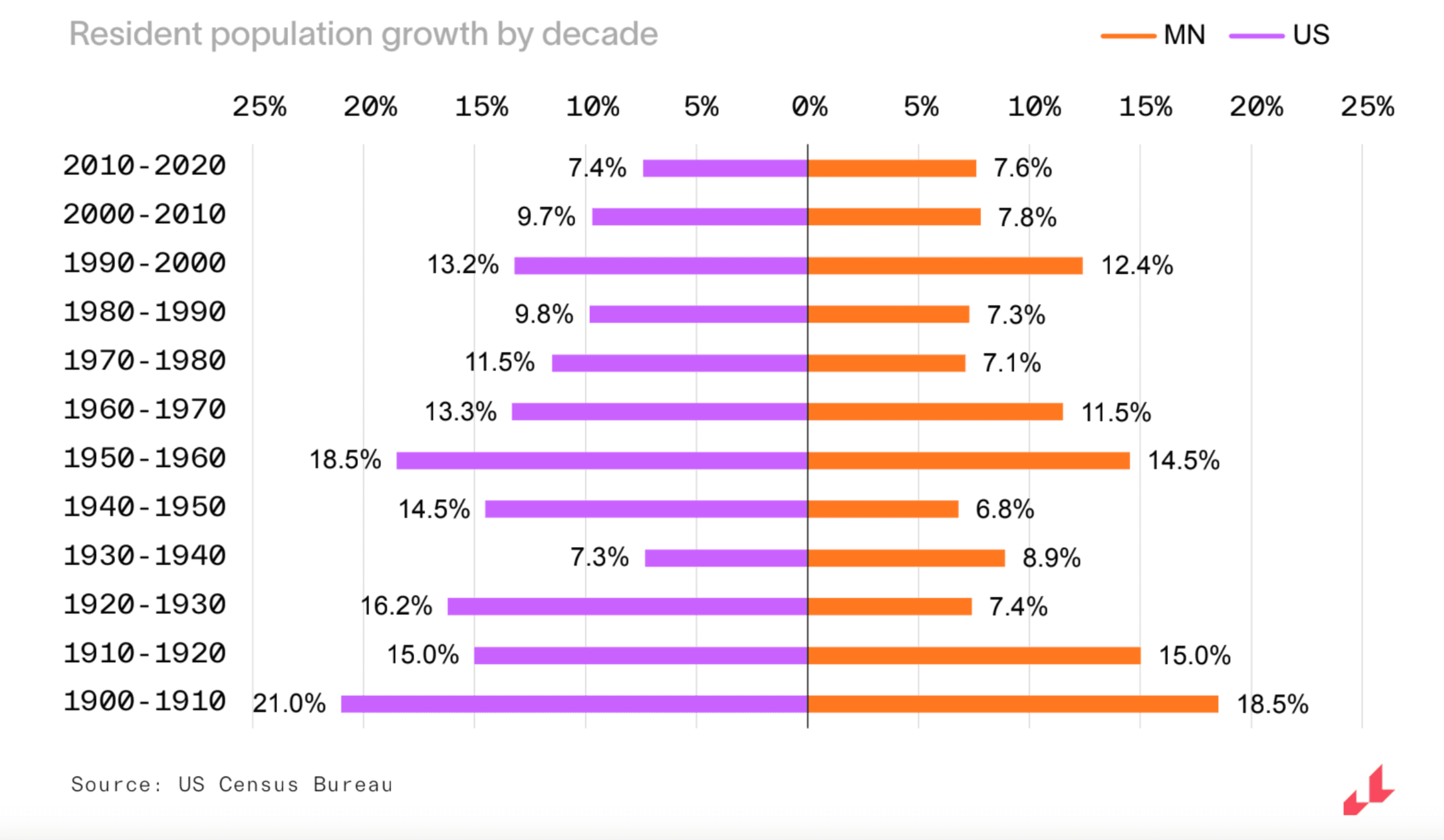
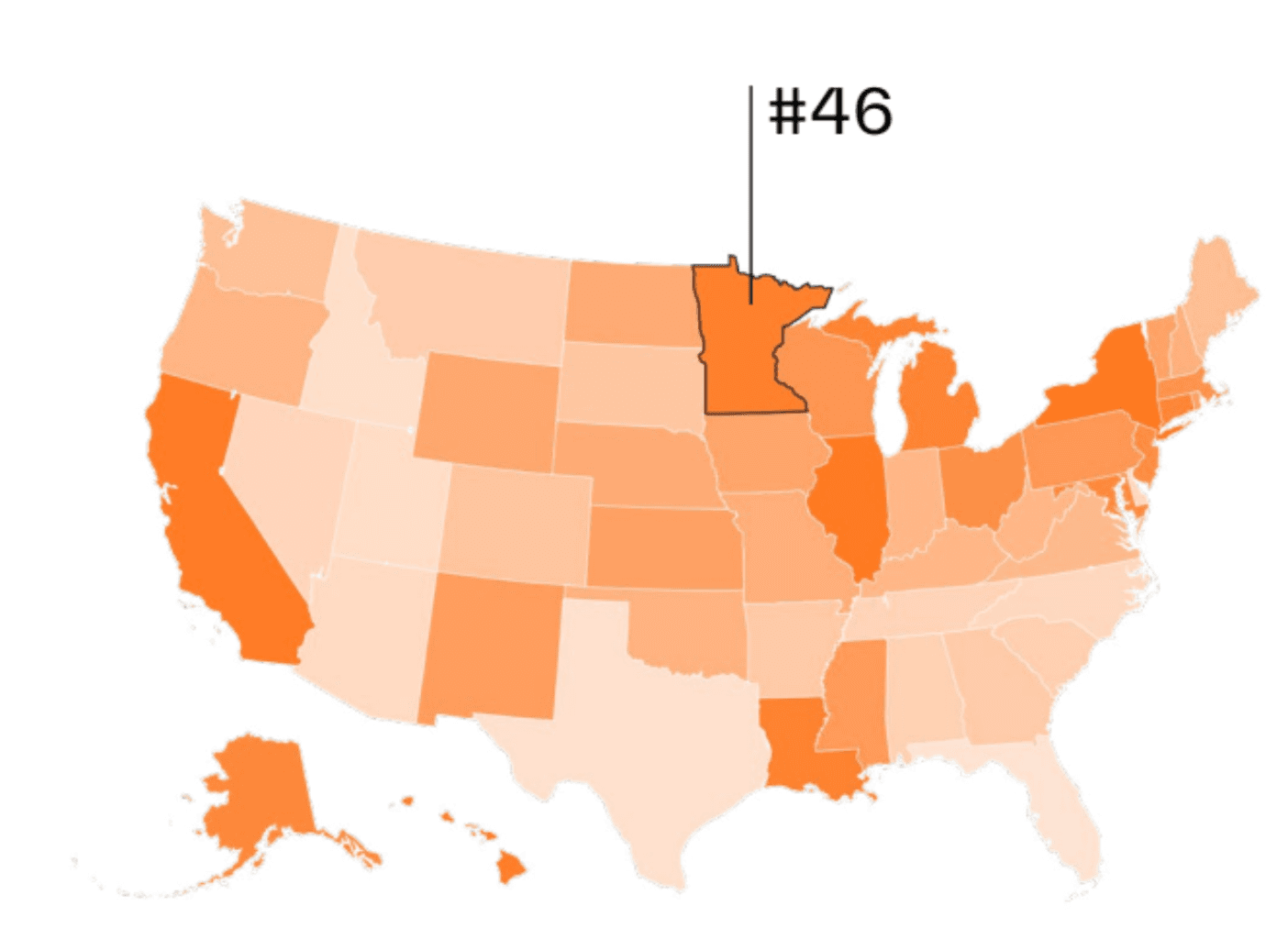
Minnesota is struggling more than nearly all other states. In June 2023, Minnesota was still 11,500 jobs below it’s pre-pandemic level while national employment had already more
than recovered. The gap between Minnesota and the US is widening.
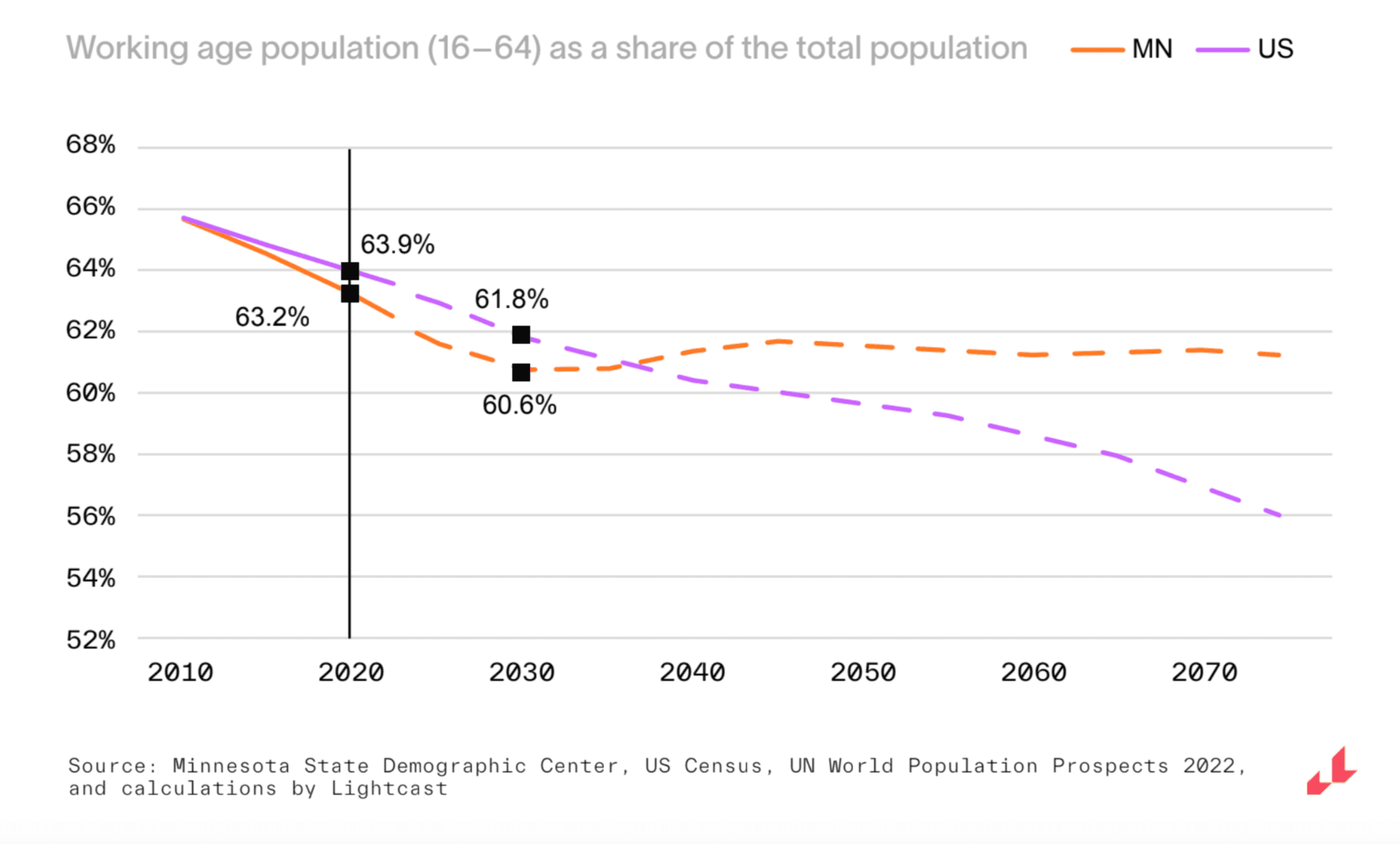
Problems are likely to get worse: By 2030, all Baby Boomers will be at least 65 and the share of the Minnesotan population that is of working age (16-64) will crater to a historic low creating a labor crisis marked by talent shortages, lower employment gains, and potentially lower economic growth.
How do we move forward?
Mitigating the economic impact of Minnesota’s Demographic Drought will require partnerships between government, businesses, and educators. Deploying tactics to boost labor force participation, expanding the labor pool through immigration, and investing in new technologies and business models can help offset the impact of a shrinking labor supply.
INCREASE THE SKILLS OF THE WORKFORCE
Reskilling and upskilling employees into greater value-added tasks will further drive productivity and growth. More than ever before, employers must be committed to growing their own talent by assessing future skill and technology needs and building talent pipelines.
Over the last five years in Minnesota, job posting data from Lightcast show that employer demand for skills related to automation, AI, and cloud storage/computing grew the fastest among computer and mathematical occupations (see next page). In contrast, skills related to mainstream or older technologies declined.
These trends, however, are not confined to tech-related roles. During the fast-paced digital transformation of the last several years, skills such as AI, data engineering, Kubernetes, and PowerBI were also among the top ten fastest growing skills across all occupations in Minnesota. Lightcast data also show that the prominence of tech-related skills has led to growing employer demand for complementary “human” or “soft” skills that cannot be automated.
Employers can start by developing more robust reskilling, upskilling, and on-the-job training programs. Often, expanding talent pools means reducing education or experience requirements and instead hiring for foundational skills, all while increasing training to fill knowledge gaps.
Institutions, especially community colleges and trade schools, can help fill these gaps by offering short-term stackable training opportunities well-suited for working students. The growing emphasis on skills rather than degrees in job markets also provides incentives for state governments to develop a system of state-approved non-degree credentials that encourage reskilling and workforce participation.

Chosen excerpts by Job Market Monitor. Read the whole story @ Minnesota’s Vanishing Workforce | Lightcast



 Job Market Monitor
Discussion
No comments yet.