Over recent years, the number of people in the UK who are economically inactive has risen sharply. In total there are 440,000 more people who are neither in work nor looking for work now than there were before the Covid-19 pandemic began.
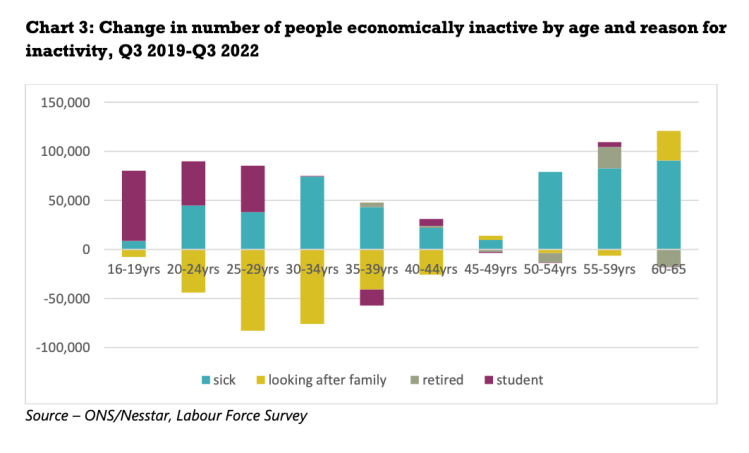
This has been largely driven by an increase in the numbers of older people leaving the labour market before they reach state pension age. This initially led to discussion of a ‘great retirement’, with the suggestion that older people were deciding to leave work early having re-evaluated their lives over the pandemic.
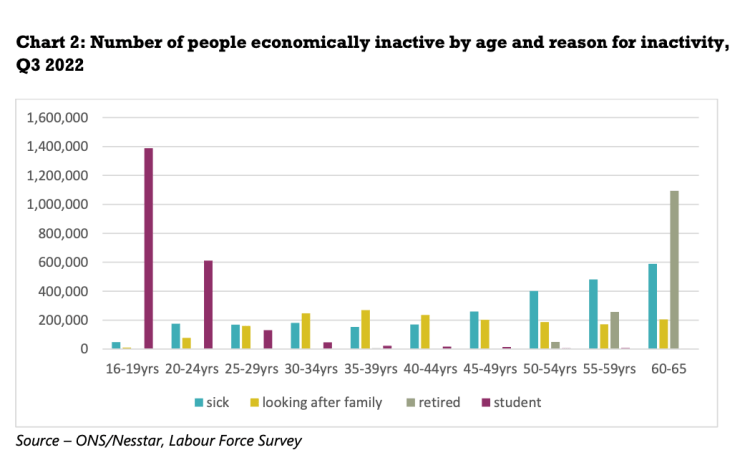
But the latest data is clear that the real story is that a growing number of people are simply too sick to work. While the number of people below state pension age who are retired has dropped below levels seen in 2019, the number who are out of work because of long-term ill health is nearly 340,000 higher than it was before the pandemic at almost 2.5 million.
This increase in poor health is seen across all age groups but was greatest among older people, who were already more likely to be out of work because of ill health. The result is 1.5 million men and women between 50 and state pension age out of work because of long-term sickness.
There is also an occupational divide between those who are likely to be forced out of work before they start drawing their state pension and those who are either able to stay in work longer or can afford to retire early.
These disparities often reflect the inequalities in our labour market. Among older workers inactive because of illness who had previously worked, two thirds had come from a job in one of the five lowest paid occupation groups, despite these groups accounting for just four in ten jobs.
And the gap is increasing, with people who used to work in these occupational groups accounting for more than three quarters of the increase in the number of people out of the work due to ill health.
Although the number of people out of work because of caring responsibilities has fallen over this period, it remains a significant factor. Older women are still more likely to be out of work because of caring responsibilities than older men, with BME women particularly impacted. Economically inactive older BME women are four times more likely than economically inactive older white men to be unable to work because of caring responsibilities.
The government has acknowledged the importance to the UK economy of persuading older people to stay in and return to the labour market. Chancellor Jeremy Hunt recognised this was necessary to “harness the full potential of our country” and “fix our productivity puzzle” and promised older workers he would “look at the conditions necessary to make work worth your while”.1
Helping those who are willing and able to work into their 50s and 60s will also improve the living standards of many. Leaving work before reaching state pension age can have a damaging impact on physical and mental health and reduce incomes before and after state pension age.
But increasing levels of economic activity will require a wide range of policies. The role of ill health in the increase seen in recent years means that restoring the NHS, tackling waiting lists and the recruitment and retention crisis, is a priority.
There are also a wide range of reforms to labour markets, social security, skills and working conditions that would enable more people in their 50s and 60s to stay in work:
- Older unemployed people do need extra support getting back into work as they face additional barriers in the job market, but low levels of unemployment and rising economic inactivity among this group means labour market policies should be directed at those not actively seeking employment through job centres.
- Rather than trying to force older people back to work through benefit sanctions or a rising state pension age, the focus must be on providing good quality jobs, with the flexibility necessary for workers managing health conditions or juggling caring responsibilities.
- Older workers should be empowered to access the training they need to keep their skills up to date or to reskill for new roles to increase their ability to remain in employment.
- In recognition of the fact that many older people who are too sick to work may never be able to return, the safety net needs to strengthened to prevent this resulting in severe hardship, and levels of workplace pension saving must be increased to give more people the financial resources to have control over how and when they stop paid work.



 Job Market Monitor
Discussion
No comments yet.