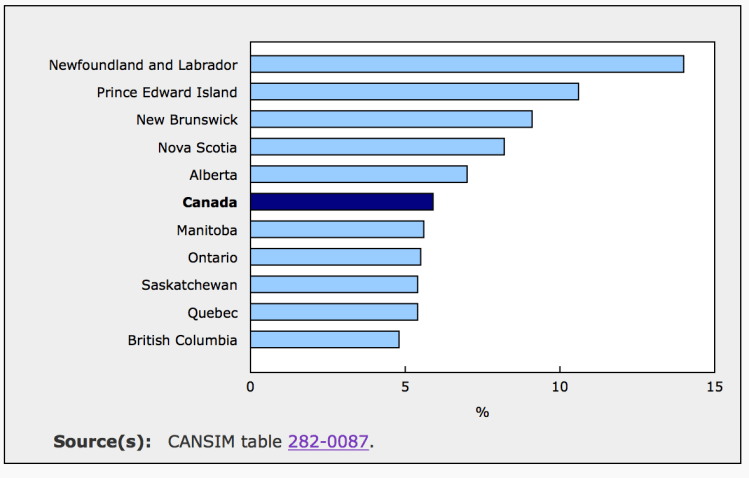
Following two months of increases, employment fell by 88,000 in January. Part-time employment declined (-137,000), while full-time employment was up (+49,000). At the same time, the unemployment rate increased by 0.1 percentage points to 5.9%.
On a year-over-year basis, employment grew by 289,000 or 1.6%. Gains were driven by increases in full-time work (+414,000 or +2.8%), while there were fewer people working part time (-125,000 or -3.5%). Over the same period, hours worked rose by 2.8%.
Highlights
In January, employment declined for core-aged women (25 to 54 years old), as well as people 55 and older and youth aged 15 to 24. There was little change for core-aged men.
The largest employment declines were in Ontario and Quebec. There were also decreases in New Brunswick and Manitoba.
Declines were spread across a number of industries, including educational services; finance, insurance, real estate, rental and leasing; professional, scientific and technical services; construction; and health care and social assistance. On the other hand, employment increased in business, building, and other support services.
In January, the number of employees fell in both the private and public sectors, while the number of self-employed workers held steady.
Chart 1
Employment
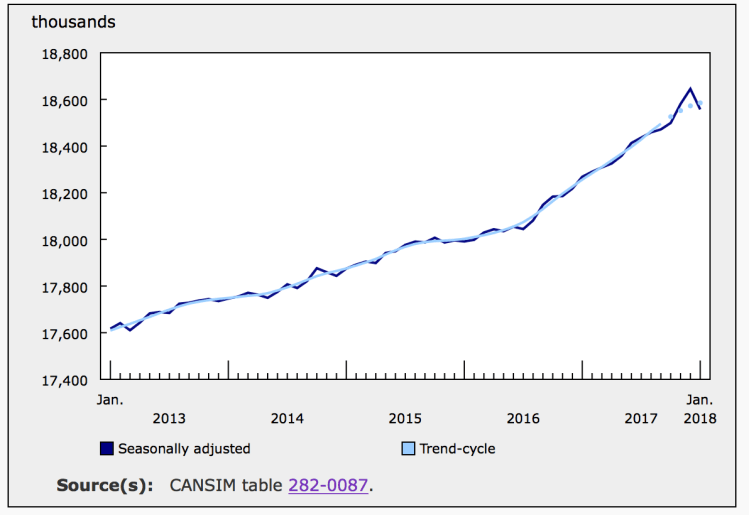
Chart 2
Unemployment rate

Chart 3
Unemployment rate by province, January 2018
Chosen excerpts by Job Market Monitor. Read the whole story at The Daily — Labour Force Survey, January 2018



 Job Market Monitor
Discussion
No comments yet.