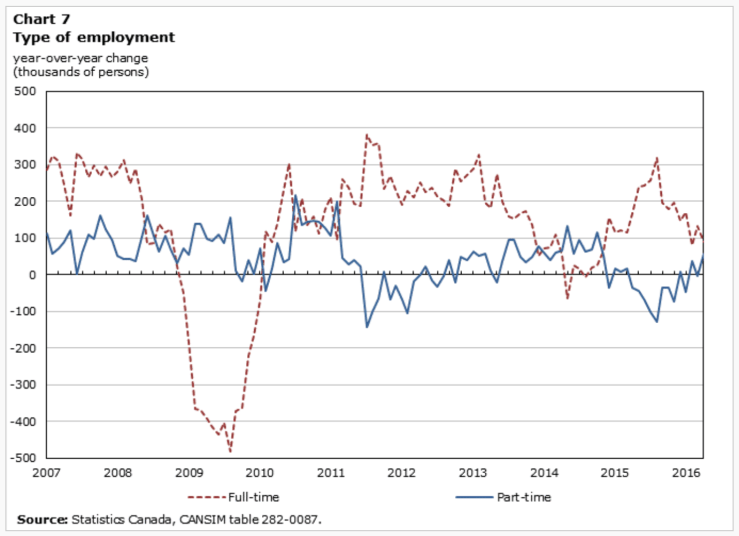
Total employment increased by 64,000 (+0.4%) in the last six months of 2015 on gains in part-time work and self employment. Full-time employment was little changed during the second half of the year after notable gains in the first six months (+123,000). Individuals aged 55 and older accounted for all of the net gain in employment from June to December, as both youth and core-age employment declined.

Employment gains during the second half of 2015 were led by increases in health care and social assistance and in professional, scientific and technical services. Employment in manufacturing edged up late in the year.
All of the net growth in employment during the last half of the year occurred in central Canada and British Columbia. Employment in Alberta declined by 15,000 in the second half of the year, as the province’s unemployment rate increased from 5.8% in June to 7.0%. Saskatchewan’s unemployment rate also rose during the second half and was 5.5% at year end. In January 2015, the unemployment rates in Saskatchewan and Alberta had been 4.5% and 4.6% respectively. The unemployment rate in Ontario remained under 7% throughout the year.


For 2015 as whole, employment increased by 155,000 (+0.9%) on gains in services, in full-time work, and among workers aged 55 and older. Total employment in British Columbia increased by 52,000 in 2015 while employment in Alberta declined by 20,000.
More recently, total employment rose by 33,000 in the first quarter of 2016 on gains in British Columbia (+24,000) and Ontario (+23,000). The unemployment rate in Alberta reached 7.9% in February before declining to 7.1% in March as employment increased in services.
Total employment was unchanged in April, as declines in Alberta were offset by gains in British Columbia. Employment in manufacturing declined by 52,000 during the first four months of the year.
Chosen excerpts by Job Market Monitor. Read the whole story at Recent Developments in the Canadian Economy: Spring 2016



 Job Market Monitor
Discussion
No comments yet.