No one source of data gives us a comprehensive picture of the income of the self-employed. However, by looking at a range of sources, we can form some tentative conclusions:
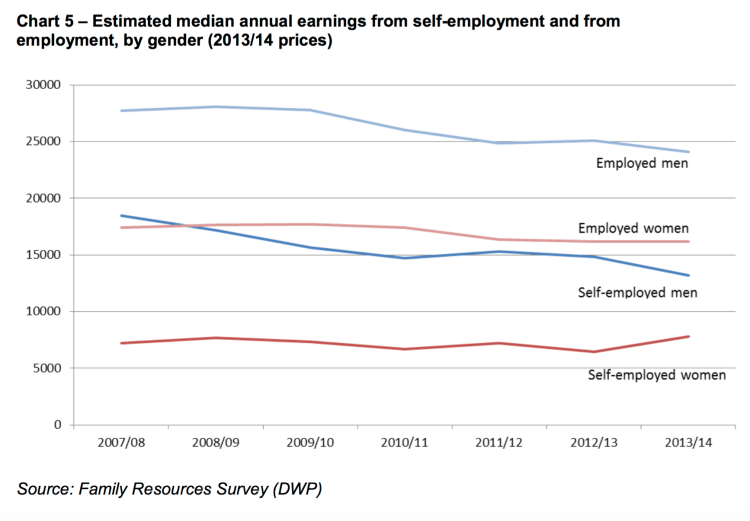
- The self-employed as a group have seen falling income since the recession
- But this is mostly down to the changing composition of self-employment
- Those individuals who have been self-employed over a number of years have seen income levels sustained, although with some self-employment earnings replaced by other sources
- There is little difference in overall life satisfaction levels between the self-employed and the employed.
Recent trends in self-employment
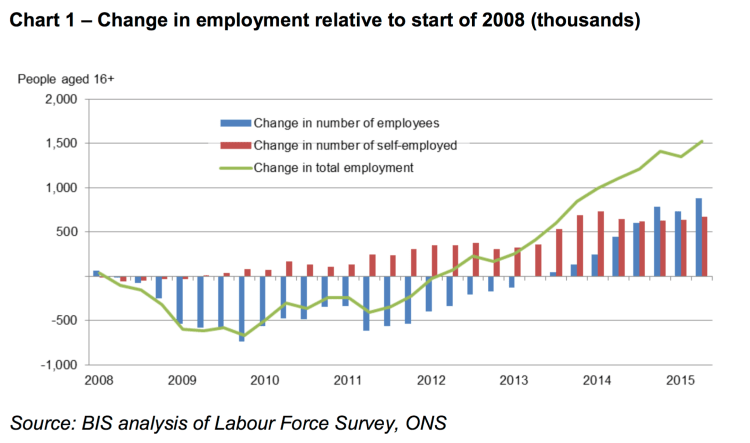
According to the most recent Labour Force Survey1, there are 4.613 million self-employed in the UK, 787 thousand higher than the pre-recession figure at the same time in 2008. This is a much larger proportional rise than for employees and indeed self-employment has accounted for more than 40 per cent of the total increase in employment over this time period despite only accounting for around 1 in 7 of the workforce.
Chart 1 shows how employment has changed compared to its pre-recession levels up to late 2015. The chart shows cumulative change, so that by mid-2012, total employment had recovered to its pre-recession level and it is clear that this was entirely down to the increase in self-employment. Self-employment then remained fairly stable before rising steadily through 2013, reaching a peak at in early 2014. It is only recently that the increase in employment has caught up and contributes more to the overall increase in employment since 2008.



Chosen excerpts by Job Market Monitor. Read the whole story at The income of the self-employed



 Job Market Monitor
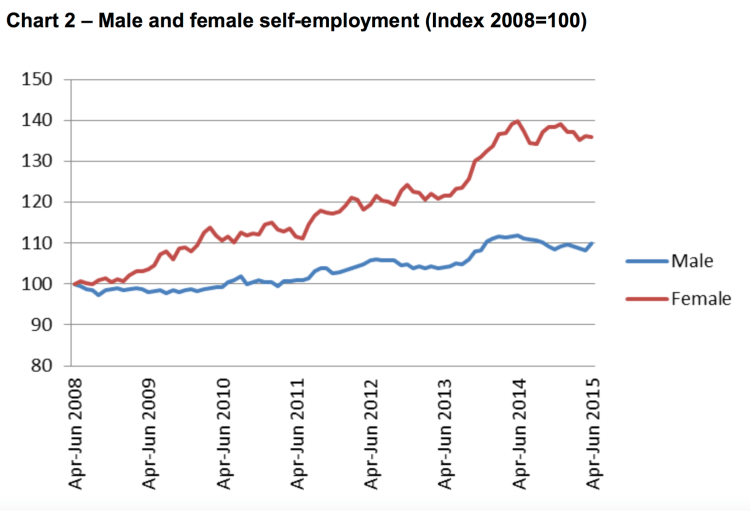
Some really interesting stats here, it’s surprising to see the high rise of women going self employed!
Posted by Charlotte M | October 25, 2016, 3:37 am