Main points for October to December 2015
- There were 31.42 million people in work, 205,000 more than for July to September 2015 and 521,000 more than for a year earlier.
- There were 22.98 million people working full-time, 387,000 more than for a year earlier. There were 8.43 million people working part-time, 134,000 more than for a year earlier.
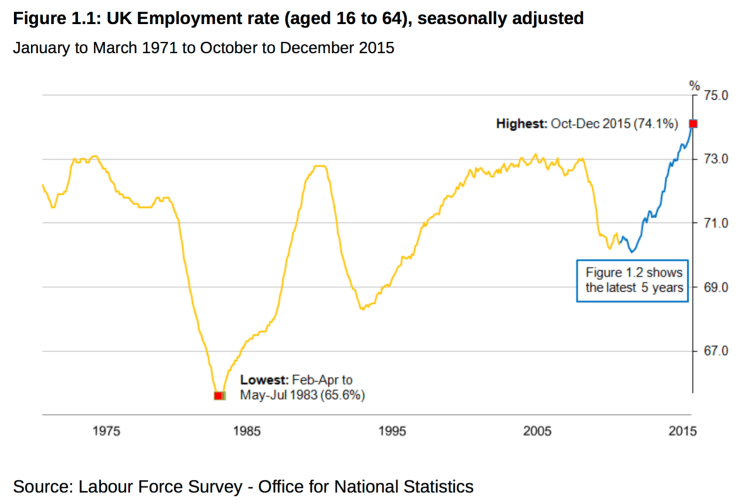
- The employment rate (the proportion of people aged from 16 to 64 who were in work) was 74.1%, the highest since comparable records began in 1971.
- There were 1.69 million unemployed people (people not in work but seeking and available to work), 60,000 fewer than for July to September 2015 and 172,000 fewer than for a year earlier.
- There were 924,000 unemployed men, 116,000 fewer than for a year earlier. There were 766,000 unemployed women, 57,000 fewer than for a year earlier.
- The unemployment rate was 5.1%, lower than for a year earlier (5.7%). The unemployment rate is the proportion of the labour force (those in work plus those unemployed) that were unemployed.
- There were 8.88 million people aged from 16 to 64 who were economically inactive (not working and not seeking or available to work), 88,000 fewer than for July to September 2015 and 172,000 fewer than for a year earlier.
- The inactivity rate (the proportion of people aged from 16 to 64 who were economically inactive) was 21.8%, lower than for a year earlier (22.3%) and only slightly higher than the record low of 21.7% last recorded for July to September 1990.
- Average weekly earnings for employees in Great Britain increased by 1.9% including bonuses and by 2.0% excluding bonuses compared with a year earlier.
Chosen excerpts by Job Market Monitor. Read the whole story at UK Labour Market, February 2016 – ONS



 Job Market Monitor
Discussion
No comments yet.