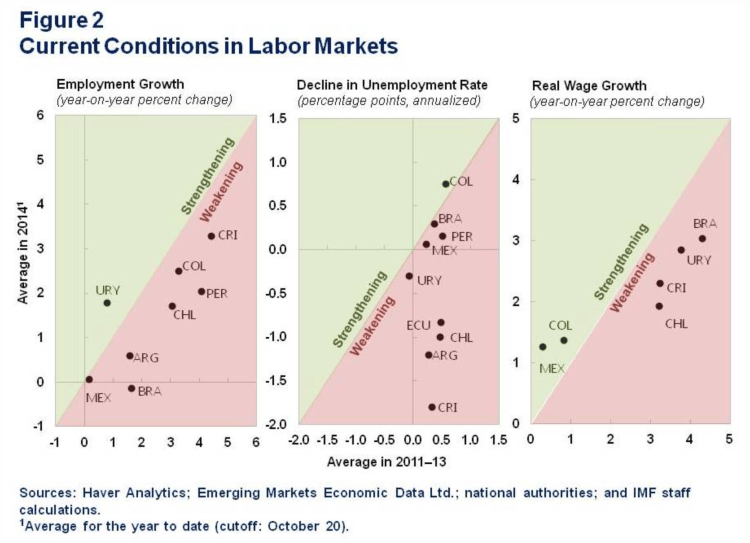
Employment growth is likely to remain subdued for some time, as changes in labor markets typically lag those in the overall economy, and output growth is not expected to revert to the high rates of the “golden decade” anytime soon.
In this context, unemployment rates will probably rise somewhat and real wage growth may well moderate further. The resulting slower growth of aggregate wage income will make it increasingly difficult to sustain the pace of poverty reduction and other social achievements observed in previous years.
What can be done? The overwhelming priority across the region is to rekindle economic growth while preserving macroeconomic stability. Given that economic slack is still limited in most Latin American countries, there is little scope for demand-side stimulus, even less so in economies with weak fiscal balances.
Instead, the focus should be on reforms to foster higher productivity and create better conditions for private investment. Improvements in physical infrastructure, educational systems, and the general business environment are key priorities. Pursuing targeted reforms in these areas is the most promising avenue not only for reviving growth, but also for generating more and better-paid jobs over the medium term.
Chosen excerpts by Job Market Monitor. Read the whole story at What next for Latin America’s labour markets? – Forum:Blog Forum:Blog | The World Economic Forum.



 Job Market Monitor
Discussion
No comments yet.