So, in principle, yesterday’s rise in Scottish unemployment should be explained by differential movements between Scotland and the UK in one or more of the following:
- GDP,
- productivity, and
- labour supply.
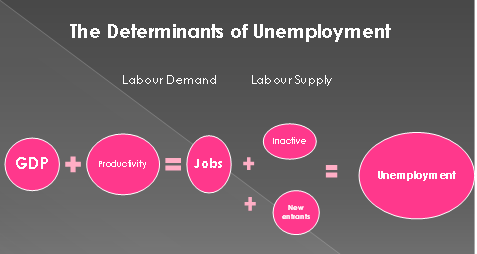
Specifically, weaker GDP growth, faster productivity growth, and a faster growth in the supply of labour should, severally, or collectively, account for the relative rise in Scottish unemployment.
Can we go further?
Yes, I think we can. But just a little!
The jobs and unemployment data published yesterday refer to the period June – August. Unfortunately, we don’t have GDP data for this period. The latest Scottish GDP data, also published yesterday, cover the second quarter, that is April – June. There is only an overlap of one month. We must await the third quarter data to see if there is evidence of an ‘Olympic bounce’ because, if it exists, it will be picked up in the GDP figures. So, the strong jobs growth of 0.72 percent in UK employment in the quarter, compared to a fall of 0.06 per cent in Scottish jobs, might be largely the result of a strong output differential due to the Olympics. But we just don’t know at the moment….

via Scotland’s unemployment differential – Scottish Economy Watch.



 Job Market Monitor
Discussion
No comments yet.